
Master the Product Development Engineer Role Skills and Career Path in 2026
· 24 min read

Why clarifying roles and skills for product development engineers matters today
In today’s fast-moving world of technology, it can sometimes be tough to understand exactly what certain job titles mean. This is especially true for roles like a product development engineer. Sometimes, different companies use similar names for jobs that are actually quite different. This can make it hard to hire the right people or even for teams to work well together.
When job titles and what is expected from someone are not clear, it causes problems.

It can make hiring new team members take longer, and it can slow down how fast new products are made. Everyone needs to be on the same page. For example, a product development engineer often helps create new products from the first idea all the way to testing them.
This confusion isn’t just a small problem. It’s a big deal for many people in tech. If you are a software developer, a company founder, a product manager, or an engineering manager, you need to know exactly what a product development engineer does. This shared understanding helps everyone make smart choices about their products and teams. It ensures that the right people with the right skills for software developer roles are brought in. Clear roles are part of the core engineering essentials for any successful project involving new engineering technology.
This guide will help make things clear. We will explore the exact role of a product development engineer and what skills they need. This way, you can build stronger teams and create amazing products in 2026.
Staying up-to-date with the newest information in the tech world is a smart move. Get clear daily AI updates from The AI Newsletter Worth Reading.
Role Taxonomy: Where the Product Development Engineer Sits in Modern Teams
To truly understand a product development engineer, it helps to see how their role fits with other key team members. Imagine a team building a new product in 2026. Many people with different skills work together. The product development engineer is a central figure, working closely with several other roles to bring ideas to life.

Adjacent Roles and Their Overlaps
Here’s a look at some related roles and how they connect with a product development engineer:
-
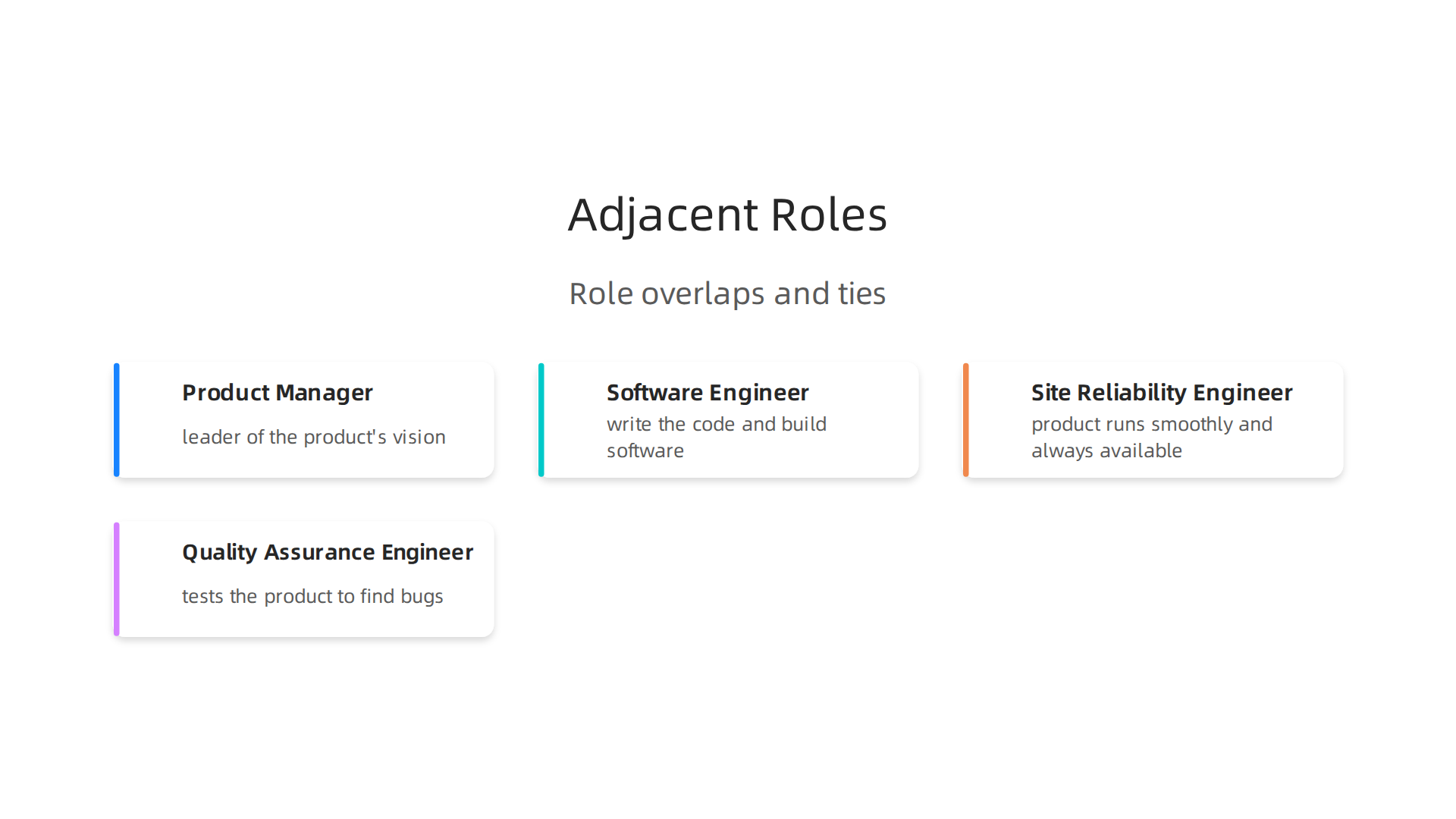
Product Manager: This person is like the leader of the product’s vision. They figure out what customers need and want. They set the goals for the product and make sure the team builds the right things. A product manager often creates the roadmap, which is a plan for what features to add and when. They work closely with the product development engineer to make sure the technical plans match the customer needs. For example, they define what "done" looks like for a feature, and the engineering team then builds it. This relationship is key for good product development.
-
Software Engineer (or Developer): These are the people who write the code and build the software parts of a product. While a product development engineer might also write code, their main job often involves a wider view of the product’s whole journey. A software engineer focuses more on making sure the code works well and is built right. Sometimes a product development engineer will hand off detailed coding tasks to a software engineer, especially in larger teams. Knowing the different skills for software developer roles helps a team stay organized.
-
Site Reliability Engineer (SRE): An SRE focuses on making sure the product runs smoothly and is always available for users. They worry about how stable, fast, and reliable the system is. While the product development engineer builds new features, the SRE makes sure those features don’t break anything and work well in the real world. Think of them as the guardians of the product’s health after it’s launched. For any modern IT engineer team, reliability is an everyday concern.
-
Quality Assurance (QA) Engineer: The QA engineer tests the product to find bugs or problems before it reaches customers. They try to break things on purpose to make sure the product works as it should. The product development engineer works with QA to fix issues and improve the product’s quality. Both roles are vital for delivering a solid product. Testing early-stage ideas and making improvements is a big part of the job for many product development engineers.
Scope and Focus of the Product Development Engineer
A product development engineer usually owns a product or a big part of it from start to finish. This means they are involved in:
- Coming up with ideas: They research what customers want and what is possible with engineering technology. This can include building and testing early prototypes.
- Designing the product: This involves creating the plans and specifications. They think about how all the different parts of the product will work together.
- Building the product: They might lead the development, making sure different parts fit. They also often get their hands dirty with some of the coding or hands-on building. Developing prototypes and documentation are often part of their tasks, especially for early ideas and existing product improvements.
- Testing and fixing: They help test the product and make changes based on feedback or issues found.
- Launching and improving: Even after a product is out, a product development engineer helps make it better over time based on how people use it.
Their main focus is on the actual delivery of a working product. They make sure that the product isn’t just an idea, but something real that customers can use. This journey from idea to market release is often called the product development process, and it’s something engineers lead from concept to launch and beyond. This full view helps connect the dots between customer needs and the actual technical build.
To truly master their role, a product development engineer needs a mix of strong technical know-how and smart ways of thinking about products.
They use these skills to guide a product from a simple idea all the way to something people use every day. It’s about building well and building the right thing.
Key Technical Skills
A product development engineer needs a solid base in several technical areas. Think of these as the tools in their toolkit.
- Systems Design: This is about knowing how all the parts of a product fit together. It’s like planning out a house before you start building. You need to understand how different systems talk to each other and how they will work when many people use them. This helps make sure the product is strong and can grow in the future.
- Coding Proficiency: While they might not always write every line of code, a product development engineer must be good at coding. They need to understand programming languages like C++ or Java. In 2026, many also use AI tools to help write code faster and better. Reports show that coding with AI assistance and building AI features into products are key skills for developers this year, as noted in the 10 AI Capabilities Every Software Developer Must Master in 2026. Strong coding skills are part of the engineering essentials for many product engineers.
- Testing and Observability: Building a product is just the start. A good product development engineer also makes sure it works right and stays working. They help test the product to find bugs and set up ways to watch how the product performs in the real world. This is called observability. It helps them fix problems quickly and keep the product running smoothly. Learning about CI/CD pipeline design in 2026 often includes looking at how to measure and improve product health.
Important Product Thinking Skills
Beyond the technical side, a product development engineer must think like a product owner.
- Customer Empathy: This means truly understanding what users need and want. It’s about putting themselves in the customer’s shoes to make sure the product solves real problems. Knowing how to do user research skills is a big part of this.
- Prioritization: Teams always have many ideas, but time and resources are limited. A product development engineer must know how to pick the most important tasks that will bring the most value to users and the business. This skill is key for moving forward effectively.
- Strategic Vision: They need to see the bigger picture. This means understanding market trends, what competitors are doing, and where the product should go next. A Q3 2026 product management skills report shows the importance of these strategic insights.
Essential Soft Skills
Working with people is just as important as working with code.
- Communication: A product development engineer talks to many different people: other engineers, product managers, designers, and even customers. They must be able to explain complex technical ideas clearly and listen well to others. Communication is often listed as a top skill for a product development engineer in 2026.
- Collaboration: Working well in a team is a must. They often lead small groups or work side-by-side with other specialists to get things done. This often involves finding the best software development course for 2026 for their team.
These skills together allow a product development engineer to not only build great products but also to ensure they truly meet user needs and perform well. It’s a challenging but very rewarding role that needs both brainpower and people skills.
Stay ahead with the latest in software development and AI.
Get clear daily AI updates from The AI Newsletter Worth Reading.
Effectively Integrating AI into Product Development Workflows
Adding AI to how products are built is changing things fast for every product development engineer. In 2026, it’s not just about using AI tools to write code faster. It’s also about building smart features powered by machine learning (ML) right into the products themselves. This shift means the skills for software developers are growing to include understanding, managing, and working with AI.
How AI Changes Skill Needs and Teamwork
When AI helps with coding, like with tools such as Claude Code, a product development engineer needs to think differently. While AI can draft code quickly, humans are still key for checking its quality and making sure it fits the project’s goals. About 76.6% of companies are already using AI in their development work, showing how common this is in 2026, according to a report on AI Reaches 97% of Software Development Organizations.
This means new skills are important:
- Prompt Engineering: Learning how to ask AI the right questions to get useful code or ideas. This is part of Google Prompt Engineering.
- AI Output Review: You need to carefully check what the AI creates. While AI makes coding faster, research shows that code quality can sometimes go down, with incidents increasing by over 23% in 2026, as noted in the Engineering in the Age of AI: 2026 Benchmark Report.
- Understanding AI Limits: Knowing when AI is helpful and when a human touch is still best is an important part of effective LLM AI adoption for developers.
Teamwork also changes. Developers might work more closely with AI experts or ‘AI agents’ that handle certain tasks. This requires clear communication about who does what, and how to combine human and AI efforts smoothly. An agile software development engineering for AI-assisted teams in 2026 approach is becoming vital.
Steps for Using AI Tools Safely and Productively
Bringing AI into your product development process needs a smart plan. Here’s how to do it:
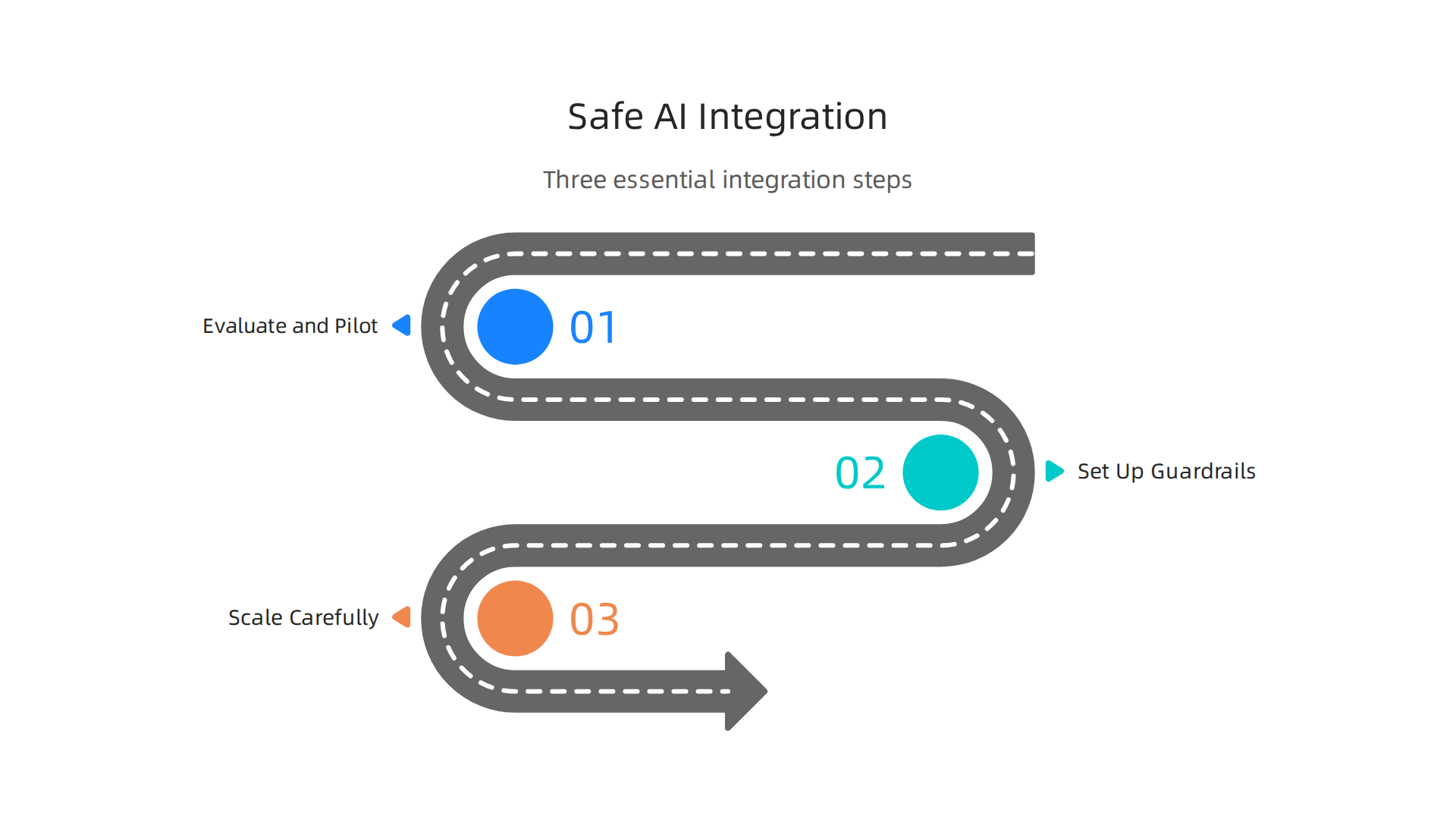
- Evaluate and Pilot: Don’t just jump in. Start by testing AI tools on small, low-risk projects. This helps you see what works without causing big problems. Pick tools that fit well with how your team already works. A good way to choose is to try the tool that solves your biggest problem for a couple of weeks, then decide if it’s a good fit, as suggested by Best AI Developer Tools 2026: What 400 Engineers Use.
- Set Up "Guardrails": Think of guardrails as safety rules for using AI. These rules help make sure AI code is secure, private, and follows company guidelines. This is very important because AI-generated code can sometimes hide new technical debt, as highlighted in the Latest Trends in Software Development in 2026. Best practices for Vibe Coding Best Practices: 9 Guardrails for 2026 suggest testing AI on low-risk projects first and having human review for all AI-generated code. Setting strong AI code guardrails is essential for safe software delivery.
- Scale Carefully: Once a tool works well in a small test, you can slowly bring it to more of the team. But keep checking how it’s used and if the rules are still working. It’s important to have policies for using AI to make sure it’s helpful and fair, helping your team gain an edge with compliant AI. You also need to keep a close eye on security, especially for Enterprise AI Coding Security Guardrails: Standards and Tools when using AI in the company.
By taking these steps, a product development engineer can use AI tools to make better products faster and more safely. This also helps other it engineer and engineering technology teams adapt to new ways of working.
Optimizing Workflows, Tools, and Metrics for Product-Focused Engineering Teams
As AI becomes more a part of how we build things, a product development engineer needs to think not just about new tech but also about how teams work together. The goal is to make sure everyone is pulling in the same direction, reducing problems, and building great products.
How Product Teams Work Together
In 2026, many engineering teams use different ways to organize their work. Here are a few common types:
- Feature Teams (or Squads): Imagine a small group of people, like a mini-company, that owns a specific part of a product. They handle everything from planning to building to fixing that feature. A product development engineer in a feature team works closely with designers, product managers, and other developers to create a specific user experience. This setup helps them move fast and stay focused on what users need.
- Platform Teams: These teams build and take care of the shared tools and services that other feature teams use. Think of them as building the roads and bridges for other teams to drive on. A product development engineer on a platform team creates important building blocks. This helps all other teams work faster and more reliably. It’s all about making sure the underlying engineering technology is strong and easy to use.
These team structures help define the skills for software developer roles, focusing on collaboration and product delivery.
Smart Tools and Checks for Smooth Work
To make things run smoothly, engineering essentials include using the right tools and checking how well things are working.
-
Tools for Building and Testing (CI/CD):
- Continuous Integration (CI): This means developers frequently add their new code to a main shared codebase. Then, automated tools quickly check if the new code works with the old code and if there are any basic errors. This helps catch problems early.
- Continuous Delivery (CD): After CI, CD means that code changes are automatically ready to be released to users. This makes sending out new features much faster and less risky. Best practices for CI/CD in 2026 focus on making these pipelines work reliably and quickly, often using tools like GitHub Actions or Tekton, as noted in a guide for platform engineering with Backstage. Having strong CI/CD practices is a top way to improve how you deliver software, helping to measure things like how often you deploy and how long changes take to go live, according to CI/CD Pipeline Design in 2026.
-
Watching How Things Work (Observability):
- Observability is like having a superpower to see inside your software and understand exactly what’s happening. This means collecting lots of information about your system’s performance, like how fast it responds or if it’s having errors. For example, in 2026, SRE best practices use observability to keep an eye on AI tasks and set clear goals for how well services should perform, as highlighted in a report on SRE best practices and platform engineering trends 2026. By setting up proper observability for engineering teams, you can quickly find and fix problems, reducing the chances of major issues.
Measuring Success
How do we know if our engineering teams are doing well? We use special measures called metrics. The DORA metrics are a popular way to do this:
- Deployment Frequency: How often does the team release new code? More often is usually better.
- Lead Time for Changes: How long does it take for a code change to go from someone writing it to it being live for users? Shorter times are better.
- Change Failure Rate: How often do new changes cause problems? Lower is better.
- Time to Restore Service: If something breaks, how quickly can we fix it? Faster is better.
Keeping an eye on these metrics helps a product development engineer and the entire it engineer team understand their progress and find ways to improve. Tracking these metrics is a key practice for strong CI/CD pipelines in 2026, as discussed in Top 15 CI/CD Metrics.
Staying on top of the latest in AI and software development is important for every product development engineer. For deeper insights and daily updates on AI and broader technology topics, you can get The AI Newsletter Worth Reading.
Hiring, Assessing, and Upskilling Product Development Engineers
After getting your engineering workflows and tools just right, the next big step is making sure you have the best people on your team. This means finding the right product development engineer, helping them grow, and making sure they understand both the technical side and what users really need.
Finding the Right Product Development Engineer
Hiring smart means looking for engineers who are not only good at coding but also think about the product and the people who will use it. In 2026, many companies use special interviews and tests to check for both skills.
- Practical Interviews and Assessments: Instead of just asking tricky questions, good interviews might ask candidates to solve a real problem or design a small part of a product. This shows how they think and work. For example, some companies look for how well a candidate can handle tasks like debugging and software development, which are key skills for engineers today, as shown in the Job Skills Report 2026.
- What Skills to Look For: A product development engineer needs a mix of technical know-how and "people" skills. Technical skills might include knowing specific programming languages or how to use tools for product design. On the other hand, soft skills like communication, solving problems, and being creative are also very important for a product engineer, according to a list of Product Engineer Skills For Your Resume. Knowing these things helps them work well in a team and with users. The Q3 2026 report on product management skills report: trends and data also shows how important product understanding is.
Growing Your Engineers into Product Leaders
Once you have a great team, you want to help them get even better. This is called upskilling, and it means giving engineers chances to learn and take on new roles.
- Career Development Plans: It’s helpful to have clear plans that show how an engineer can move up in the company. These plans might help a software developer learn more about product management or how to lead a team. Setting up clear levels for define developer levels build clear engineering career paths can guide engineers.
- Training and Learning: Offering courses and workshops can help engineers learn new engineering technology or improve their product thinking. For example, many engineers in 2026 are looking to improve their skills in areas like AI. Finding the right programs, such as choose online courses for career development that deliver real impact, can make a big difference in an engineer’s growth and ability to contribute to product success. Learning new things, especially about AI, is one of the most-requested hard skills for 2026.
- Mentorship: Pairing newer engineers with experienced product development engineers can help them learn faster. This hands-on guidance can show them how to think like a product person while still using their strong engineering essentials.
By focusing on how you hire and grow your product development engineer talent, your team can build amazing products that truly meet user needs.
Career Pathways: Leveling and Progression for Product Development Engineers
After helping your engineers grow their skills, the next step is to show them how they can move forward in their careers. For a product development engineer, there are many exciting paths they can take. It is like having a map for their future in the company, guiding them to new challenges and roles. These paths help engineers become even better at what they do and take on more important work.
Different Career Tracks for Engineers
A product development engineer can choose from several paths depending on what they are good at and what they like to do.
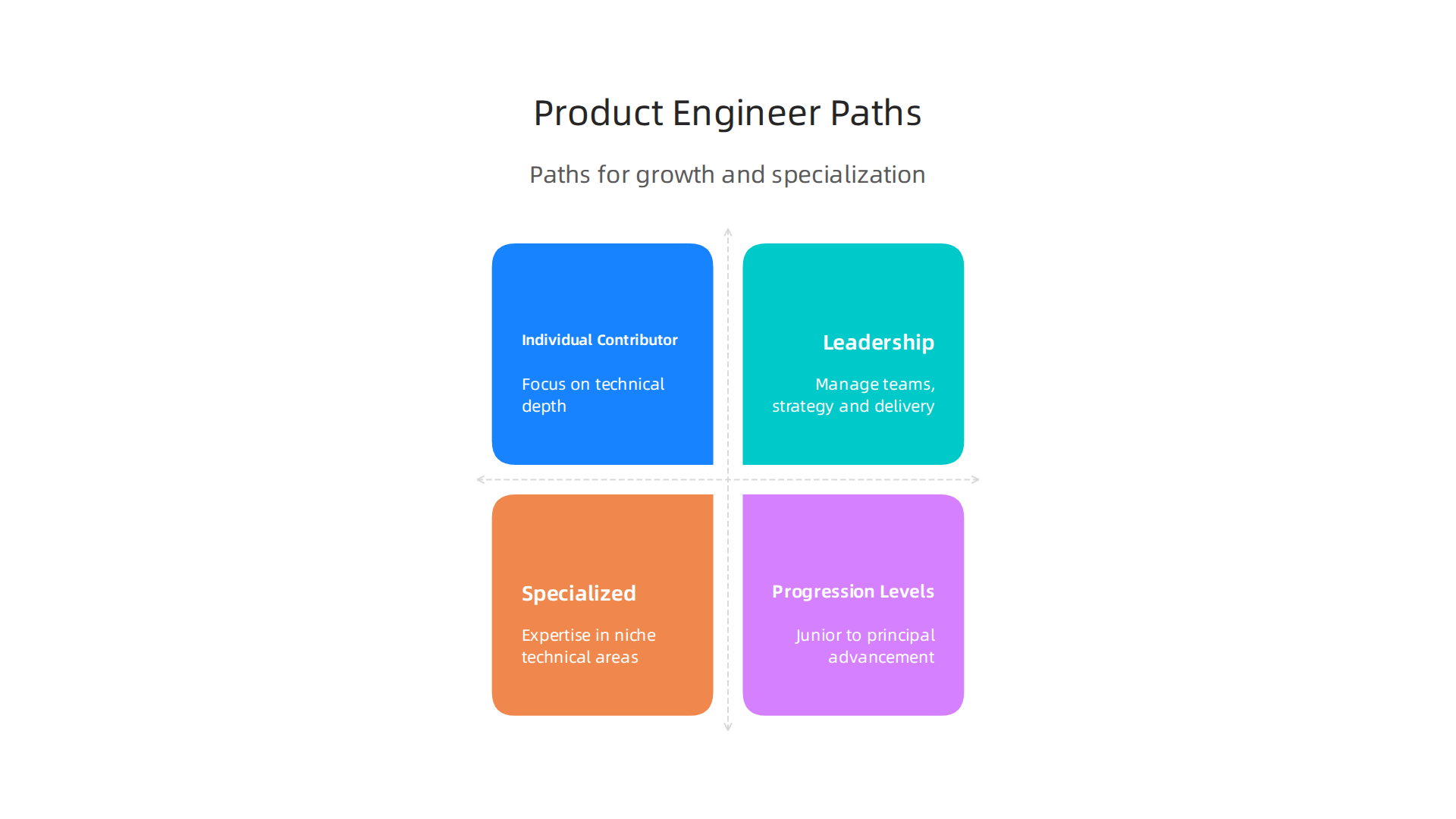
- Individual Contributor (IC) Path: This path is for engineers who love to focus on the technical side of things. They become experts in their field.
- Senior Product Development Engineer: This role means you are very skilled at creating new products and can guide others. You take on complex projects and help solve tough problems. A senior product development engineer often leads smaller parts of a project team, as noted in a description of VIEWING PRODUCT DEVELOPMENT AS A DECISION PRODUCTION SYSTEM.
- Principal Product Development Engineer: This is a top-level expert who sets the standard for engineering technology. They often work on the hardest problems and help shape the company’s product vision.
- Leadership Paths: For engineers who like to guide teams and manage projects.
- Technical Lead: This person helps a team of engineers with technical decisions, making sure the product is built correctly and efficiently. They still code but also spend time coaching.
- Product Engineering Manager: This role involves managing an entire team of product development engineers. They focus on people management, project schedules, and making sure the team has what it needs to succeed. Being a product development engineer can lead to roles like Product Development Specialist, which involves creating strategies and business plans for new products, according to the Career Path: Product Development Specialist.
- Specialized Paths: Some engineers become experts in very specific areas.
- Product-ML Engineer: With AI growing fast, some product development engineers choose to focus on machine learning. They use their engineering essentials to build smart features into products, combining product understanding with advanced AI skills. If you’re wondering about advanced engineering paths, you might explore how to master the different types of engineering for your 2026 career path.
Moving Up: When an Engineer is Ready
Knowing when an engineer is ready for a promotion means looking at a few things. It is not just about how long they have been there.
- Showing Readiness: An engineer might be ready when they consistently deliver great work, help their teammates, and take on extra tasks without being asked. They also start to think beyond their own work, considering the bigger picture of the product. Engineering competency standards highlight the importance of lifelong learning and critical thinking for future readiness, as seen in Preparing for the Future: Aligning Engineering Competency Standards.
- Cross-functional Leadership: This means an engineer can work well with people from other teams, like design or marketing, not just other engineers. They can explain technical ideas clearly and help everyone work towards the same product goal. This kind of leadership is key for a product development engineer to truly influence the product’s success.
Staying informed about the latest trends in technology, especially AI, is crucial for any engineer looking to grow. Get clear daily AI updates from The AI Newsletter Worth Reading.
After talking about how engineers can move up in their careers, it is also important to look at what new things are happening in the tech world. Staying updated with the latest trends helps a product development engineer keep their skills sharp for 2026 and beyond.

This way, they can continue to grow and be ready for whatever comes next.
Key Trends for Product Development Engineers
The world of building products is changing fast. Here are some big trends that every product development engineer should know about right now.
AI-Assisted Development
In 2026, Artificial Intelligence (AI) is a huge helper in building software. Most companies are now using AI tools in their development work. Actually, about 97% of software development organizations are actively using or looking into using AI in their daily tasks, according to a report on AI Reaches 97% of Software Development Organizations. This means that AI helps engineers write code faster, find problems, and even design new parts of a product. For a product development engineer, this means learning how to work with AI, not against it. It is about using these smart tools to do your job better. You can learn more about this in a guide on how to use AI for software development in 2026 a developers workflow guide.
Platform Engineering
Another big trend is called platform engineering. Think of it like building a special toolbox for all engineers in a company. This toolbox has everything they need to build and run software easily and quickly. Many companies are setting up dedicated platform engineering teams. This shift helps support new AI tools and makes sure products are built in a standard way. For example, 73% of platform engineering groups are already using AI-assisted tools in 2026, showing how important this area is, as noted in Platform Engineers Critical To AI Adoption In 2026 – Futurum Research. For a product development engineer, understanding these platforms is becoming a key skill, making the work smoother and more efficient.
Low-Code and Automation
Low-code tools let people build applications with very little coding. Automation means making computers do routine tasks by themselves. These tools help teams create simple apps or features much faster. They free up product development engineers to focus on harder, more creative problems. While low-code might seem simple, understanding how it fits into the bigger picture of engineering technology is important.
Keeping Your Skills Fresh
With these changes, continuous learning is more important than ever for a product development engineer. You want to keep your engineering essentials up to date.
- Learn AI basics: Understand how AI works and how to use AI tools in your daily tasks. This can greatly improve your skills for software developer roles.
- Understand platforms: Know how your company’s internal platforms work and how to use them to build and deliver products.
- Focus on problem-solving: Even with new tools, the core skill of solving problems remains key.
- Fight information overload: There’s so much to learn! Pick specific areas to focus on, like mastering AI skills with an AI powered learning platform in 2026, to make sure you learn what matters most without getting lost in too much information.
Companies should also invest in training and clear learning paths to help their IT engineer teams stay current. This way, everyone can keep up with the fast pace of innovation in 2026.
Summary
This article explains why clarifying the role and required skills of a product development engineer (PDE) matters for modern product teams. It maps the PDE’s place alongside product managers, software engineers, SREs and QA, and outlines the full delivery ownership PDEs often hold from idea to launch and improvement. The guide breaks down the technical toolkit—systems design, coding, testing and observability—plus product thinking skills like customer empathy, prioritization, and strategic vision. It shows how AI is changing workflows (prompt engineering, AI output review, guardrails) and offers practical steps to pilot and scale AI safely. You’ll also find recommendations on team structures, CI/CD practices, DORA metrics to measure success, and concrete hiring and upskilling approaches. Finally, the article lays out career tracks and key trends for 2026 so hiring managers and engineers can build the right capabilities and prepare for AI-driven product development.