
Define Developer Levels Build Clear Engineering Career Paths
· 20 min read

Why clear developer levels and role definitions matter now
In 2026, the world of software development moves very fast. Many companies, big and small, often struggle with how they define their teams. One big problem is not having clear developer levels. This means it’s hard to tell the difference between someone just starting out and someone with lots of experience.
When roles are not clear, it causes many headaches. For example, hiring new people becomes tough. If a company wants to hire an expert in AI, like an AI engineer, but doesn’t have a good description for that role, it’s hard to find the right person. People looking for work might not know if a job fits their skills, whether it’s for systems engineering entry level jobs or more advanced software engineering manager jobs.
This lack of clarity also hurts the people already working at a company. They might not understand how to grow their careers. How do they move from one level to the next? What skills do they need to learn to get a promotion? This confusion can make good people feel stuck and even leave their jobs.

This guide is here to help. Think of it as your own software engineer guidebook. We will look at clear ways to define developer levels and roles. We’ll share smart ideas and practical steps that leaders and teams can use. Our goal is to make career paths easy to see and understand, so everyone can succeed.
Staying updated on the latest tech trends, especially with AI changing so much, is a big part of growing your career. You can Get clear daily AI updates to help you keep up.

Understanding different developer levels also helps you see what kind of jobs are out there and what they pay, which is important for your career growth. For example, you can learn more about computer science jobs 2026 and what skills are most needed.
Overview: What ‘developer levels’ actually mean across organizations
So, what exactly do we mean by "developer levels"? Simply put, developer levels are like steps on a ladder that show how much experience, skill, and responsibility a software engineer has within a company. They help everyone understand where someone stands and what they are expected to do.
Different companies use different names for these levels, and what each level means can change a lot from one workplace to another. For example, a "Senior Software Engineer" at one company might do the same work as a "Lead Developer" at another. But no matter the name, these levels usually tell you three main things:
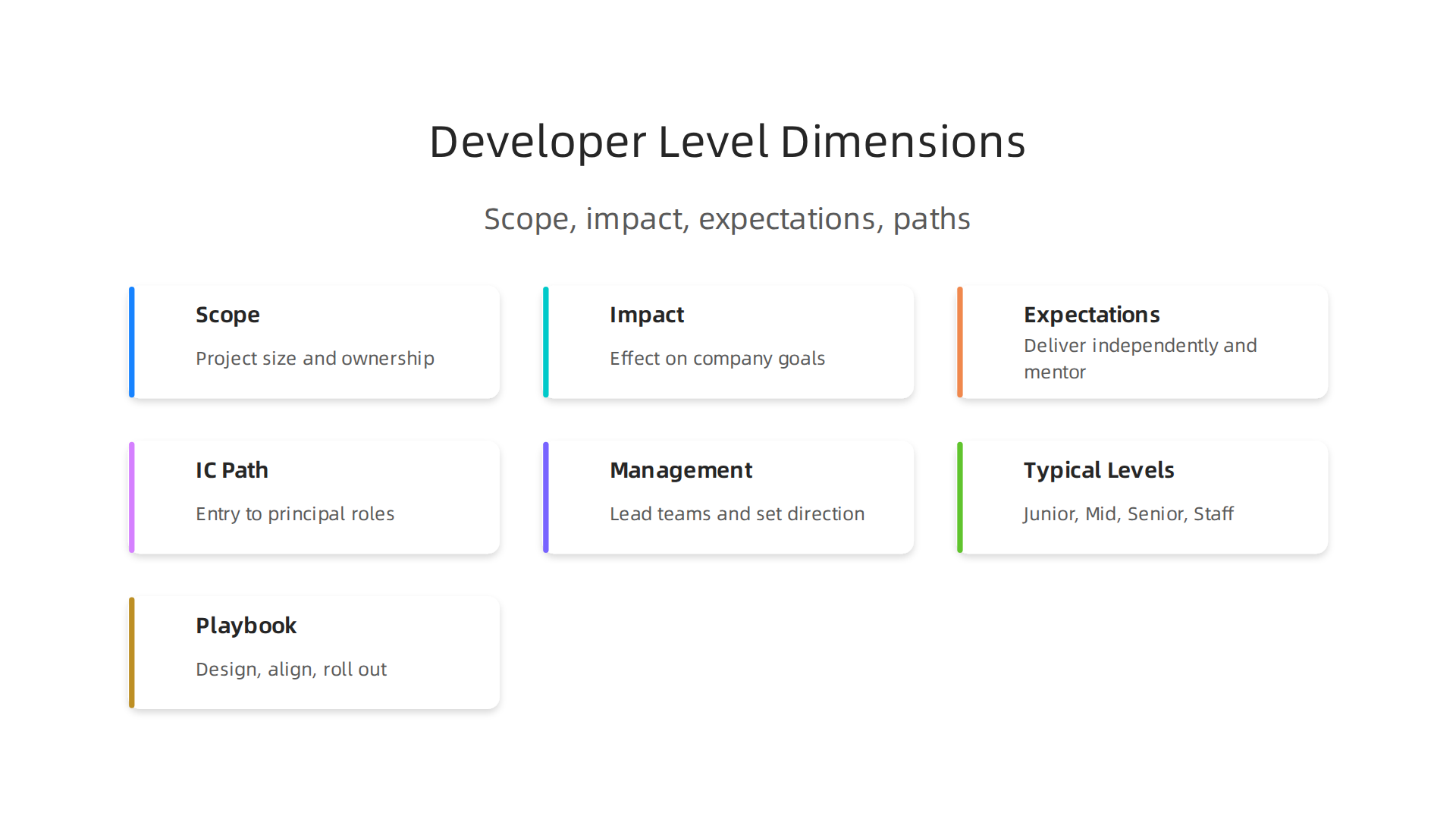
- Scope: How big or important are the projects this person works on? Do they handle a small part of one project, or do they guide many projects across different teams?
- Impact: How much does their work affect the company’s goals? Do they fix small bugs, or do they build new features that bring in many customers?
- Expectations: What is this person expected to achieve on their own, and how much do they help others? Are they learning new things, or are they teaching others and leading big efforts?
These levels are not just about how many years someone has worked. They are more about the quality and influence of their work. A modern approach to creating these ladders focuses on scope and impact, rather than just how long someone has been in the industry, as highlighted in current guidance for structuring Engineering Career Ladders in 2026: How to Structure Levels.
Generally, developer levels fall into two main paths:
-
Individual Contributor (IC) Tiers: This path is for people who want to focus on technical work and become really good at coding, design, or problem-solving without managing other people.
- Entry-Level: These are often called "Junior Developer" or "Software Engineer I." People in these roles are just starting. They learn the basics, work on smaller tasks, and need more guidance. This might include many systems engineering entry level jobs.
- Mid-Level: Often called "Software Engineer II" or "Developer." They can work more on their own, solve harder problems, and sometimes help guide junior team members.
- Senior-Level: These are "Senior Software Engineers" or "Lead Developers." They are experts. They lead projects, make important technical choices, and mentor many others. They might work on complex AI projects as an ai engineer.
- Staff/Principal/Distinguished: These are very experienced individual contributors. They often work on company-wide strategies, solve the hardest technical challenges, and influence how many teams work.
-
Management Distinctions: This path is for people who want to lead and grow teams.
- Team Lead/Manager: These roles, like software engineering manager jobs, focus on guiding people, helping them with their careers, and making sure projects are on track. They still understand the technical side but spend more time on people and project planning.
- Director/VP of Engineering: These are higher-level leaders who manage many teams or even whole departments. They set the overall technical direction for a large part of the company.
Understanding these different developer levels is key to seeing your own path forward. It’s like having a clear software engineer guidebook for your career. Knowing what skills are needed at each step can help you plan your learning, maybe even pursuing a 2026 software engineer certification to advance.
Defining clear rules for each step on the developer levels ladder is very important. It helps everyone understand what is expected. To do this well, companies look at more than just how many years someone has been working. They focus on what a person can do and what they achieve.
What Are Competencies?
Competencies are the skills, knowledge, and behaviors that someone needs to do their job successfully. Think of them as a set of superpowers needed for each developer level. For software engineers, a good framework covers technical skills, problem-solving, teamwork, and how they lead or help others.

Many studies focus on creating these helpful guides for software engineers, as seen in various competency frameworks for software engineers developed over time.
Input-Driven vs. Outcome-Driven Criteria
When we define these levels, we can look at two main types of criteria:
- Input-Driven Criteria: These are things like "how many years of experience does someone have?" or "what skills do they know?" While these are part of the picture, they don’t tell the whole story. A person might have many years of experience but not always deliver the best results.
- Outcome-Driven Criteria: These focus on what someone achieves and the impact they make. This is often more useful. It asks:
- How big is the problem they can solve?
- How much does their work help the company’s goals?
- How do they improve the team or product?
For example, it’s not just about knowing a programming language. It’s about how you use that language to build a useful part of an app, fix a big bug, or make a system faster. This approach helps create a Software Engineer Skill Matrix & Competency Framework that truly shows growth.
Examples of Behaviors and Deliverables at Each Level
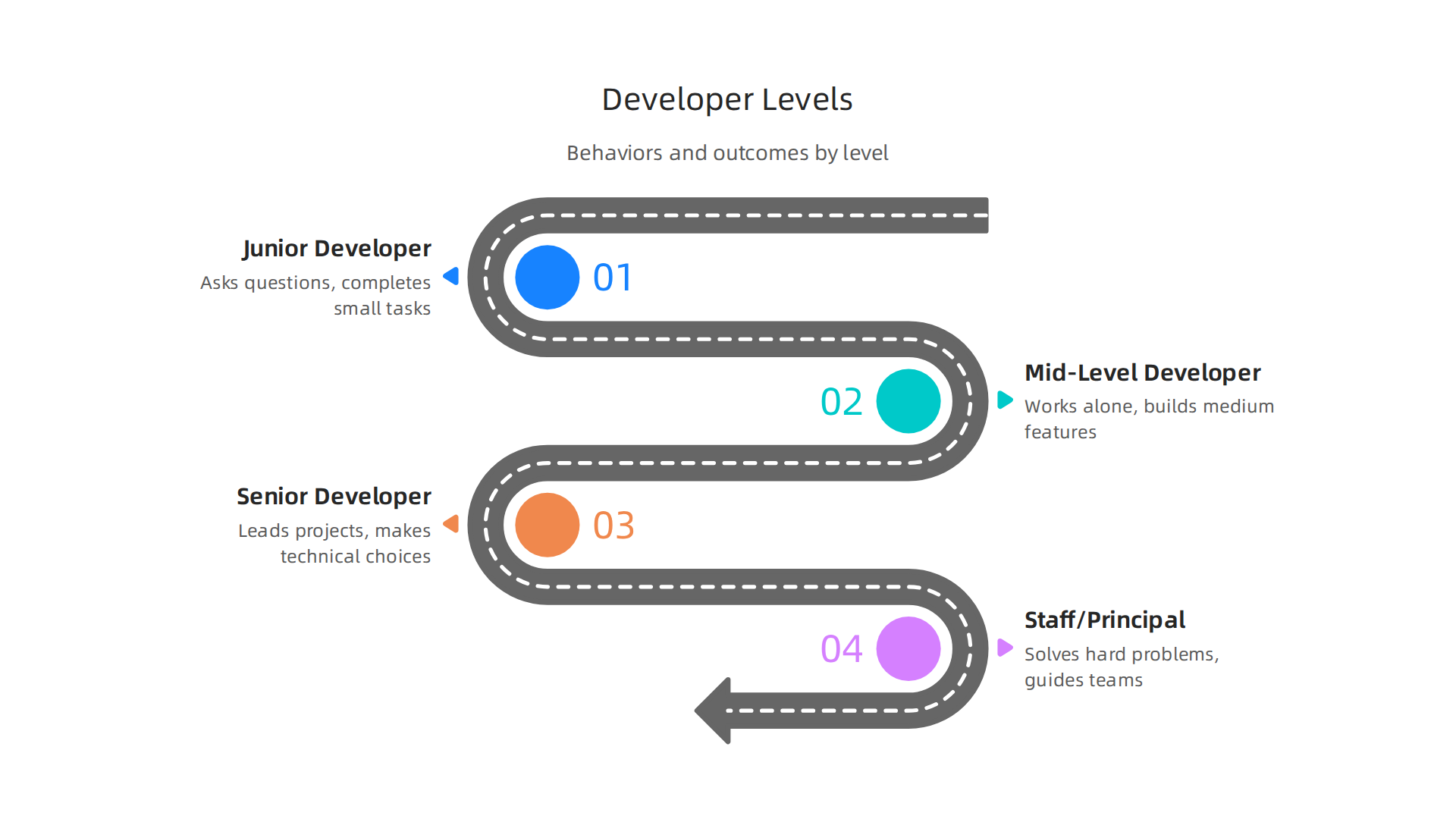
Let’s look at what these different developer levels might look like in action, focusing on outcomes:
-
Junior Developer (Entry-Level):
- Behaviors: Asks good questions, learns quickly, follows instructions carefully.
- Outcomes: Successfully completes small, clear tasks like adding a button or fixing a minor bug. Writes code that follows team rules.
- Example: A junior engineer might work on a part of a user login system after being given clear steps.
-
Mid-Level Developer:
- Behaviors: Works well on their own, helps new team members, finds simple solutions to problems.
- Outcomes: Builds medium-sized features from start to finish. Can fix tougher bugs without much help. Makes code easier to understand and use.
- Example: This developer could create a new feature for sharing photos within an app, managing the different parts involved. They might also help new folks with mastering the software development lifecycle models.
-
Senior Developer:
- Behaviors: Leads small projects, helps other developers grow, thinks about how their work affects the whole product.
- Outcomes: Leads the creation of major features or parts of systems. Makes important technical choices that help the team. Improves how the whole team builds software.
- Example: A senior engineer might design and build a new data storage system for an app, making sure it’s fast and reliable for many users.
-
Staff/Principal Developer:
- Behaviors: Solves very hard problems that no one else can, guides many teams, sets technical goals for the whole company.
- Outcomes: Designs complex systems that affect the whole company. Introduces new technologies or ways of working that bring big benefits. Helps shape the future of the product.
- Example: A principal developer might figure out how to use new AI tools to make the company’s main product much smarter, affecting how many customers use it every day. This kind of work is vital for any team dealing with AI software development in 2026.
By defining developer levels with clear competencies and outcome-driven examples, companies can help engineers understand how to grow and what to aim for. It makes career paths transparent and fair.
Staying up to date on all things AI and tech is crucial for your growth. Get clear daily AI updates. You’ll want to read The AI Newsletter Worth Reading.
Building clear developer levels needs good tools. These tools help measure what engineers can do and how they grow. This is where competency frameworks, like templates and rubrics, become very useful. They map out the skills and behaviors expected at each level.
Competency frameworks: templates, rubrics, and assessment workflows
A competency framework acts like a special guidebook for different developer levels. It helps companies understand the essential skills software professionals need to do their jobs well. Think of it as a checklist that shows what an engineer should be able to do at each step of their career. Many experts study and create these kinds of guides to help teams grow, identifying the essential competencies of software professionals.
Making a Rubric for Developer Levels
A rubric is a score card that helps you rate how well someone meets the expectations for their developer level. When you build one, you look at key areas:
- Technical Skills: This includes how good someone is at coding, understanding different programming languages, and using tools. For an AI engineer, this might mean knowing about machine learning models.
- System Thinking: This is about seeing the bigger picture. Can the engineer understand how their code fits into the whole product? Can they think about how different parts of a system work together? This is especially important for roles like those in systems engineering entry level jobs.
- Collaboration: How well do they work with others? Can they share ideas, listen to feedback, and help their teammates? Teamwork is a big part of successful projects.
- Leadership: This isn’t just for managers. It’s about how engineers take charge of tasks, mentor others, and guide projects, which is a key part of many software engineering manager jobs.
These areas change as developers move up the career ladder. What’s expected from a junior developer will be different from a senior developer.
Good Ways to Check Skills
Once you have your rubric, you need ways to use it fairly. Here are some good methods:
- Calibration Interviews: This is when a group of managers or senior engineers talk about an employee’s performance. They make sure everyone is using the rubric the same way. This helps avoid unfair decisions and ensures everyone agrees on an employee’s level.
- Multi-Rater Feedback: Instead of just one manager giving feedback, multiple people give input. This can include teammates, other managers, and even people outside the team who work with the engineer. It gives a full picture of someone’s work and behaviors.
- Evidence Artifacts: This means looking at real examples of an engineer’s work. It could be code they wrote, designs they created, presentations they gave, or notes from meetings where they solved a problem. This shows what they actually delivered, not just what they say they did.
Using these steps helps companies give clear feedback and support engineers as they grow. It also helps them decide who is ready for new challenges and higher developer levels. In 2026, companies are focusing more on clear training and growth paths, with many employees desiring training in hard skills, according to Essential Employee Training Statistics for 2026. This makes these frameworks even more vital.
Building clear guidelines for what developers need to know helps a lot when hiring new people or deciding who gets promoted.

It’s like having a clear map that everyone can follow. These competency frameworks, which we talked about before, are very useful for these big steps in a software professional’s career.
Hiring, Interviewing, and Promotions Aligned to Levels
When a company wants to hire new engineers, they use these frameworks to write job ads that clearly say what kind of skills and experience are needed for each developer level. This means job descriptions aren’t vague. For example, a posting for an entry-level position will list different expectations than one for a senior engineer. In 2026, companies are looking for ways to hire smarter and offer good career paths to attract top talent, as seen in new engineering hiring frameworks described by Randstad USA.
During interviews, companies use level-specific scorecards. These scorecards help interviewers ask the right questions and rate candidates fairly against the skills defined for each role. This helps make sure everyone gets a fair chance. For specific roles like an AI engineer, the scorecard would focus on AI-related skills.
How Promotions Work
Moving up to a higher developer level, or getting a promotion, should also be very clear. It’s not just about how long you’ve been at a company. It’s about showing that you can do the work of the next level. This means you need objective evidence. This evidence could be:
- Project Work: Showing big projects you’ve led or important code you’ve written.
- Mentoring: Helping junior team members learn and grow.
- Problem Solving: How you’ve tackled tough technical challenges.
A good promotion process asks for a "promotion packet." This packet includes a summary of your achievements and proof for each area of the career ladder, along with feedback from your coworkers and manager. This helps show you’re ready for new challenges, as explained on the SmithSpektrum Blog.
One common problem is when promotion decisions are not clear or seem unfair. To avoid this, many companies use special groups called "promotion committees." These committees review all the information and decide fairly. They also hold "calibration meetings," similar to those used for performance reviews, to make sure everyone agrees on what it takes to get promoted. These meetings help ensure that different teams apply the same rules for promotion across the company, defining levels by impact rather than just years of experience, according to insights on engineering career ladders in 2026. For those looking to advance their career in this fast-changing field, continuous learning is key.
Get clear daily AI updates from The AI Newsletter Worth Reading.
When we talk about moving up the career ladder or getting hired, how much money someone makes is a big part of the picture. This is where looking at salary information for different developer levels comes in handy. Companies want to pay fair wages that match what other businesses are paying for similar jobs. This helps them attract good people and keep their best workers.
Understanding Salary Reports
Looking at salary reports can be tricky. You’ll often see numbers like "ranges" and "medians." A salary "range" shows the lowest to the highest pay for a job, like $80,000 to $120,000. The "median" is the middle number in that range. For example, the median base salary for software roles in the U.S. was around $132,000 in 2026, according to one Developer Salary Guide 2026.
It’s good to look at both the range and the median to get a full picture.
Where a person works also changes how much they earn. Pay can be very different between a big city and a smaller town. Also, remote jobs can have different pay scales compared to office jobs. Many reports, like the 2026 Remote Developer Salary Benchmark Report, now give special attention to remote salaries. Different types of jobs within software development also pay differently. For instance, an AI engineer might earn more than a general software engineer because of specialized skills.
Bringing Market Data into Your Company’s Pay Plan
It’s important to use this market data smartly. Companies should use these benchmarks to make sure their own pay scales for different developer levels are fair. If a company’s internal pay is too low compared to the market, it might be hard to hire and keep good talent.
A common problem to avoid is "salary compression." This happens when new hires get paid almost as much as people who have been with the company for a long time and have more experience. This can make experienced workers feel undervalued. By using market data responsibly and thinking about what each developer level really means, companies can create clear, fair pay structures that help everyone grow.
When we talk about what each developer level means, especially regarding pay, it’s a big deal for companies and workers. But there’s another huge change happening right now: Artificial Intelligence (AI) and the tools it brings. These new tools are changing how we work and what we expect from software developers at every stage of their careers.
AI, tooling, and the evolving expectations for each level
In 2026, AI-powered coding tools have truly changed the game. They help developers do their jobs faster, but they also create a gap between those who use them well and those who don’t. These tools are like smart helpers that can write small parts of code or automate tasks that take a lot of time. This means human developers can focus more on the bigger picture, like design, how the system works, and making sure everything is good quality, according to insights on AI‑Assisted Coding Assistants in 2026.
Actually, the difference in how much work teams can get done with AI compared to teams without AI has grown quite a lot. One study showed this gap widened a lot from 2023 to 2025, which really highlights the impact of AI Coding Efficiency. So, what does this mean for different developer levels?
New Skills for Modern Developers
Now, it’s not just about writing code from scratch. Developers need new skills:

- Using AI tools well: This means knowing how to get the best results from AI helpers. You need to know what questions to ask and how to guide the AI. This is sometimes called "prompt engineering." If you want to learn more about this, you can check out a developer guide to writing better AI prompts.
- Checking AI’s work: Even though AI can write code, it’s still up to the human developer to make sure the code is correct, safe, and works as it should. This is very important.
- Designing with AI in mind: Thinking about how AI tools can fit into the overall plan of a project, from start to finish.
This shift affects every developer, from those just starting in systems engineering entry level jobs to experienced software engineering manager jobs. Junior developers might use AI to learn faster and write code more quickly, but they still need guidance to understand what the AI is doing. More senior developers and AI engineer roles need to know how to set up AI systems, manage AI-assisted projects, and teach others how to use these tools responsibly.
For companies, this means when they look at someone’s skills, they’re not just looking at how much code they can write on their own. They’re also looking at how well a person can work with AI to create better software. It’s about being smart and efficient.
Want to keep up with how AI is changing the tech world every day?
The AI Newsletter Worth Reading delivers clear, daily AI updates straight to your inbox.
To make sure developers are smart and efficient, companies need a clear plan for how people grow in their jobs. This is where a career ladder, sometimes called a competency framework, comes in. It’s like a map that shows different developer levels and what skills are needed at each step.
Practical playbook: building, rolling out, and evolving a career ladder
Building a good career ladder is a bit like building software itself. It needs careful planning, testing, and changes over time. Here’s a simple playbook for creating and using one effectively in 2026:
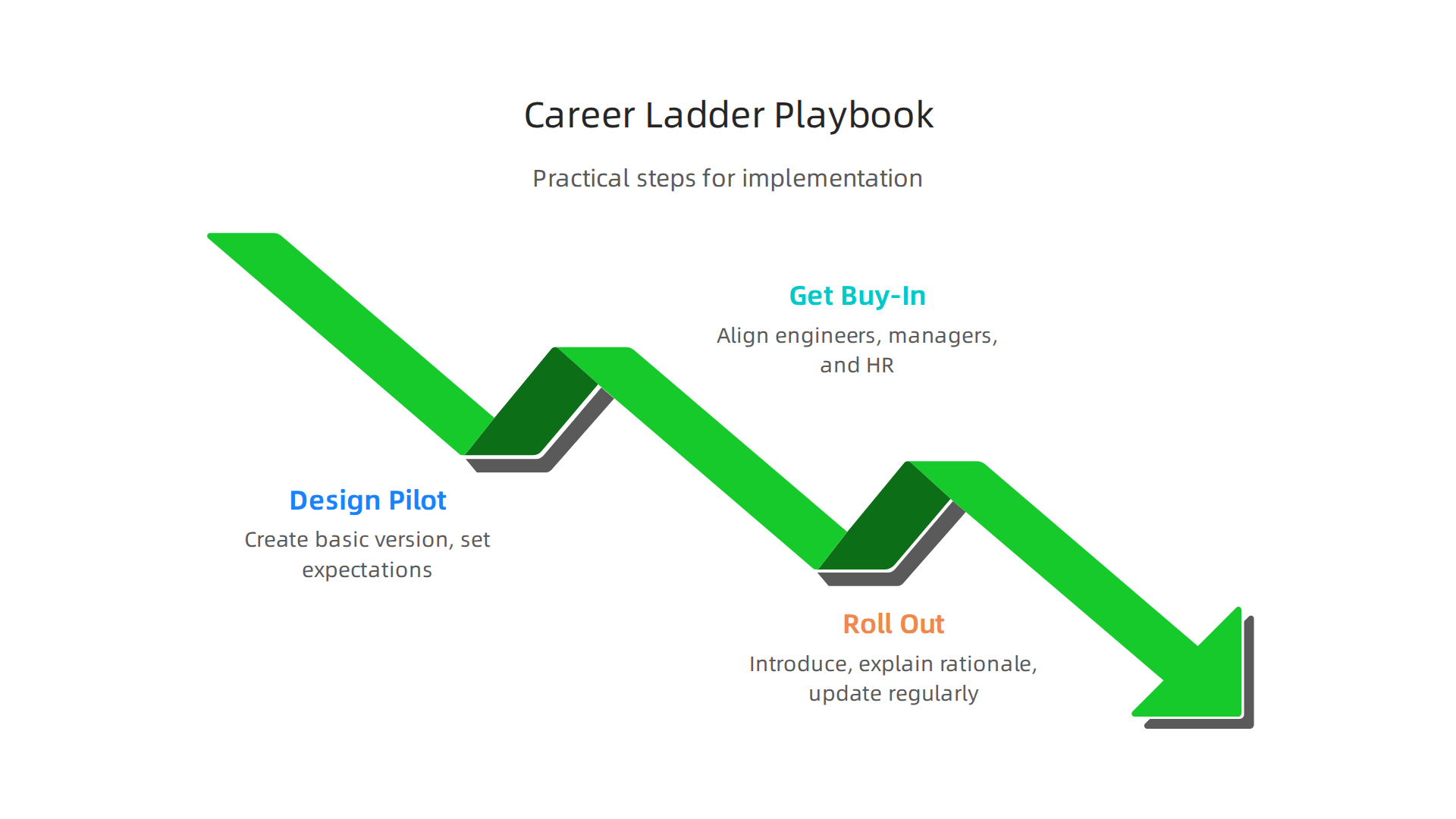
Step 1: Design a Pilot Framework
First, create a basic version of your career ladder. This framework should clearly define what’s expected at different developer levels, from those in systems engineering entry level jobs to senior roles like software engineering manager jobs and even roles for an AI engineer. It’s not just about years of experience, but about the impact and scope of their work. Think about key skills, how they solve problems, and how they help the team. You can look at different ideas for these frameworks to get started, as many studies have explored various types of competence frameworks for software engineers.
Step 2: Get Everyone on Board
This step is super important. You need to talk to engineers, their managers, and HR. Ask them what they think about the pilot framework. When people feel like they’ve had a say, they’re more likely to accept the changes. Actually, it’s best if the teams help define the levels themselves, so they feel the ladder is for them, not just something told to them by others. This helps reduce doubts and prevents people from trying to "game" the system by just doing the bare minimum instead of truly growing.
Step 3: Roll Out and Review
Once you have a solid career ladder, introduce it to everyone. Explain clearly why this ladder is being put in place and how it will help them grow their careers. Regular check-ins are key. Companies should have a plan for how often they will look at the ladder and make updates, maybe once or twice a year. This makes sure the ladder stays useful as technology, like AI, keeps changing how we work. Learning paths like those in a software engineer guidebook can also be tied into these career ladders to provide clear guidance. This helps ensure your team continuously improves their master developer skills.
Summary
This article explains why clear developer levels and role definitions are essential in 2026’s fast-moving software world, and it gives a practical guide for building them. It defines developer levels in terms of scope, impact and expectations rather than years, contrasts individual contributor and management tracks, and shows concrete behaviors and deliverables for each stage from junior to principal. The guide argues for outcome‑driven competency frameworks, rubrics, multi‑rater assessments and evidence artifacts to make promotions and hiring fairer. It also covers how to align pay to market data, how AI and new tooling change skill expectations at every level, and offers a step‑by‑step playbook for piloting, rolling out and updating a career ladder so teams can hire better, keep talent, and support real career growth.