
AI Policy for Developers Gain an Edge with Compliant AI
· 22 min read

Why AI policy matters for developers, product teams, and engineering leaders
Imagine a world where powerful AI tools are everywhere. It feels like just yesterday people were asking, "when did AI become popular?" Now, in 2026, AI is built into almost everything we use, from simple apps to complex systems that help make big decisions. Companies like Tencent AI are pushing boundaries with new AI applications all the time. But with all this amazing growth comes a new set of rules: AI policy.
For developers, product teams, and engineering leaders, this means a lot. The speed at which AI can do new things is mind-blowing. At the same time, governments and other groups are creating rules about how AI should be used. This mix of fast change and new rules can make things tricky. Your team might face new challenges in how you build software, how you use data, and how you make sure your products are fair and safe. This means new tasks for staying on the right side of the law and keeping your work running smoothly.
But here’s the good news: understanding these AI policy rules isn’t just about avoiding trouble. It’s actually a chance to get ahead.

When your product team knows about the different levels of risk for AI models and follows the best ways to manage them, it can make your products much better and more trusted. For example, knowing about different AI Model Governance Frameworks for Enterprise Teams in May 2026 can help you plan your projects smarter.
By being thoughtful about AI policy, you can design products that are not only powerful but also trustworthy and fair. This gives you a big advantage over competitors. It helps you choose the best AI platforms to build your tools and shows your users that you care about their safety and privacy. Embracing these rules now can turn what seems like a hurdle into a superpower for your engineering team. It’s all about making sure your AI ethics for software teams are solid.
Want to keep up with the fast-changing world of AI and its policies? Get clear daily AI updates from The AI Newsletter Worth Reading.
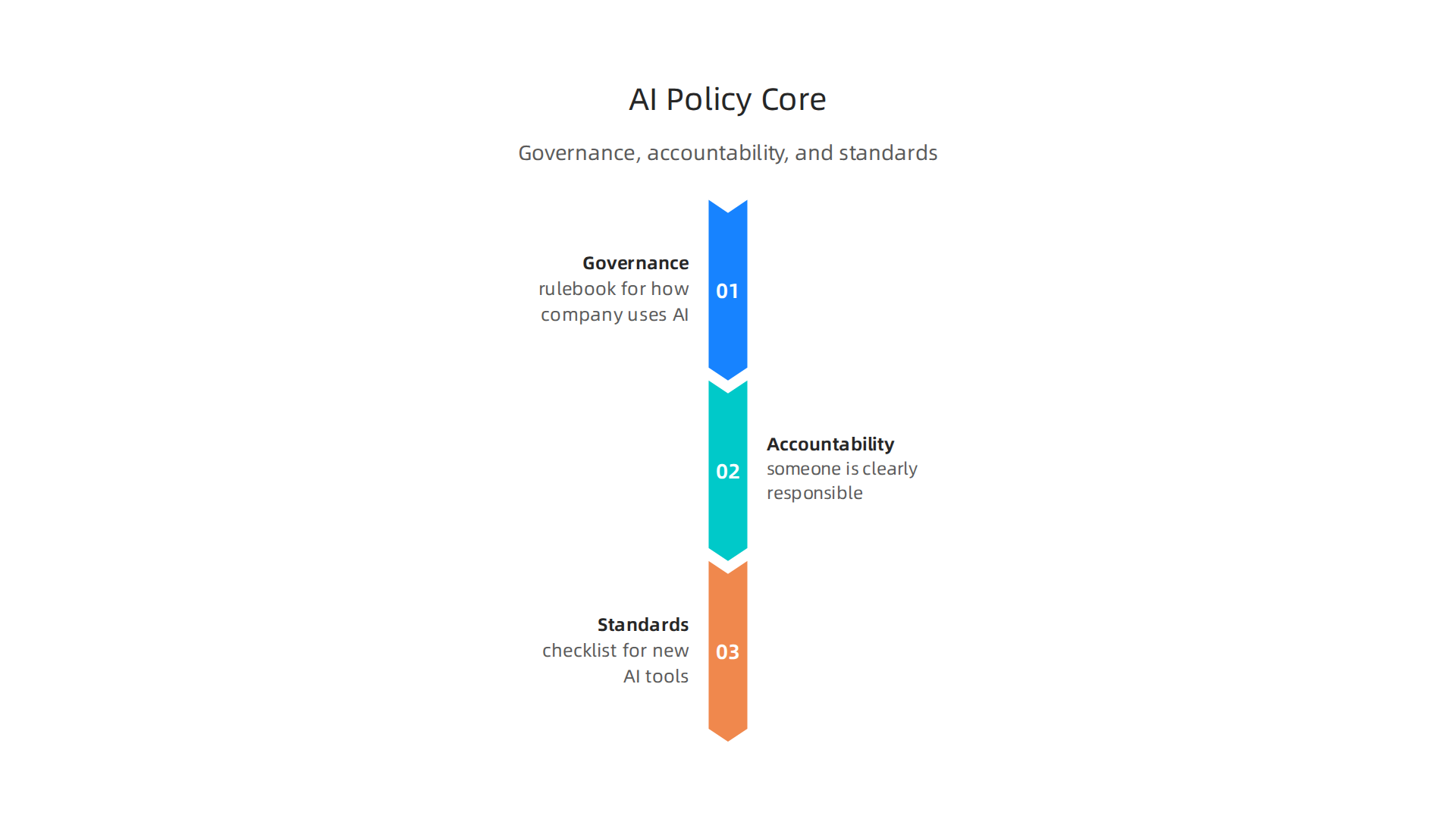
Understanding AI policy can indeed be a superpower for your engineering team. This is because modern AI policy is built on a few key parts: governance, accountability, and standards.
Let’s look at what these mean for teams working with AI in 2026.
Core components of modern AI policy: governance, accountability, and standards
Governance is like the rulebook for how a company uses AI. It’s about setting up smart ways to make decisions and guide how AI applications are built and used. This often starts with internal committees. These are groups of people inside a company who make sure AI is used in a safe and fair way.
A big part of governance is having an AI model inventory. Think of this as a detailed list of every AI tool your company uses, whether you built it or bought it. This list usually shows what each AI does, where it’s used, and who is responsible for it. It’s important for teams to keep this list up-to-date.
Another key part is risk tiers. Companies sort their AI tools into different groups based on how much harm they could cause if something went wrong. For example, an AI that suggests which song to listen to might be "low-risk." But an AI that helps decide who gets a loan or a job is "high-risk." These tiers help teams know how careful they need to be with each AI system. This kind of careful sorting helps guide how teams handle each AI application, making sure more critical AI applications get more attention and checks. In fact, knowing who owns what and how much risk an AI system carries is a big part of good AI management today AI Governance Practices 2026: From Policy to Evidence.
Next, we have accountability. This means making sure that someone is clearly responsible for each AI tool. For your engineering team, this involves:
- Assigning clear roles: For every AI system, there should be a business owner and a technical owner. These people are in charge of making sure the AI works right and follows all the rules.
- Doing audits: This is like a regular check-up for the AI. It makes sure the AI is still working as it should, treating everyone fairly, and hasn’t started doing anything unexpected.
- Keeping good records: This is called documentation. It means writing down how the AI was built, what data it uses, how it was tested, and any changes made over time. This helps everyone understand the AI and proves it meets all the standards.
These steps help build trust in your AI applications. When you have strong governance and clear accountability, you can also set standards for all your AI projects. These standards are like a checklist that all new AI tools must meet before they can be used. This helps ensure quality and safety across all your AI developments. Learning to make sure your AI applications are safe and work as planned is a critical skill for developers in 2026, and you can learn more about mastering AI response design evaluation and safe implementation to help your team.
Making sure your AI applications are safe and work well is definitely a critical skill. But it’s not just about what your team does. There are also rules and laws from different places around the world that affect how you build and use AI. This is called ai policy, and understanding it is key in 2026.
Regulatory landscape overview (jurisdictions, timelines, and what to watch in 2026)
The world’s approach to AI policy isn’t one-size-fits-all. In fact, many countries and regions have their own ideas about how to best control AI.

This means that what’s okay to do with an AI tool in one place might not be in another. Globally, AI governance has split into different ways of thinking about these rules, making it important for teams to know where their AI applications will be used Global Fragmentation of AI Governance and Regulation.
Let’s look at the main differences:
- The European Union (EU): The EU has a very thorough law called the EU AI Act. This law is based on how much risk an AI system might cause. It sorts AI into different groups:
*   **Unacceptable risk:** These AI systems are banned completely, like social scoring tools.
*   **High-risk:** These are AI applications that could greatly affect people's lives, such as those used for hiring, giving loans, or in critical infrastructure. They have strict rules and need lots of checks. For instance, an AI inventory system is crucial for meeting EU AI Act rules [AI Governance for the EU AI Act](https://aiact-navigator.com/ai-governance). Many of these high-risk rules start being fully enforced in August 2026 [US–EU AI Governance Divergence: Enterprise Compliance Guide](https://labs.cloudsecurityalliance.org/wp-content/uploads/2026/04/CSA_research_note_us_eu_ai_governance_divergence_20260406-csa-styled.pdf).
*   **Limited risk:** These systems just need to tell users that they are interacting with AI, like chatbots.
*   **Minimal risk:** Most AI tools fall into this group, and they have very few rules. The EU's way of doing things aims to make sure AI is safe across many different industries [The rapid deployment of Artificial Intelligence (AI) across ... - Steptoe](https://www.steptoe.com/a/web/mdWt44Hg7mmGXDAcLsAr7n/comparative-table-on-approaches-to-ai-regulation-in-the-eu-us-and-uk-2.pdf).
-
The United States (US): The US takes a different path. Instead of one big federal law for AI, it uses rules that already exist and gives advice that companies can choose to follow. There’s no single federal law for AI in the US AI Regulation Compared: EU, US, UK, China (2026). Some states also have their own AI rules, which can make things a bit tricky to follow Lessons from State and International Frontier AI Regulation.
-
The United Kingdom (UK): The UK has a lighter touch when it comes to AI policy. It lets different industry regulators handle AI rules for their specific areas, rather than creating a big new law The United Kingdom and artificial intelligence.
For your engineering team, these different rules mean certain things are very important:
- Transparency: You might need to show how your AI works, especially if it’s a high-risk system. This helps people understand and trust the AI’s decisions.
- Data Use: Rules about what data you can collect, how you store it, and how you use it are becoming stricter. You need to make sure your AI applications handle data responsibly.
- High-Risk Classifications: If your AI falls into a "high-risk" category, especially under the EU AI Act, you’ll have many more hoops to jump through. This includes careful testing, human oversight, and making sure the AI is fair.
In 2026, many of these global AI policy rules are already being put into action. For example, parts of the EU AI Act started in August 2024, with high-risk system rules becoming fully applicable in August 2026 AI Act | Shaping Europe’s digital future. Keeping up with these changes is vital for anyone creating new ai applications.
Understanding and building AI ethics for software teams is no longer just a good idea; it’s a requirement to meet these global standards. For developers, staying informed about these changes is crucial for building compliant and trusted AI systems.
To keep up with the fast-changing world of AI and its policies, consider subscribing to The AI Newsletter Worth Reading.
Now, let’s look at how new kinds of AI tools are changing the game for software teams. These tools are powerful, but they also bring new risks that developers need to understand. How we build and use these ai applications directly connects to all the ai policy rules we just talked about.
Emerging applications and developer implications: AI-assisted coding, LLM integrations, and model ops
In 2026, many new ai applications are helping developers work faster. These include AI tools that help write code, systems that use Large Language Models (LLMs) to understand and create text, and even smart "agents" that can do tasks on their own. While these tools offer big benefits, they also change how we think about safety and security.
For example, AI-assisted coding tools can write parts of your software very quickly. But this speed comes with new risks. Experts warn that AI coding assistants are much riskier than traditional coding methods in 2026 AI Coding Assistants in 2026: 4× Faster, 10× Riskier and …. This means that every piece of code an AI helps you write must be checked very carefully.
When teams use LLMs, they face challenges like "prompt injection." This happens when someone tricks the AI with a clever input, making it do something it shouldn’t. LLM security risks in 2026 also include things like leaking sensitive information and letting the AI do too much on its own LLM security risks in 2026: prompt injection, MCP and agent abuse. Autonomous agents, which are AI programs that can act without constant human input, can make these problems even bigger if not managed well. It is important for developers to adopt these tools effectively and safely, as explained in our guide on effective LLM AI adoption for developers.
These new AI patterns bring several important engineering challenges for teams:
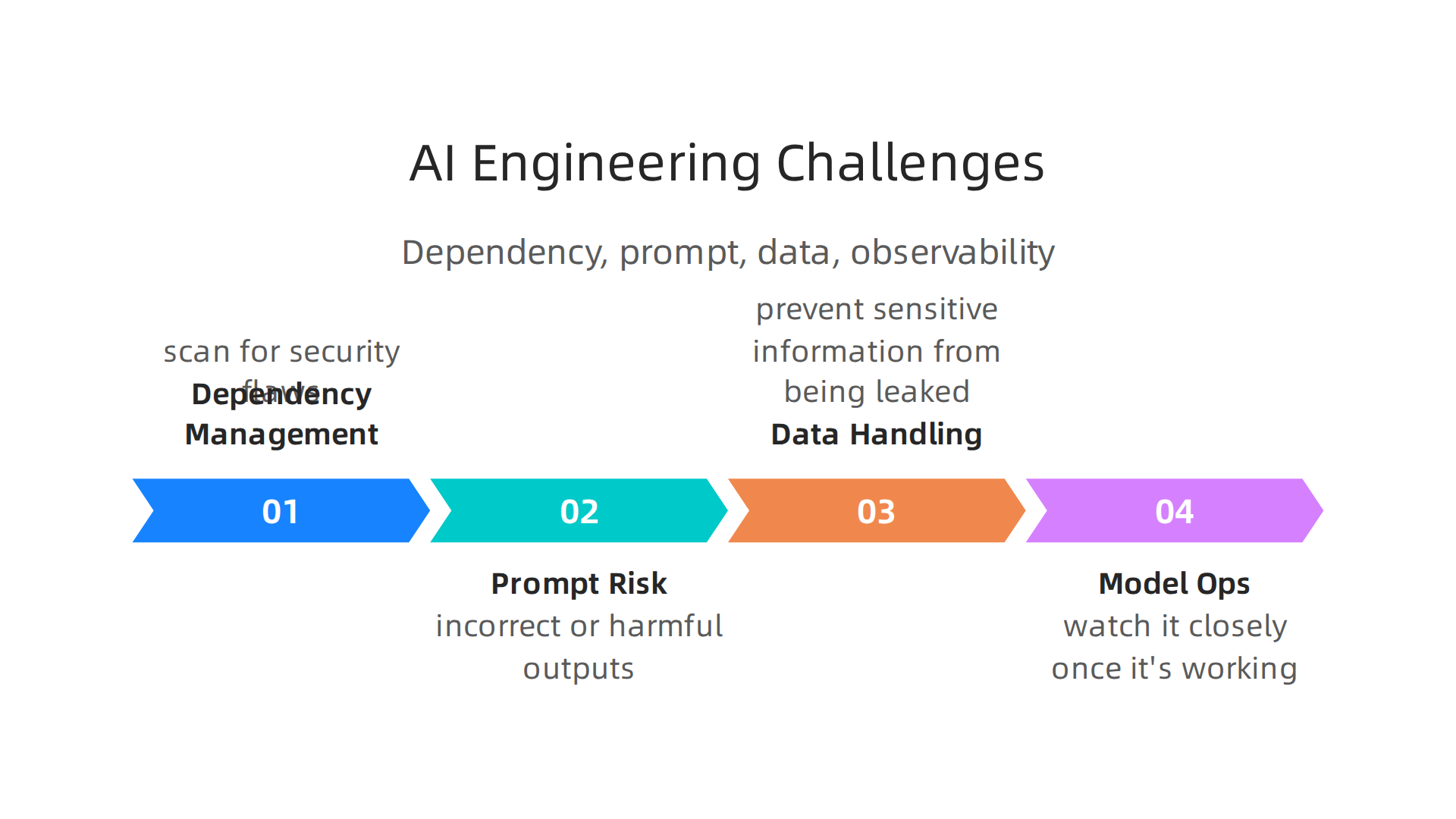
- Dependency Management: When an AI helps write code, it might bring in other software parts (dependencies) that have their own security issues. You must treat all AI-generated code as if it’s from an untrusted source. This means using special tools to scan for security flaws and check all the code dependencies it adds. This is a critical step for any AI for software development project.
- Prompt Risk: The way you ask an AI a question (the "prompt") can greatly affect its answer. A bad prompt could lead to incorrect or harmful AI outputs. Developers need to learn how to write good prompts and set up systems that can catch bad ones before they cause problems. Learning how to write good prompts is key, as highlighted in our article on Google prompt engineering.
- Data Handling: AI systems often need a lot of data. Making sure this data is handled safely and privately is a big deal. Teams must put rules in place to prevent sensitive information from being leaked and to make sure only authorized people can see certain data. This includes setting up strong audit logs to track all AI actions AI Coding Assistants Security: Best Practices Guide.
- Observability (Model Ops): It’s not enough to just build an AI model. You need to watch it closely once it’s working. This means tracking how well the AI is performing, if it’s making fair decisions, and if it’s acting strangely over time. Tools and practices for "Model Operations" or "MLOps" help teams keep an eye on their AI models, ensuring they keep working correctly and safely after they are deployed MLOps in 2026 Best Practices. This helps meet
ai policyrequirements for transparency and accountability.
In short, while best ai platforms and tools are making development easier, they also demand a new level of care and planning from engineering teams. Keeping these risks in mind helps ensure your AI applications are not only powerful but also safe and follow the rules.
As we saw, using new AI tools brings both great power and important risks. To make sure our ai applications are safe and reliable, we need to put strong controls in place. This includes steps for safety, privacy, explainability, and thorough testing. By doing this, teams can meet ai policy rules and build trustworthy systems.
Making AI Safe and Private
One key step is to treat any code or content made by AI as if it’s new and needs to be checked. Think of it like a new team member’s first work; you’d review it closely. This means using special tools to scan for security problems and checking all the hidden software parts (dependencies) that the AI might add. Experts say that security teams should review AI-generated code just like any other production code, requiring proper tests and approvals before it’s used broadly Technical Breakdown.
Here are some practical controls:
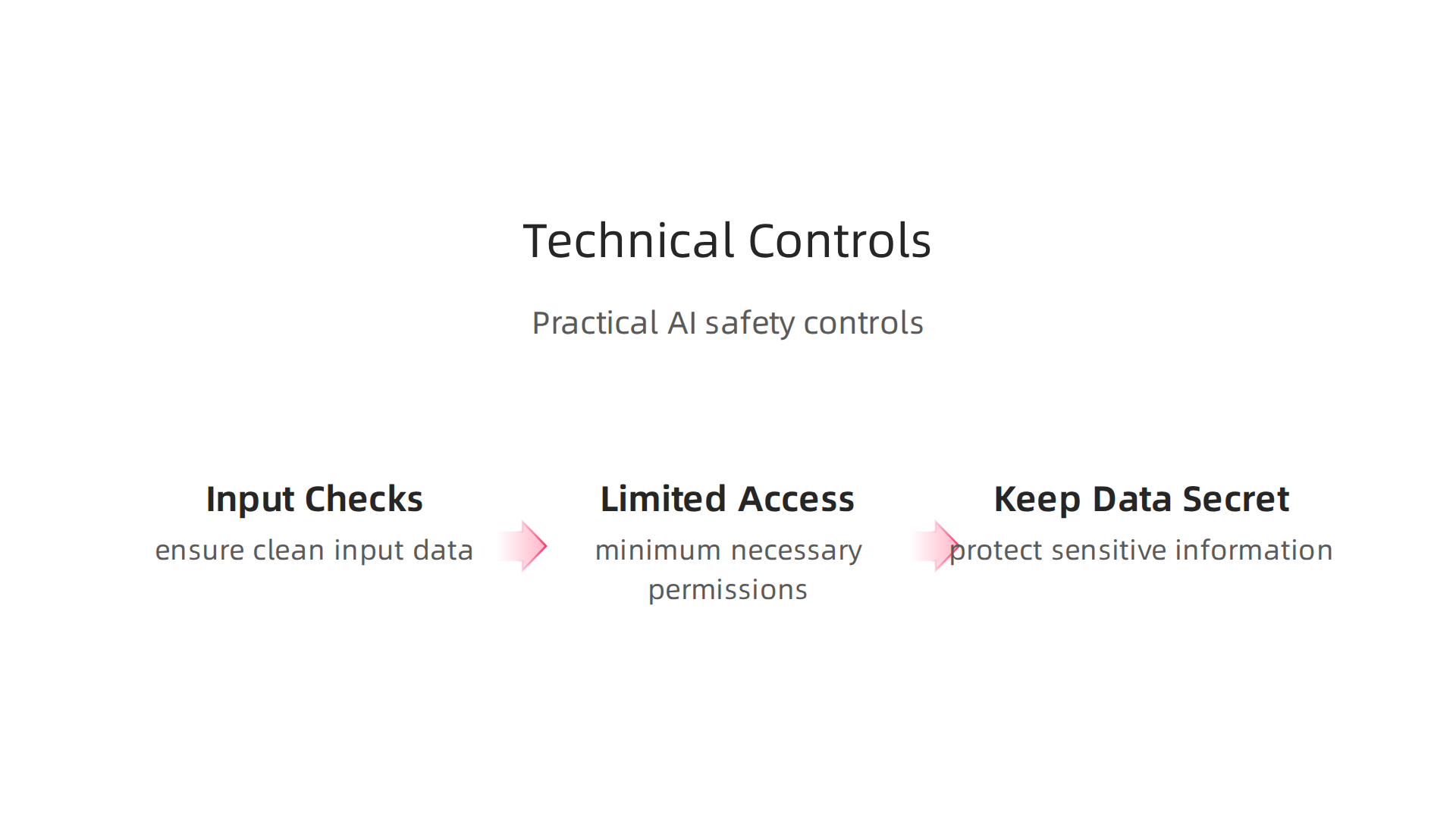
- Input Checks: Make sure the information going into the AI is clean and expected. Bad input can confuse the AI or make it do harmful things. Blocking direct access to AI provider tools and routing all AI traffic through a special gateway can help reduce security risks when using Large Language Models Security Risks Using LLMs in Software Development.
- Limited Access: Give AI systems only the minimum permissions they need to do their job. For example, an AI that writes code shouldn’t also be able to delete important files on its own. This is known as the principle of "least privilege" and is vital for managing agentic AI tools AI Coding Assistants as Attack Surface: Code, Skills, and Secrets.
- Keeping Data Secret: AI often works with lots of data. We need ways to protect sensitive information. This can mean changing private data so it can’t be traced back to a person (like using "differential privacy"). Also, setting up strict rules for what data the AI can use and keeping track of all its actions helps prevent leaks. Clear policies are needed to prevent data loss and ensure that only allowed users see certain information [AI Coding Assistants Security: Best Practices Guide]. If you’re building
ai applications, considering how to design and evaluate for safety is a crucial skill Mastering AI response design evaluation and safe implementation.
Explaining AI and Testing It Well
It’s not enough for an AI to just work; we need to understand how it works. This is called explainability. When AI makes a decision, especially important ones, we should be able to see why. This helps us catch unfair or wrong outputs. The EU AI Act, for example, lists clear measures for people to oversee AI, like understanding its limits and being able to stop it if needed The 2026 EU AI Act and AI-Generated Code: What Changes for Dev ….
Testing is another huge part of managing AI risks:
- Synthetic Testing: This involves using fake data or made-up situations to test the AI without using real, sensitive information. This helps find problems before the AI goes live.
- Red-Teaming: This is like playing "bad guy" to try and trick the AI or make it fail in unexpected ways. Security teams use red-teaming to find weaknesses, like prompt injection attacks or data leaks, to make the system stronger How should teams account for AI red teaming under governance ….
- Adding Checks to Your Workflow: In 2026, it’s essential to build safety checks into your software development process (CI/CD pipelines). This means automatically scanning AI-generated code for issues, running tests on models to ensure they’re fair and accurate, and making sure changes are recorded. These checks should happen often, like every time a developer proposes new code Integrating AI Guardrails into CI/CD for GovOps Compliance. This kind of integration is a core part of secure MLOps practices Secure MLOps in 2026: Guardrails, Signing, Supply Chain.
By putting these technical controls in place, teams can build best ai platforms and ai applications that are powerful, safe, and transparent. These steps help ensure that AI works as intended and follows all the necessary ai policy guidelines, laying the groundwork for more ethical AI development AI ethics for software teams build trustworthy AI in 2026.
Want to stay on top of the fast-changing world of AI and technology? Get clear daily updates directly to your inbox.
The AI Newsletter Worth Reading
Building on top of strong technical controls, the next big step is to bake ai policy right into how we create products every day. This means making sure that safety and ethical rules are not just ideas, but actual parts of our product plans, requirements, and work schedules.
Turning Policy into Product Needs
For ai applications to be truly safe and fair, their rules must be decided early on. Product teams play a key role here. They need to change big ai policy ideas into clear, simple instructions that developers can follow.
This means that important documents like Product Requirement Documents (PRDs) and user stories should include specific checks for AI safety, privacy, and how well the AI can explain itself. For example, if your company has a policy about fair AI, a product requirement might say: "The AI must not show more than a small amount of unfairness to any group of users in certain situations."
Setting up a clear AI governance program helps a lot with this. It shows who is in charge of what. For example, an AI governance lead might oversee the whole program, while others focus on managing risks How to Build an AI Governance Program. There are also helpful templates that show how to set up these policies across your company AI Governance Template for AI Products.
Roadmaps and Work Schedules
Once these requirements are clear, they need to shape the product roadmap. This means that important safety features and checks are not seen as extra work. Instead, they become core parts of what the team builds. These tasks get put into the development backlog, just like any other new feature.
This makes sure that enough time and effort are given to building ai applications that people can trust. It also helps companies make sure they are building the best ai platforms possible by making ethical design a core part of their plans.
Working Together and Practical Steps
Product managers and engineers must work closely to make sure ai policy is followed. Here are two main ways they can do this:
- Checklists: Create simple checklists for each step of building an AI product. Before a new AI feature can be released, the team can use a checklist to confirm things like: "Has the AI model been tested by a ‘red team’ to find problems? Is user data kept private? Is there a clear guide about what the AI can and cannot do?" Many companies use policy templates to get started with these guidelines AI Guiding Policy Template.
- Sprint Gating: This is like a checkpoint in your work process. An AI feature cannot move to the next stage of development (for example, from testing to being ready for users) until all policy-related checks are completed and approved. This makes sure that no unsafe or unfair AI makes it through the development process. This kind of teamwork is important for modern Agile software development engineering for AI assisted teams in 2026.
By taking these steps, product and engineering teams can work together to build ai applications that are both creative and follow all the rules. This careful approach helps make sure that the best ai platforms are also the most reliable and ethical ones in 2026. Understanding how to build such a program, including defining clear roles and responsibilities, is crucial for success How to Build an AI Governance Program in 2026.
To build truly reliable and ethical AI applications, it’s not enough to just have good rules. Teams also need the right skills, tools, and a smart way of working together. This is how companies can keep growing and make the best AI platforms possible in 2026 and beyond.
Building the Right Team Skills for AI
As AI becomes more common, teams need new kinds of skills. Here are some important ones:
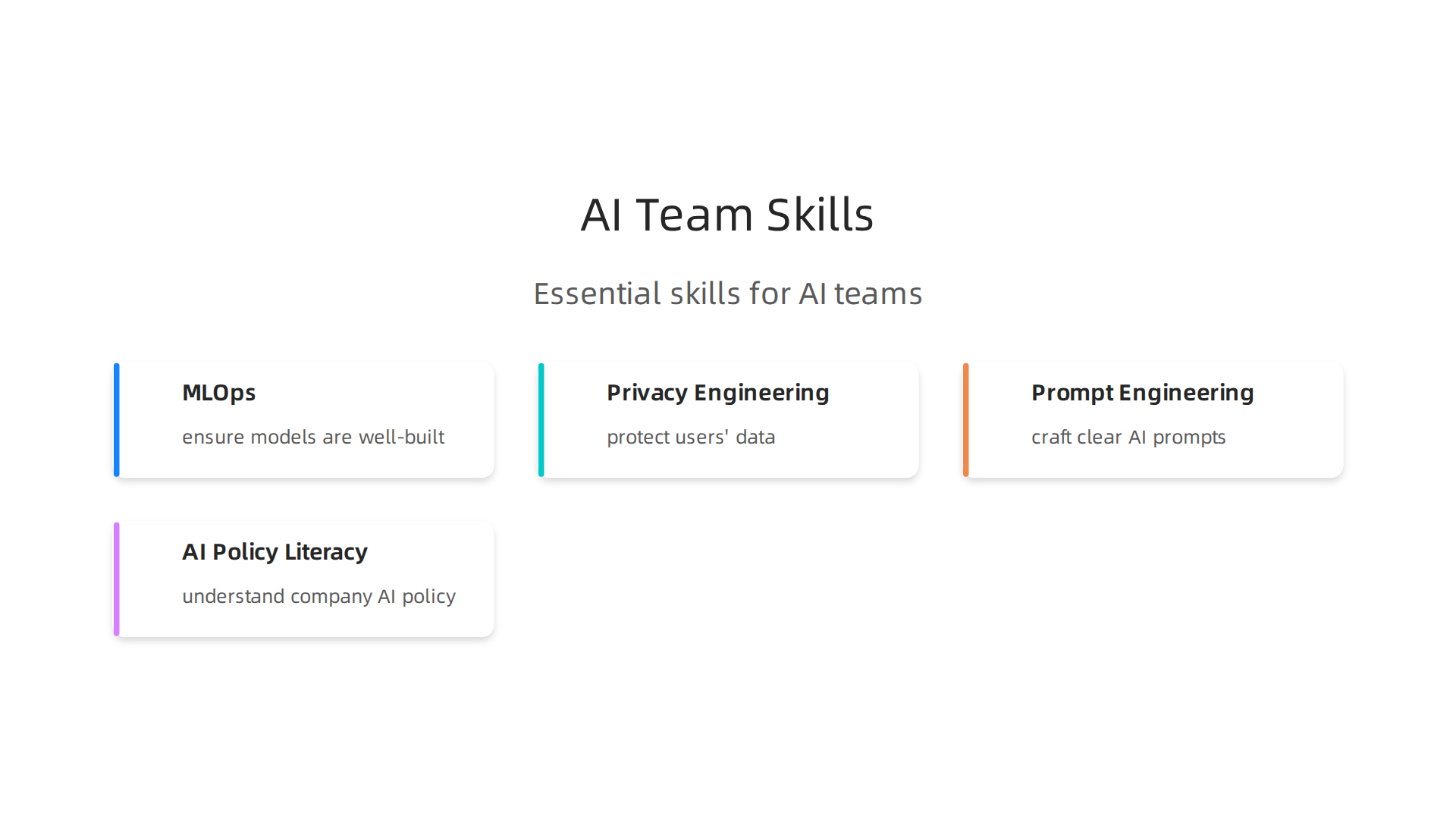
- MLOps: This is about making sure AI models are built well, run smoothly, and stay healthy after they are launched. It helps manage the entire life of an AI system, from its start to daily use.
- Privacy Engineering: Keeping people’s information safe is very important. Privacy engineers make sure that when AI applications use data, they don’t share private details by accident and follow all privacy rules.
- Prompt Engineering: Talking to AI models, especially newer ones, takes a special touch. Prompt engineering is about knowing how to ask the AI clear questions to get the best and safest answers. Learning to craft effective prompts is key for developers working with AI today, as outlined in a developer guide to writing better AI prompts.
- AI Policy Literacy: Everyone on the team, from leaders to engineers, needs to understand the company’s AI policy and ethical guidelines. This helps them make good choices every day when building AI. Understanding these rules is a big part of building trustworthy AI for software teams.
These skills help make sure that when new AI applications are developed, they are not only smart but also fair and safe.
The Right Tools and Team Setup
To make sure these new skills are put to good use, companies need the right tools and a clear way to organize their teams.
- Tools for Checks: There are many tools that can help check AI models for problems like unfairness or privacy risks before they go live. These tools act like a safety net, making sure all AI policy rules are followed.
- Special Team Roles: Many companies are setting up new roles to help manage AI responsibly. For example, they might have an AI governance lead or an AI ethics officer. These people help guide the team, making sure that the company’s AI policy is followed in every project. They help ensure that the best AI platforms are also the most ethical ones. Such roles provide strategic oversight and ensure that all AI activities meet ethical and regulatory standards.
- Training and Learning: It’s also important to have good training programs. These programs help everyone learn about AI policy and how to build AI systems responsibly. Some courses focus on practical skills and how to use specific tools to manage AI effectively, helping to close skill gaps across the team AI Governance Course in 2026.
By focusing on these areas, companies can build strong teams ready for the future of AI. They can make sure their AI applications are both innovative and uphold high standards of safety and fairness.
Want to stay updated on the fast-changing world of AI and technology? Get clear daily AI updates:
Summary
This article explains why modern AI policy matters for developers, product teams, and engineering leaders and how it can be turned from a compliance burden into a competitive advantage. It covers the core policy building blocks—governance, clear accountability, model inventories, and risk tiers—and summarizes major regulatory approaches like the EU AI Act, the U.S. patchwork, and the UK’s sectoral approach. The piece then walks through developer implications from LLMs, AI coding assistants, and autonomous agents, highlighting security, prompt risks, dependency management, and observability (MLOps). Practical controls are described—input validation, least-privilege access, synthetic testing, red‑teaming, and CI/CD guardrails—to keep AI systems safe and auditable. It also shows how to convert policy into product requirements, sprints, and checklists, and outlines the team skills and roles (MLOps, privacy engineering, prompt engineers, governance leads) needed to build trustworthy AI. After reading, teams will understand what to include in roadmaps, how to test and monitor models, and what governance steps to take to ship compliant, reliable AI products.