
Agentic AI vs Generative AI: A Developer’s Guide to Choosing the Right AI
· 25 min read

Why the distinction matters for software teams today
In 2026, the world of artificial intelligence changes very quickly. New terms pop up all the time, and it can be hard to keep up. One area that causes a lot of head-scratching for software teams is the difference between agentic AI and generative AI.

This mix-up can slow things down, make projects confusing, and lead to teams expecting the wrong things from their AI tools.
Many software companies and AI labs are trying to use AI more. But if they don’t clearly understand what each type of AI does best, they might pick the wrong tools. This could mean wasted time and money, or even building products that don’t quite work as planned. For example, generative AI is great at making new content like text or images, while agentic AI focuses on planning and taking actions to reach goals Agentic AI vs. Generative AI – IBM. Knowing this clear difference is vital for anyone working in the application of computer science.
Actually, getting a good grip on the unique features of agentic ai vs generative ai is super important for AI for software development. It helps teams from big companies to small AI startups make smart choices about how to build their next big thing.
This guide will clear up any confusion. We’ll give you a simple, practical look at what agentic AI and generative AI really are. We will talk about how they are built, what they are good at, what they are not so good at, and when you should use each one. Our goal is to help your team make better decisions and use AI in the best way possible.
Keep up with the fast-moving AI world every day. Get smarter about new tech.
The AI Newsletter Worth Reading
Definitions: Agentic AI and Generative AI, in plain language
Let’s make things super clear. Understanding the core ideas behind agentic AI vs generative AI is not as hard as it might seem. Think of them as two different kinds of smart helpers, each with special skills. Knowing what each one does best helps you pick the right tool for your project.
What is Agentic AI?
Imagine an AI that doesn’t just answer questions but can actually do things to reach a goal. That’s agentic AI. It’s like having a smart assistant that can plan steps, make choices, and carry out tasks all on its own, with very little help from you. Agentic AI systems are made up of one or more "agents." These agents use AI models to understand the world around them, decide what to do, and then take action Careful adoption of agentic AI services – Department of War.
Here are the key things agentic AI does:
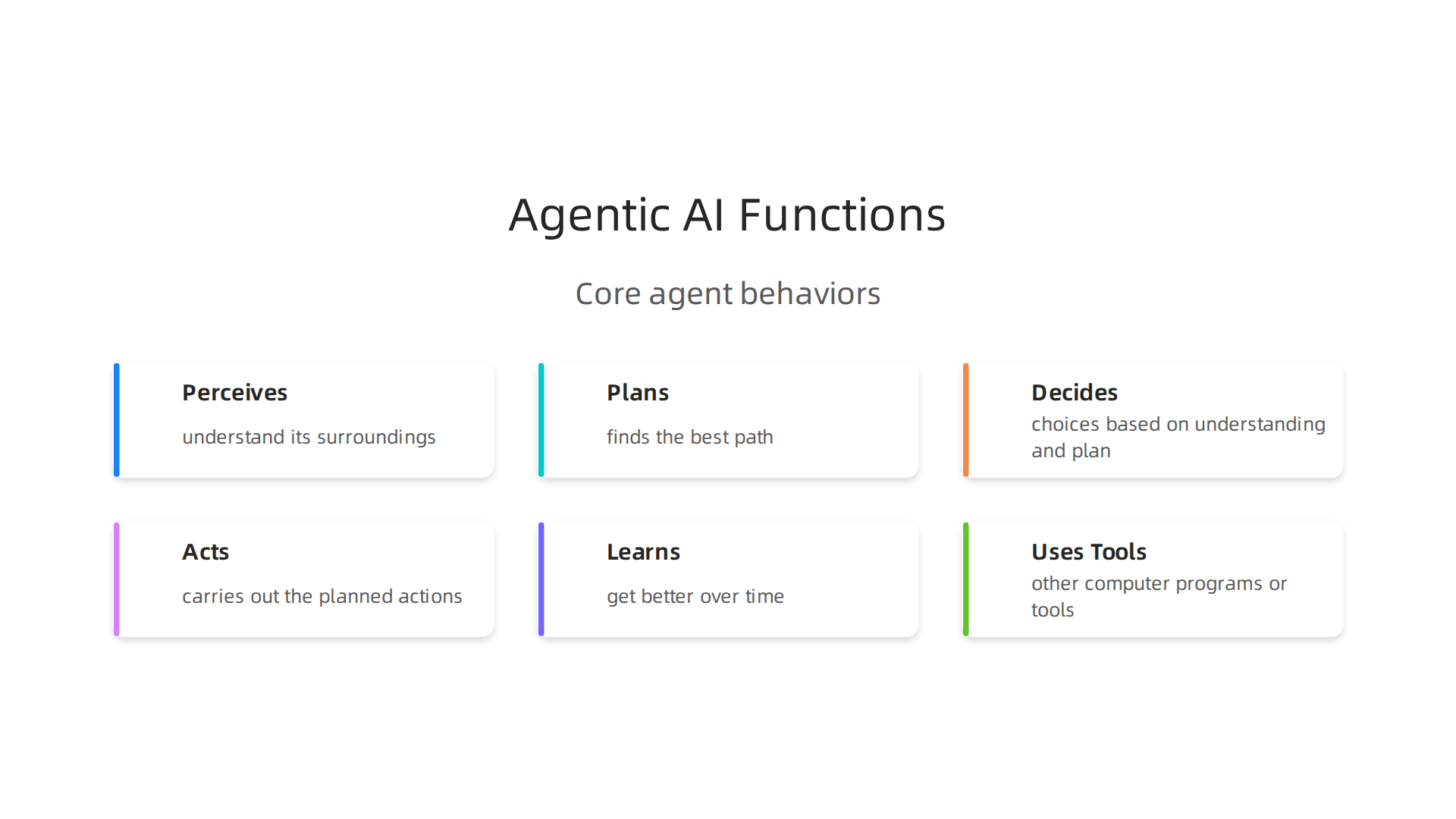
- Perceives: It can "see" or understand its surroundings.
- Plans: It figures out the best way to get to a goal, often through many steps Agentic AI: A Next-Generation Autonomous Artificial ….
- Decides: It makes choices based on its understanding and plan.
- Acts: It carries out the planned actions.
- Learns: It can get better over time by reflecting on what happened Understanding Agentic AI: Concepts, Architecture, and Risks.
- Uses Tools: Often, agentic AI can use other computer programs or tools to help with its tasks.
Unlike earlier AI that just followed rules, agentic AI has "agency." This means it can pursue complex goals without constant human checking Agentic AI 2026 | PDF | Artificial Intelligence – Scribd. This kind of AI is a big step forward for things like managing complex tasks in software development. To build reliable systems using this kind of AI, you might need to learn more about context engineering design reliable AI systems now.
What is Generative AI?
Now, generative AI is a different kind of smart helper. Its main job is to create new things. It learns from a lot of existing data, like millions of pictures, texts, or pieces of code. Then, it uses what it learned to make something completely new that looks or sounds real.
Think of it like this:
- You ask it to "write a poem about a flying cat." It doesn’t plan to deliver the poem, it just creates it.
- You ask it to "draw a picture of a blue tree." It makes that picture for you.
- You ask it to "write some code for a simple button." It produces the code.
Generative AI is very good at making new content based on patterns it has seen before. It does not try to achieve goals in the same way agentic AI does. Instead, it creates text, images, code, or music that feels new and original Generative AI and Agentic AI for ESG and Sustainability Innovation and Applications. It’s all about making new stuff. If you’re working with these tools, knowing about effective LLM AI adoption for developers can be really helpful.
Understanding what agentic AI and generative AI are is the first step. Now, let’s look at how they are built and how developers work with each one. This helps us see the real difference between them, especially in how we build and test software.
How Generative AI Models Work
Generative AI models, like the ones that write text or create images, often follow a simpler path. At their core, these systems use a single large AI model. This model has learned from a huge amount of data. When you give it a prompt, it uses its training to predict and create the next piece of content.
- Core Architecture: Usually, it’s one big model, like a Large Language Model (LLM) or a diffusion model for images. This model is trained on a massive dataset offline.
- Components: The main parts are the model itself and the way you give it instructions (the prompt).
- Developer Workflow: For developers, working with generative AI often means:
- Prompt Engineering: Learning how to write good instructions to get the best results from the AI. This is like learning how to talk to the AI effectively. If you want to dive deeper into this, check out Google prompt engineering.
- Fine-tuning: Sometimes, developers "fine-tune" a pre-trained model with their own data to make it better at specific tasks or to match a certain style.
- Integration: Putting the generative AI into other apps, often through an API.
- Testing: Checking if the AI’s output is good and follows what was asked. This might involve looking at many examples.
Generative AI is focused on creation. It generates an output based on its input, without needing to plan complex steps or use other tools to achieve a goal.
How Agentic AI Systems Work
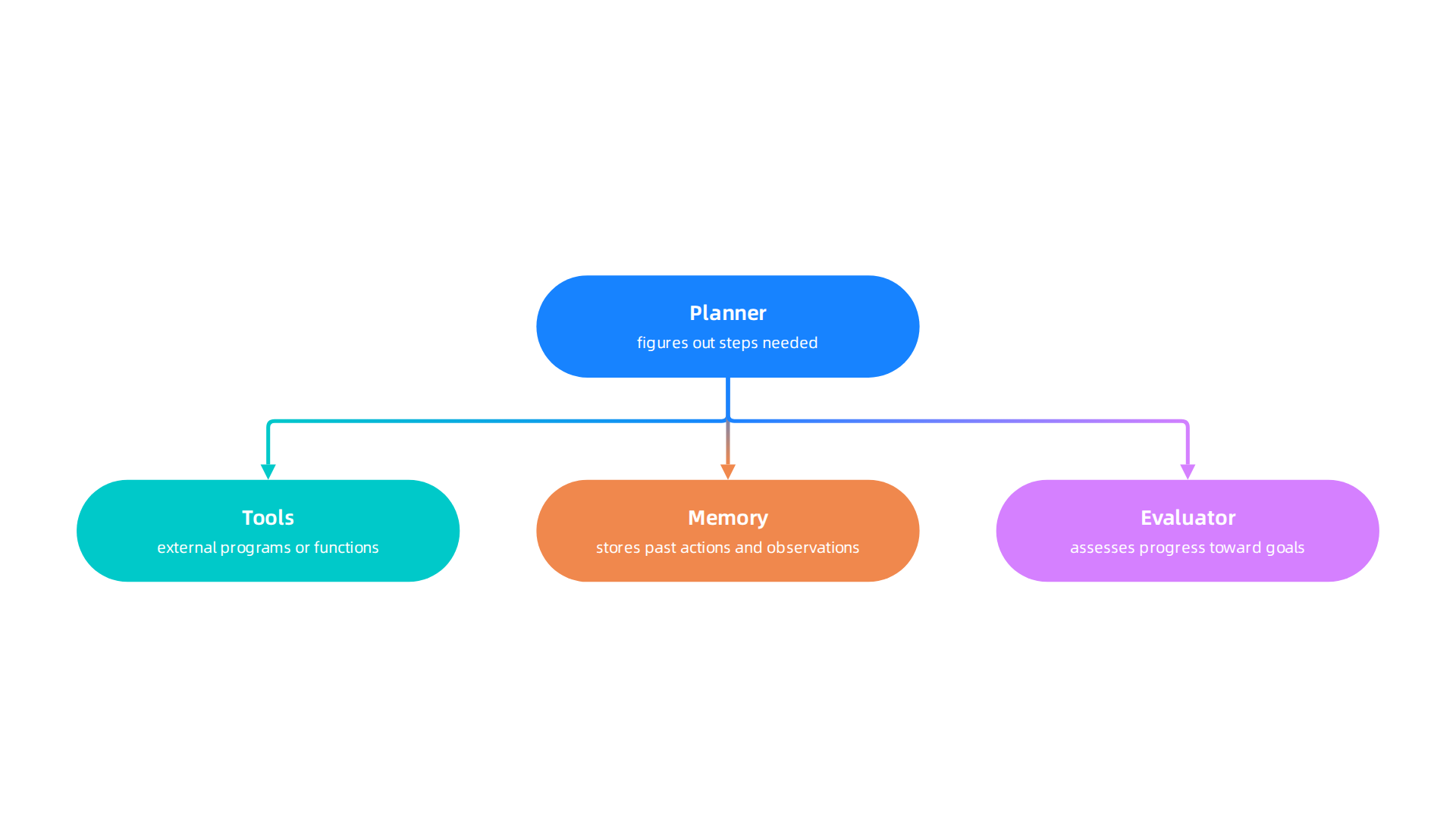
Agentic AI systems are more like a team of smart workers. They are designed to achieve a goal through a series of actions. This means their architecture is more complex and involves many connected parts.
Think of it as an application of computer science that builds intelligent systems from many smaller, cooperating pieces.
- Core Architecture: Agentic AI uses a loop of thinking, acting, and observing. A common pattern is called "Thought-Action-Observation" (ReAct), where the agent thinks about what to do, takes an action using a tool, and then sees the result to plan the next step Production Failure Modes. This loop continues until the goal is met or it can’t go any further. You can learn more about general patterns for architecting agentic AI systems for 2026.
- Components:
- Planner/Orchestrator: This is the "brain" that figures out the steps needed to reach a goal.
- Tools: These are external programs or functions the agent can use to perform specific tasks, like searching the internet, sending an email, or running code.
- Memory: Agents need a way to remember past actions and observations to make better decisions.
- Evaluator: A part that checks if the agent’s actions are getting closer to the goal.
- Developer Workflow Implications: Working with agentic AI is more involved for developers:
- Agent Design: You need to carefully design how the agent thinks and what tools it can use. Best practices include making agents simple and giving them a single clear job A Practical Guide for Designing, Developing… agentic AI workflows.
- Tool Integration: Connecting the AI to various external tools is a big part of the work.
- Observability: This is super important. Because agents take many steps, developers need to see every decision, tool call, and result. This helps find problems and understand why an agent did what it did. Tools like OpenTelemetry are key for tracking these complex processes in 2026 OpenTelemetry GenAI Agent Observability. Observability is a primary requirement for agentic AI software architecture today The Evolution of Agentic AI Software Architecture.
- Testing: Testing agentic AI is harder because there are many possible paths it can take. You need ways to test if it handles different situations well and recovers from mistakes.
- State Management: Keeping track of the agent’s progress and current situation is crucial.
Developing agentic AI systems requires a deep understanding of these complex workflows to ensure they are reliable and safe.

Want to stay on top of all the latest AI advancements? Get clear daily AI updates from The AI Newsletter Worth Reading.
After understanding how generative AI models and agentic AI systems are built, it’s helpful to look at the real-world choices developers and companies face. Choosing between these two types of AI involves thinking about how well they perform, how much control you have, what they cost, and what skills your team needs.
Practical trade-offs: performance, controllability, costs, and team skill needs
When looking at agentic AI vs generative AI, the differences in their build lead to big trade-offs in their use.
Performance and Speed
Generative AI models are often built for speed. Because they usually have one main task, like writing text or making an image, they can give an answer quite fast. They take your request and generate an output directly. This means they often have lower latency, which is the time it takes to get a response. For tasks where you need quick answers, generative AI is a strong choice.
Agentic AI, however, works differently. It goes through a cycle of thinking, acting, and observing. This means it might take many steps, call several tools, and update its memory before reaching a goal. All these steps add up, making agentic AI generally slower and leading to higher latency. When you design an agentic AI system, you must think carefully about its expected speed and how much delay your task can handle. You should always define your workload needs, including how fast you expect it to run and any limits on time Choose a design pattern for your agentic AI system.
Controllability and Predictability
Controlling what an AI does and knowing what it will do next is very important. With generative AI, you guide it mainly through clear instructions or "prompts." If you are good at writing prompts and have fine-tuned the model, you can often get pretty predictable results. The model generates what it thinks is the best direct answer based on its training.
Agentic AI is much harder to control and predict. Because it makes its own decisions and uses different tools to reach a goal, its path can change. It’s like giving a person a job and letting them figure out the best way to do it. There are many possible ways an agent might try to solve a problem. This makes it challenging to know exactly how it will act in every situation. To manage this, developers need to include ways for the agent to recover from mistakes and even involve humans to check important steps Agentic AI Workflows: Architecture Patterns That Scale. This helps build more reliable AI systems. If you’re interested in making AI systems more reliable, learning about context engineering design reliable ai systems now can be very helpful.
Costs and Team Skills
The costs for agentic AI vs generative AI come down to complexity. Generative AI is typically simpler to set up and run. Its operational costs might be lower for basic uses because it’s a more direct process. Teams mostly need skills in prompt engineering, fine-tuning, and integrating the AI into their existing applications.
Agentic AI requires more. The complex architecture, the need for many components, and the harder testing mean higher development costs. Also, because agents can take many paths, detailed tracking of their every step, decision, and tool use is critical. This is called observability, and it’s a primary requirement for agentic AI today, leading to higher operational costs Agentic AI Observability: A Practical Guide for 2026. This means companies, especially newer ai startups and established ai labs, need to invest more in tools and processes to see what their agents are doing. Observability in the agentic era requires new ways to track what’s happening Observability in the agentic era: What’s breaking, and how ….
Teams working with agentic AI need a strong understanding of computer science and its application. They need skills in designing agents, integrating various tools, and setting up advanced observability systems. It also requires a new mindset for testing and managing these systems safely. Focusing on AI ethics for software teams build trustworthy AI in 2026 is also key, as agentic systems can have a wider impact due to their autonomy.
Now that we’ve talked about the skills needed, let’s look at how generative AI models and agentic AI systems are used in the real world. Each type has its special jobs where it shines. And sometimes, they might not work so well.
Real-world examples and mini case studies: where each shines (and fails)
When we compare agentic AI vs generative AI, we see they solve very different kinds of problems.
Generative AI: Creating and Summarizing
Generative AI is best at making new things or summarizing big chunks of information. Think of it like a very fast writer or artist.
- Content Creation: A marketing team might use generative AI to quickly write many different ad slogans or social media posts. For example, a company needed lots of unique descriptions for thousands of products on its website. Using generative AI, they could create these descriptions much faster than people could, saving a lot of time and money. Reports from 2026 show that companies are widely adopting generative AI for these tasks Generative AI Implementation in Enterprises. If you’re a developer, learning about Effective LLM AI Adoption for Developers can help you use these tools better.
- Summarization: Imagine a legal team that needs to read hundreds of documents. Generative AI can quickly read them all and pull out the main points, helping the team work faster.
Where it can fail: Generative AI might sometimes make up facts or give answers that are too general. It needs careful instructions to get the best results.
Agentic AI: Taking Action and Solving Problems
Agentic AI is like a smart assistant that can make plans, use tools, and work towards a goal over many steps. It’s great for tasks that need more than just one quick answer.

- Customer Service: Instead of just giving a saved answer, an agentic AI chatbot can talk to a customer, look up their order in a database, check shipping status, and even process a refund. These AI agents are changing customer service, with some even handling millions of chats a month and solving issues much faster 7 enterprise AI agent use cases in production (2026).
- Automating Complex Workflows: In factories or busy offices, agentic AI can manage a series of steps. For example, in drug discovery, an agentic AI system can search through scientific papers, suggest experiments, and even help design new studies Agentic AI in Pharma: Scaling from Pilot to Production. This shows a deep application of computer science.
- IT Support: An agentic AI can detect a problem in a computer system, diagnose it, and then try different solutions, like restarting a service, without needing a human to guide every step. Such systems are seeing big gains in efficiency for complex tasks in 2026 AI Implementation Case Studies: Real Enterprise Results 2026.
Where it can fail: Because agentic AI makes its own choices, it can sometimes get stuck or do something unexpected. It requires a solid understanding of Computer Science Fundamentals to build and manage these complex systems. Also, companies need to make sure they can track what the AI is doing, especially for ai startups and larger ai labs.
To stay on top of the fast-changing world of AI, many pros turn to trusted sources.
Get clear daily AI updates. Sign up for The AI Newsletter Worth Reading.
After looking at what generative AI and agentic AI can do, it’s very important to also think about making them safe and fair. When we compare agentic AI vs generative AI, we see different safety concerns for each. Developers, especially in ai startups and larger ai labs, need to put strong rules in place early on.
Safety, governance, and ethical considerations for developers
Making sure AI systems are safe, fair, and trustworthy is a big job. This involves setting up clear rules, making sure we can see what the AI is doing, and thinking about what’s right. The International AI Safety Report 2026 highlights how important these steps are globally.
Key safety risks for generative AI
Generative AI, which creates content, has its own set of dangers:
- Making up facts: Sometimes, generative AI can create information that sounds real but is not true. This is often called "hallucinations." Developers must build ways to check facts and reduce this risk.
- Bias in data: If the data used to train the AI has unfairness or biases, the AI might learn these and create biased content. This means the AI could act unfairly towards certain groups of people.
- Copyright issues: When AI creates new images or text, it might use parts of existing works without proper permission, leading to legal problems.
- Misuse: People could use generative AI to create fake news or harmful content.
Developers need to be careful with how they design and use these systems. It’s key to have good AI ethics for software teams.
Key safety risks for agentic AI
Agentic AI, which takes actions and solves problems over many steps, has different and often bigger risks because it acts in the real world:
- Unintended actions: Because agentic AI can make its own decisions, it might do something unexpected or even harmful if its goals are not perfectly clear or if it runs into a new situation. For instance, in an office setting, an AI agent might accidentally delete important files if its task of "cleaning up" isn’t carefully defined.
- Loss of control: It can be hard to stop an agentic AI once it starts a complex task. This is why having clear "off switches" and ways to pause the AI are very important.
- Hard to understand: When an agentic AI makes a series of choices, it can be tough for a person to understand why it did what it did. This makes it hard to fix problems or explain mistakes. This risk for autonomous AI systems is highlighted in the State of Agentic AI Security and Governance 2.01.
Practical controls and observability patterns for engineers
Developers can put many things in place to make both types of AI safer.
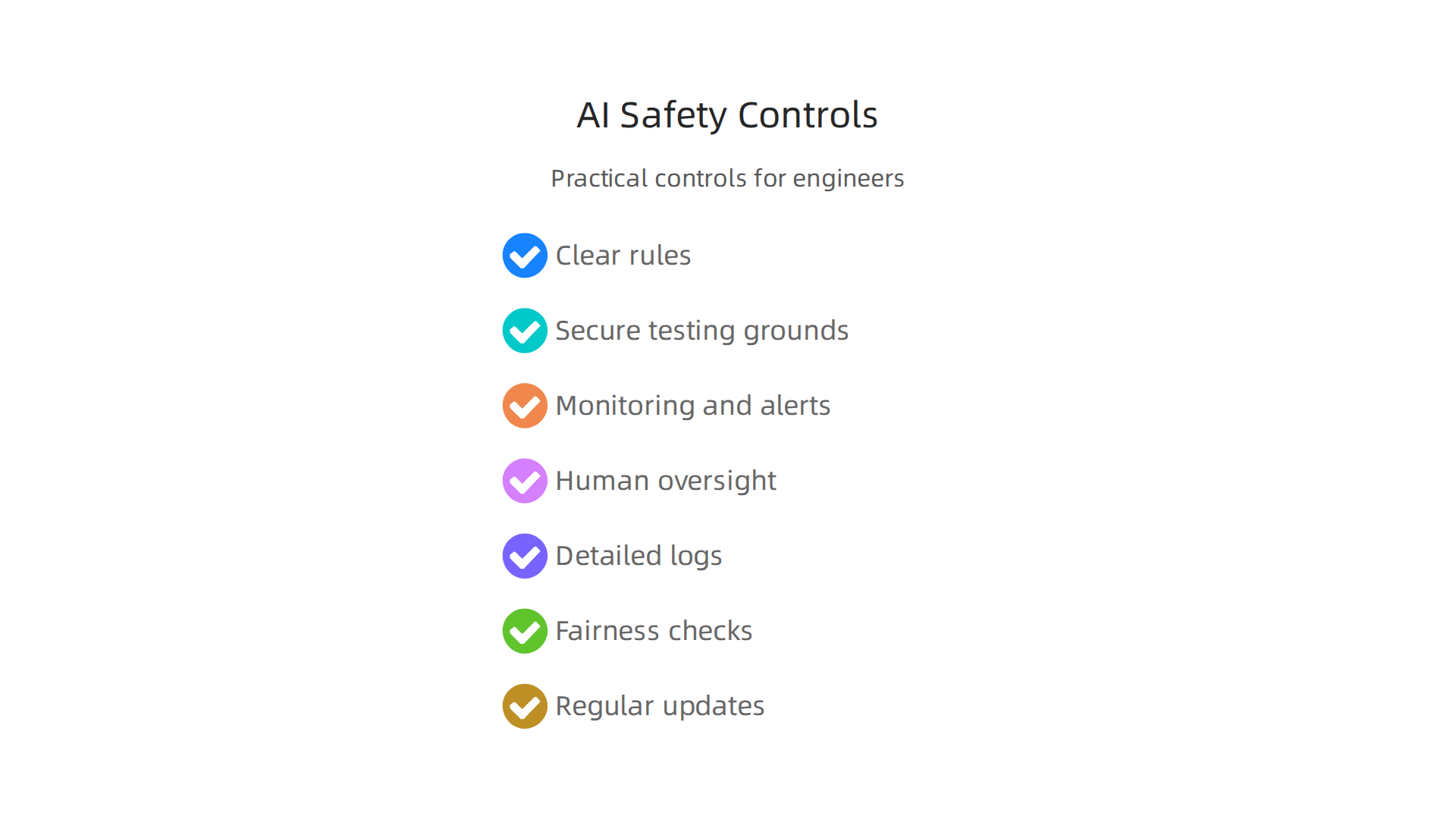
- Clear rules and boundaries: Engineers should set very clear limits on what an AI can and cannot do. For agentic AI, this means "safety contracts" that the AI cannot ignore, as suggested by advice on the Careful Adoption of Agentic AI Services.
- Secure testing grounds: Before putting AI into the real world, test it in a safe, isolated space. This helps catch problems before they can cause harm.
- Monitoring and alerts: Always watch what the AI is doing. If it starts acting strangely or goes outside its set rules, developers should get an alert right away. This is a key part of "observability."
- Human oversight: Even the best AI needs human eyes on it. People should be able to step in and take over if the AI makes a mistake or gets stuck.
- Detailed logs: Keep records of every decision and action the AI takes. This helps developers understand what happened if something goes wrong and learn how to make the AI better.
- Fairness checks: Regularly test the AI to make sure it is not showing bias or being unfair to anyone.
- Regular updates: Just like any other software, AI systems need to be updated and improved often to fix bugs and make them safer.
By following these steps, developers can help build AI systems that are powerful yet responsible. It’s about designing AI to be helpful without causing harm, a critical application of computer science in 2026.
When building AI systems that are powerful and responsible, choosing the right tools and platforms is super important. This means picking the best libraries, frameworks, and ways to connect everything together. The tools you pick will often depend on whether you are working with agentic AI vs generative AI.
Tooling and platforms: choosing libraries, frameworks, and orchestration layers
Developers in AI labs and even smaller AI startups need a good map of the AI tools available. These tools help create, manage, and connect AI systems.
Tools for Generative AI
For generative AI, which creates text, images, or other media, developers often use tools that help manage large language models (LLMs) or other big models.
- Frameworks and Libraries: Many teams use Python libraries like PyTorch or TensorFlow to build and train their models. Hugging Face is another popular choice, offering many pre-made models that can be used or changed. These tools make it easier to work with complex AI models. To learn more about using these, check out this guide on effective LLM AI adoption for developers.
- Orchestration: While generative AI often focuses on a single task, tools like LangChain can help put different generative AI parts together. This is helpful if you want to make a story with AI, where one part writes, and another part checks facts.
Tools for Agentic AI
Agentic AI, which performs tasks by taking many steps, needs tools that can manage these actions and decisions.
- Frameworks for Agents: Frameworks like LangChain, AutoGen, and CrewAI are very popular in 2026. They help developers design agents that can reason, plan, and act. These frameworks allow agents to use other tools, like searching the internet or running code.
- Orchestration Layers: For agentic AI, orchestration is all about making sure the agent’s different steps work together smoothly. It’s like managing a team, but for AI. Tools in this area help define how agents talk to each other and what tasks they should do. The NIST AI Risk Management Framework: Agentic Profile offers insights into managing risks when using these frameworks.
Connecting everything: APIs, monitoring, and costs
No matter if you choose generative AI or agentic AI, you need to think about how these systems will work with your existing software.
- APIs (Application Programming Interfaces): These are like plugs that let different software talk to each other. Using APIs, your AI models can connect to your apps, websites, or other services. You can learn more about this with Mastering Google Cloud services for API development in 2026.
- Monitoring and Retraining: It’s key to watch how your AI is performing in the real world. Monitoring tools help you see if it’s making mistakes or getting slow. If problems come up, you’ll want to retrain your AI with new data to make it better. This helps keep your AI useful and safe over time.
- Cost Management: Running AI models can be expensive. Developers need to think about how much computing power they are using and choose tools that help manage these costs efficiently. This is a big part of smart AI software development in 2026.
By carefully choosing the right tooling and thinking about these integration points, developers can build strong, efficient, and cost-effective AI systems.
Want to stay on top of the fast-moving world of AI?
Get clear daily AI updates from The AI Newsletter Worth Reading.
Choosing the right tools is just one part of building smart AI systems. The next big step is figuring out if you need agentic AI, generative AI, or a mix of both for your project.

This choice is super important for product teams and impacts how well your AI works. It’s like picking the right kind of machine for a job.
A decision framework: when to choose agentic, generative, or a hybrid approach
When you are trying to decide between agentic AI vs generative AI, think about what you want your AI to actually do. Some AI is good at making new things, while other AI is good at taking many steps to reach a goal.
Here is a simple way for product teams to think about it:
-
What is the Goal?
- Generative AI is best when you need to create something new. This could be text, pictures, music, or even code. Think of it as a creative assistant. For example, if you need to write many product descriptions, generative AI can help.
- Agentic AI shines when you have a task that needs multiple steps, decisions, and maybe even using other tools. It’s like having a smart helper who can plan and act on its own. For instance, an agentic AI could book a travel itinerary by searching flights, hotels, and then sending you the best options. These systems often need a strong understanding of computer science fundamentals to ensure they work correctly.
-
How Complex is the Task?
- If the task is simple and has one clear output, generative AI is often enough.
- If the task needs problem-solving, planning, and adapting to changes, agentic AI is likely a better fit. Reports in 2026 show that many companies are now using agentic systems for complex workflows, with some organizations seeing 28.4% using agentic ways to build things 1.
-
Consider a Hybrid Approach:
- Sometimes, the best answer is to use both. You might use generative AI to create a first draft of text, and then an agentic AI could check the facts, make edits, and share it. This way, you get the benefits of both types of AI. Many teams in AI labs and AI startups are looking at how to combine these.
Piloting, Measuring, and Iterating Safely
Once you decide on an approach, you need to test it out. Here’s how to do it smartly:
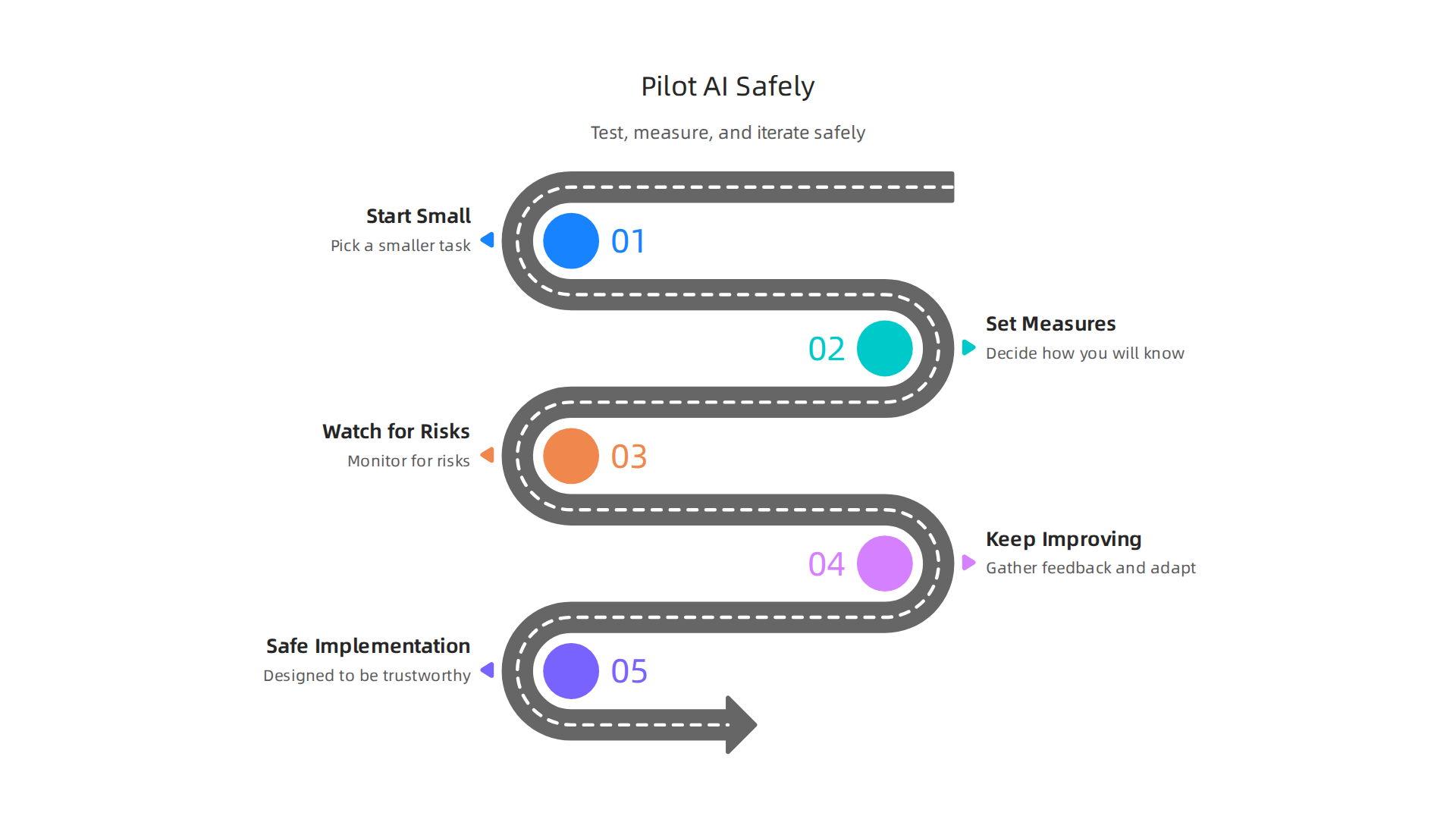
- Start Small: Don’t try to solve your biggest problem all at once. Pick a smaller task where you can easily see if the AI is working. Experts suggest starting with clear goals where the impact is easy to measure and mistakes are easy to fix 2.
- Set Clear Measures: Decide how you will know if your AI is successful. What are the key things you will track? This could be how fast it works, how accurate it is, or how happy users are.
- Watch for Risks: Agentic AI, especially, needs careful watching. Because it can act on its own, you need to make sure it’s doing things safely and as expected. Many groups are creating guidelines for safe adoption of agentic AI 3. Understanding AI ethics for software teams is vital here.
- Keep Improving: AI systems aren’t "set it and forget it." You need to keep an eye on them, gather feedback, and make changes to make them better. This is part of the ongoing software development lifecycle.
- Focus on Safe Implementation: Make sure your AI is designed to be trustworthy and reliable, especially when it is making important decisions. Learning how to manage AI response design, evaluation, and safe implementation is a key skill for teams today.
By following these steps, product teams can make smart choices about using agentic AI, generative AI, or both. This helps ensure they build powerful AI tools that are also safe and work well.
Summary
This article explains the practical difference between agentic AI and generative AI for software teams, why that distinction matters, and how to choose the right approach for a project. It defines agentic AI as systems that plan, decide, act, and learn across multiple steps using tools and memory, versus generative AI which creates new content (text, images, code) from a single model and prompt. The guide covers how each is built, developer workflows, real-world examples, and the key trade-offs in speed, controllability, cost, and required team skills. It also outlines safety and governance concerns unique to each type, plus observability and testing patterns you must adopt for agentic systems. The article reviews tooling options and orchestration layers, gives a simple decision framework (goal complexity, task type, hybrid options), and offers a pilot checklist for safe adoption so teams can deploy reliable, responsible AI solutions.