
Guide to Software Engineering Degrees for Your 2026 Tech Career
· 25 min read

Why understanding the different software engineering degrees matters today
In 2026, the world of software development is always changing. New tools and ideas pop up all the time. If you want to build a career in this field, knowing about the different degrees in software engineering is super important. It helps you pick the right path for your future. It also shows employers what you know and what you can do.
When we talk about software engineering degrees, we’re looking at formal schooling that teaches you how to design, build, and test software. These programs come in different levels. You might hear about an [associate in software engineering], a bachelor’s degree, or even a master’s degree. Each one builds on the last, giving you more skills and deeper knowledge.
Employers and hiring managers care a lot about these degrees. Why? Because a degree from a good program means you’ve learned important skills and followed certain rules. For example, many strong engineering programs are checked by groups like ABET. This means they meet high standards for what students learn, including skills in science, math, and actual engineering work Criteria for Accrediting Engineering Programs, 2025 – 2026.
When a program is accredited, it tells companies that you have a solid foundation to start your career as a software engineer.
The type of degree you get often maps to different jobs and what’s expected of you.
For instance:
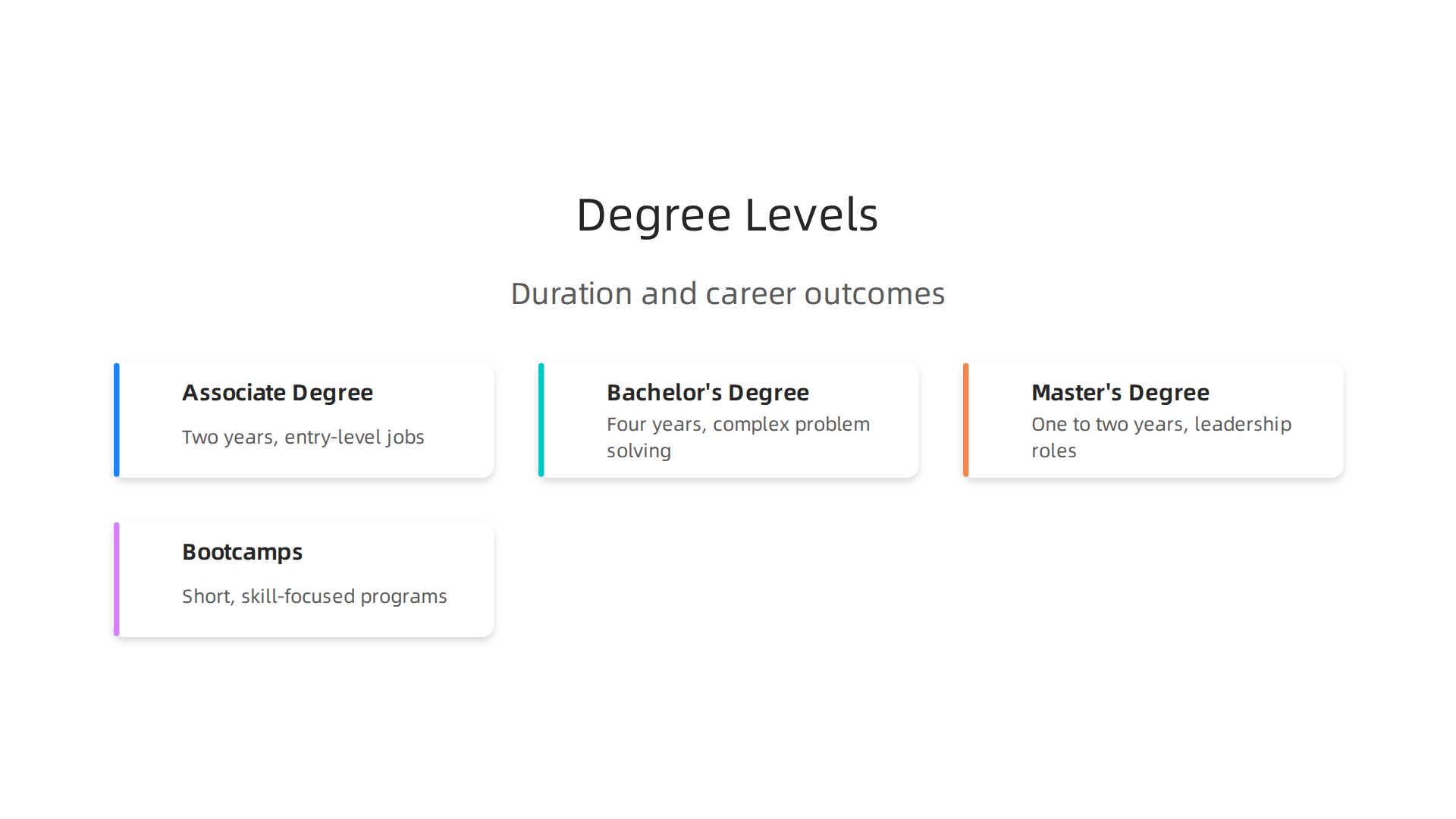
- Associate’s Degree: This usually takes about two years. It can prepare you for entry-level jobs like a junior developer or a tech support role. It gives you a basic understanding of coding and software tools.
- Bachelor’s Degree: This is the most common path, taking about four years. A bachelor’s in software engineering degrees will teach you how to solve complex problems and build bigger software projects. Most jobs for software engineers require this level of education.
- Master’s Degree: This takes one to two extra years after a bachelor’s. It’s for people who want to specialize in areas like artificial intelligence, cybersecurity, or software architecture. It can lead to leadership roles or very specialized technical positions.
Understanding these different [degrees of software engineering] helps you choose the right path for your goals. It helps you know what skills you’ll gain and what kind of job you can expect afterwards. Staying informed about the latest trends in software and AI is also key to a successful career.
Get clear daily AI updates from The Deep View Newsletter. The AI Newsletter Worth Reading
What counts as a "Software Engineering" degree?
When looking at different paths in tech, you might see many names for degrees that sound alike. It’s not always clear what truly makes a program one of the specific [degrees in software engineering]. Often, people wonder about the differences between "Software Engineering," "Computer Science," and "Software Development" degrees. While they all deal with computers, they focus on different things.
Here’s the thing: a "Software Engineering" degree is special because it teaches you how to build software in an organized, reliable way. Think of it like building a house. A computer scientist might design a new type of building material, while a software developer might put up the walls. A software engineer, however, plans the whole house, makes sure it’s strong and safe, manages the building process, and ensures it meets all the rules and needs.

This means a software engineering program covers not just coding, but also:
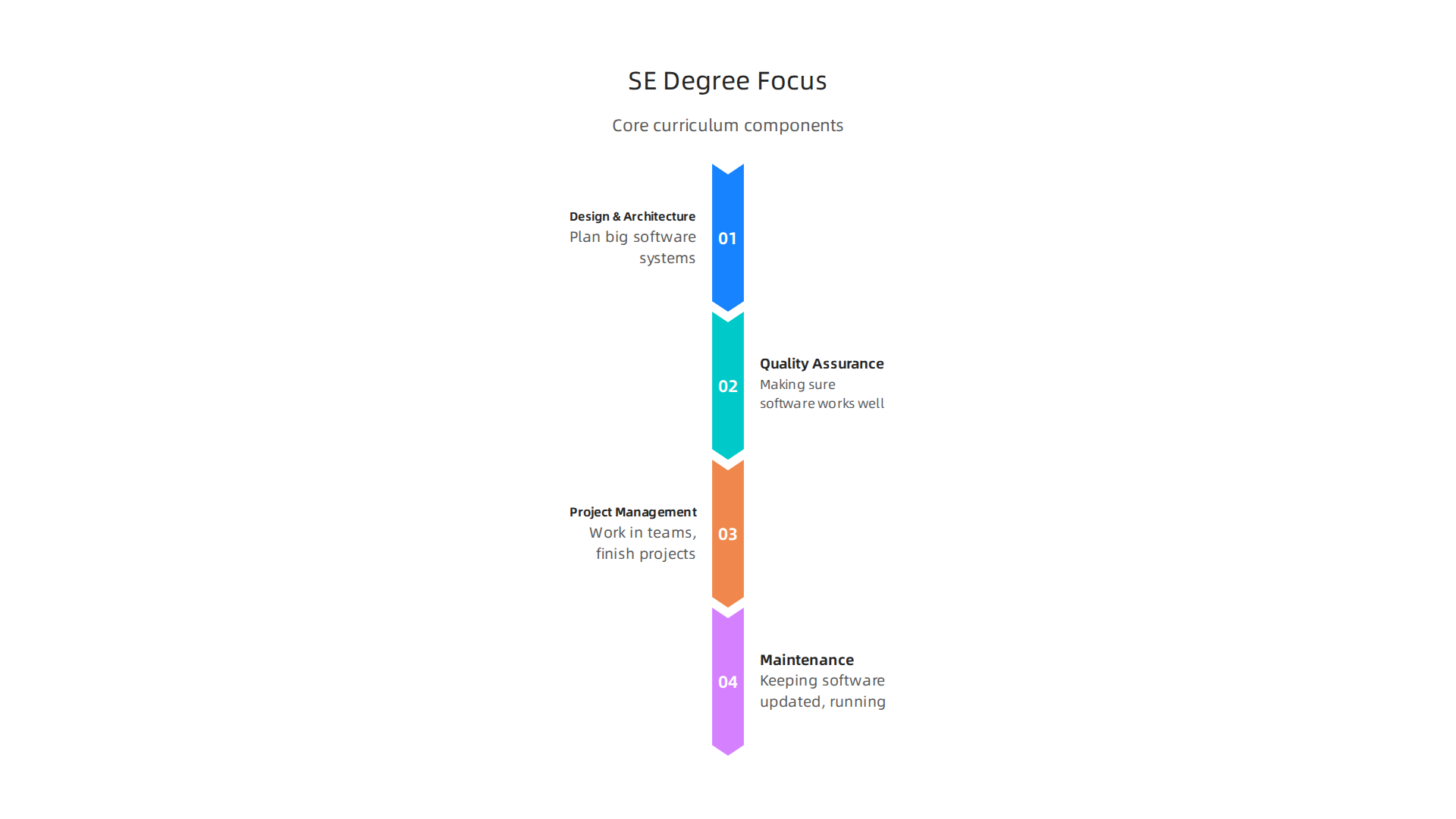
- Design and Architecture: How to plan big software systems.
- Quality Assurance: Making sure software works well and has few bugs.
- Project Management: How to work in teams and finish projects on time.
- Maintenance: Keeping software updated and running over time.
A Computer Science degree, on the other hand, is usually more about the deeper theories behind computing. It dives into algorithms, data structures, and the math that makes computers work. While computer science is very important for software, it might not focus as much on the practical steps of building large-scale software systems in teams. You can learn more about this by exploring facts about computer science growth and learning paths for 2026.
Software Development programs can be a bit broader. They might focus heavily on coding for specific areas, like web or mobile apps, and could be shorter programs or certifications. While they teach practical skills, they may not always have the deep engineering focus of a true software engineering degree.
The real marker for strong [software engineering degrees] is often accreditation. When a program is accredited, it means it has been checked by an outside group to make sure it meets high standards. For many engineering fields, including software, this group is ABET (Accreditation Board for Engineering and Technology). ABET makes sure that programs teach students specific skills and knowledge, called "learning outcomes." These outcomes ensure that graduates can solve tough engineering problems and build reliable systems Top ABET-Accredited Online Software Engineering Programs for …. For example, a university with an ABET-accredited software engineering program must show that its students learn how to identify, understand, and fix complex engineering problems using scientific and mathematical rules ABET Accreditation – Software Engineering – Iowa State University.
So, when you see a degree labeled "Software Engineering," it usually means a program with a strong focus on the entire process of creating software, backed by specific learning goals and often reviewed by important accreditation bodies like ABET. This careful approach is what sets these [degrees of software engineering] apart.
Bachelor’s degrees in software engineering: structure, skills, and outcomes
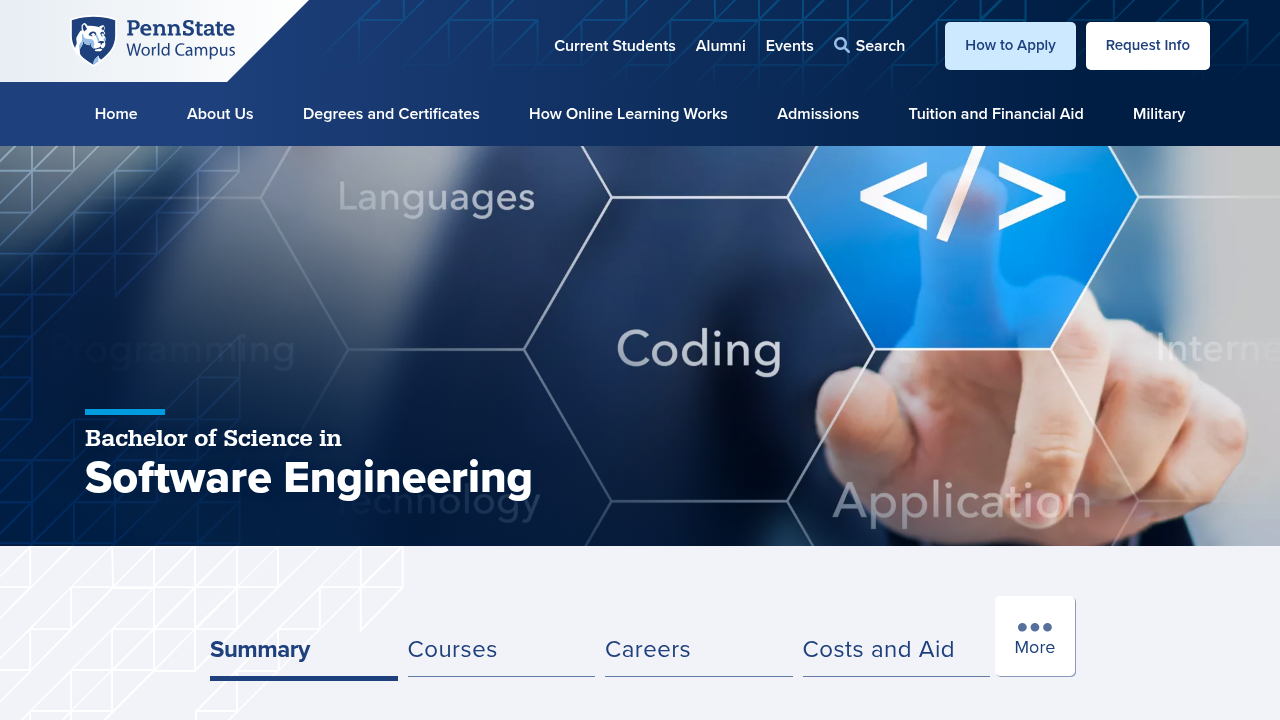
The previous section talked about what makes [degrees in software engineering] special, often backed by groups like ABET. Now, let’s look closer at what a bachelor’s degree in this field really involves. These programs usually take about four years if you study full-time, often requiring around 120-126 credits to finish Software Engineering Bachelor’s Degree Online.
What You Learn: Core Courses and Electives
When you get one of the many [software engineering degrees], your classes will be very hands-on. Most bachelor’s programs focus a lot on coding languages, the tools used in tech, and important math skills. You’ll learn how to design software, write the code, test it, and make sure it works well Online Bachelor’s Degree in Software Engineering.
Here are some common types of courses you can expect:
- Programming Basics: You’ll start with the building blocks of coding, learning different computer languages. This helps you master programming language fundamentals in 2026.
- Software Design: How to plan out software so it’s easy to use and change later.
- Data Structures and Algorithms: Ways to store information and solve problems with code efficiently.
- Operating Systems: How computers work at a deeper level.
- Database Management: How to organize and handle large amounts of data.
- Testing and Quality Assurance: Making sure software is free of bugs and performs as expected.
- Project Management: Learning how to work in teams, plan tasks, and deliver software on time.
For example, a Bachelor of Science in Software Engineering program often includes a mix of computer, engineering, math, science, and even English and social science classes, totaling around 120 credits. The goal is to make sure you can figure out what a system needs and then build software to meet those needs Software Engineering B.S. program.
Beyond the core classes, you might also pick electives in areas like:
- Web development
- Mobile app creation
- Cybersecurity
- Artificial intelligence (AI)
The Capstone Project: Your Big Showcase
A really important part of most [degrees of software engineering] is the capstone project. This is like a big final project where you get to use all the skills you’ve learned. It’s usually done in your last year and often involves working in a small team to build a real software product or solve a big problem senior-level project courses.
Think of it as putting together a puzzle with all the pieces you’ve gathered. You might propose a technical idea, build it, and then write a report about your experience, showing what you learned in your Software Engineering Bachelor’s Degree Program Online. These projects typically last one semester and require students to demonstrate their ability to analyze, design, develop, and test a software system Software Engineering Capstone competencies. Some programs even have a three-course capstone sequence where students lead a team to create a full software product advanced software engineering and product development.
Understanding Degree Names: BS, BEng, and BA
You might see different names for bachelor’s degrees, such as:
- Bachelor of Science (BS) in Software Engineering: This is the most common. It focuses heavily on technical skills, math, and science. Most employers see a BS degree as a strong sign of technical knowledge.
- Bachelor of Engineering (BEng) in Software Engineering: This is similar to a BS but might have an even stronger focus on engineering principles and practices, often more tied to traditional engineering fields.
- Bachelor of Arts (BA) in Software Engineering: A BA is less common for software engineering. It might include more liberal arts courses, focusing on broader critical thinking and communication skills, with less depth in core technical areas. Employers typically prefer a BS or BEng for pure software engineering roles because they show a deeper technical foundation.
No matter the name, these [degrees in software engineering] aim to create practical engineers who can understand system needs and build smart software solutions. If you’re wondering more about how these compare, you can look into the computer science vs software engineering degree differences.
Staying updated on the latest tech, including how AI is changing software development, is also key for anyone in this field. Get clear daily AI updates from The AI Newsletter Worth Reading.
Now that we know about bachelor’s degrees, let’s look at what comes next for those who want to go even further. Master’s degrees in software engineering can help you gain deeper skills and specialize.
Master’s degrees and specializations: MSE, MS, and professional master’s
Master’s degrees in software engineering are for those who want to become experts in the field. These programs build on what you learn in a bachelor’s degree. They help you get ready for more advanced jobs or even research roles. Many people look for master’s programs to gain specialized knowledge in areas that are in high demand today. The job market in 2026 shows a strong need for software engineers with deep, focused technical knowledge, especially in AI.
Research-Focused vs. Professional Master’s
When you look at different degrees in software engineering at the master’s level, you’ll usually find two main types.
- Research-focused Master’s (MS or MSE): These programs often lead to a Master of Science (MS) or Master of Software Engineering (MSE). They usually involve a lot of deep study and research. You might have to write a thesis, which is a long paper about a new idea or a problem you’ve solved. This type of degree is great if you want to work in research and development, teach, or even consider an Online PhD program for engineers later.
- Professional Master’s: These
software engineering degrees, sometimes also called MS or MSE, are more about getting ready for specific jobs in the industry. They focus on practical skills and tools that companies use right now. Instead of a thesis, you might complete a big project or an internship. This path is good if you want to move into leadership roles or specialize quickly in a fast-growing area.

Popular Specializations
No matter which type of master’s degree you choose, you’ll likely pick a special area to focus on. These specializations make your software engineering degrees even more valuable in the job market. Some of the most popular areas in 2026 include:
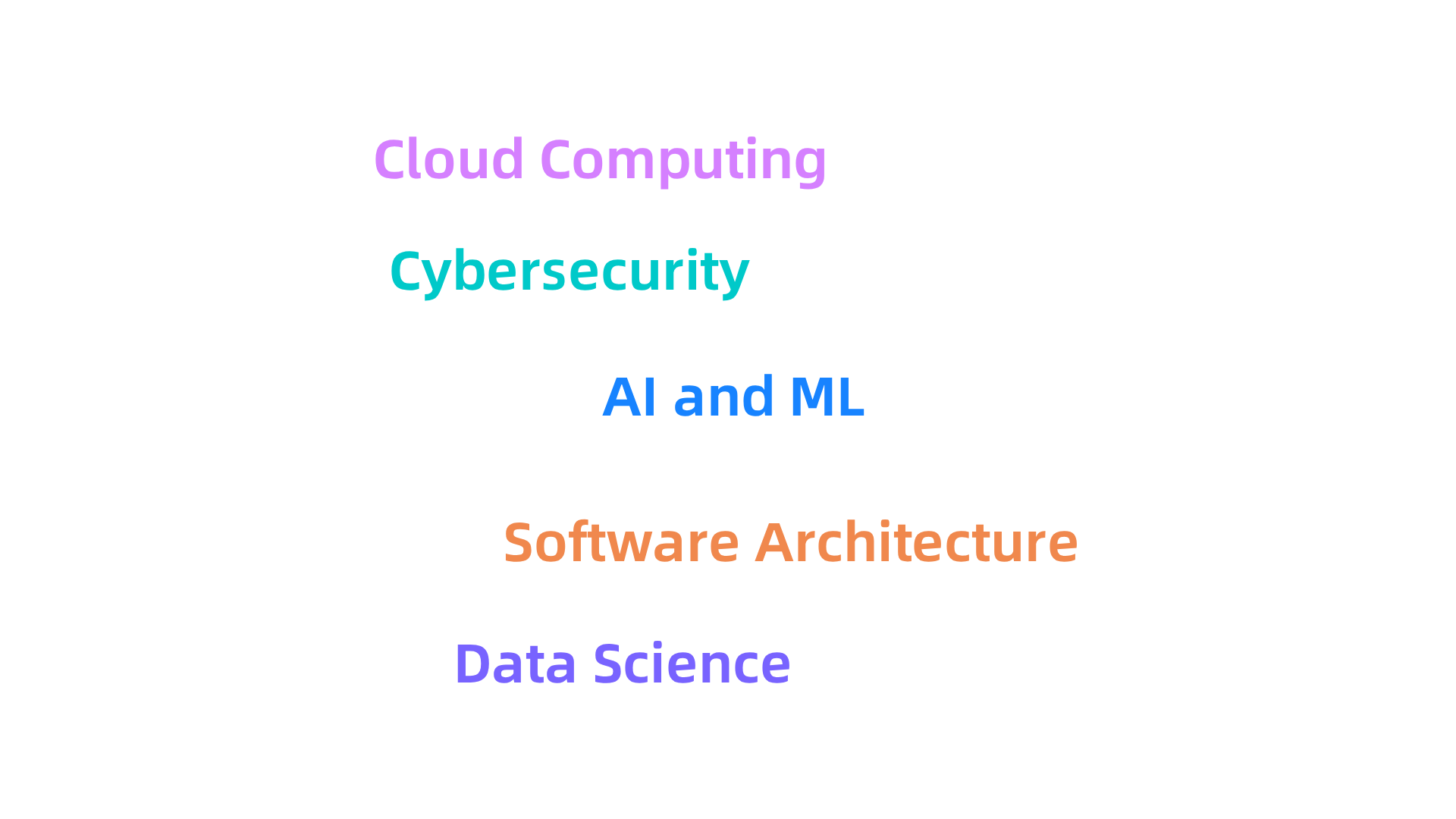
- Artificial Intelligence (AI) and Machine Learning (ML): This is a huge field right now. Many jobs for software engineers in 2026 are for AI and ML experts. Companies really want engineers who can build and ship real AI-powered products. AI and ML engineers are the clearest winners in terms of hiring demand for software engineers this year, showing the highest number of job postings, according to data from the Software Engineering Job Market 2026. If you’re looking to master these skills for your team, an AI mastering for custom software teams playbook can be very helpful. Also, companies see Machine Learning / AI as a clear priority for developers, states the State of Tech Hiring 2026 report.
- Cybersecurity: With more software out there, keeping it safe from attacks is super important. Specializing in cybersecurity means you learn how to protect software systems and data.
- Software Architecture: This is about designing the big picture of how a software system works. It’s for people who want to lead the technical direction of projects.
- Cloud Computing: Learning to build and manage software that runs on cloud platforms like AWS or Azure is also a valuable skill.
- Data Science: While related to AI/ML, data science focuses more on collecting, analyzing, and interpreting large amounts of data to find useful information.
Choosing a specialization can really help your career. Companies are looking for people with deep, focused skills rather than just general knowledge. Having these specific skills, especially in AI, makes you stand out. This is true whether you have degrees of software engineering at the bachelor’s or master’s level. For example, over 75% of AI-related engineering jobs need experts with specific technical knowledge, not just general experience, and Software Engineer Job Listings Are Up 30% this year, driven by this demand for AI skills. This means that focusing on a key area during your master’s program can lead to better job chances and higher salaries.
Beyond specific degrees in software engineering, there are other college programs that can lead to great careers in tech. These degrees overlap with software engineering in some ways but also focus on different skills. Knowing about these options can help you pick the best path for your future. Let’s look at Computer Science, Information Systems, and other engineering fields.
Alternative academic paths: Computer Science, Information Systems, and engineering disciplines
When you think about working with computers and technology, software engineering is a popular choice. But many other academic paths can also lead to exciting jobs in the same industry. These software engineering degrees and related fields share some core ideas but also have their own special focuses.
Computer Science (CS)
A Computer Science degree is often seen as a close cousin to degrees in software engineering. However, it usually dives much deeper into the theoretical side of computing. Think of it this way:
- Computer Science: Focuses on why computers work the way they do. You’ll learn a lot about math, algorithms, and how to solve problems using logic and theory. A CS degree gives you a strong foundation in things like data structures and operating systems, which are the basic building blocks of all software. Many CS programs also teach you how to analyze complex computing problems and find solutions using computer science principles, as mentioned by one university’s undergraduate handbook for 2025 graduates ECS – CSC Undergraduate Student Handbook.
- Software Engineering: Focuses more on how to build, design, and maintain large software systems. It’s about the practical side of turning theoretical ideas into real, working products that people can use.
While both degrees teach you how to code, a Computer Science program usually has more courses on the science and math behind computing. For example, a CS curriculum in 2026 might emphasize computational models based on strong mathematical rules UG-Curriculum-CSE-2026Onwards. Companies like big tech firms and defense contractors often look for CS graduates because of this strong theoretical background Software Engineer Bootcamp vs CS Degree: Full 2026 Guide.
If you love solving tricky puzzles, doing research, or want to explore new ideas in AI or complex systems, a CS degree might be a better fit. It can prepare you for roles in research and development, or for jobs that require a deep understanding of computer systems, as discussed in detail on computer science vs software engineering degree.
Information Systems (IS) or Information Technology (IT)
These degrees of software engineering alternatives are generally more focused on the business side of technology.
- Information Systems: Helps you understand how technology can be used to solve business problems. You learn about databases, networks, and how to manage information. It’s a blend of business and tech.
- Information Technology: Is even more practical, often focusing on setting up, managing, and maintaining computer systems and networks for organizations.
People with IS or IT degrees often work as system administrators, business analysts, or IT managers. They are key in making sure a company’s technology runs smoothly and helps the business meet its goals. While they might not be coding complex software every day like a software engineer, they are vital for integrating and managing software solutions.
Other Engineering Disciplines
Sometimes, other engineering degrees also have a strong computer or software component.
- Computer Engineering: This field sits right between Electrical Engineering and Computer Science. It focuses on how hardware and software work together. If you’re fascinated by designing computer chips, building embedded systems (like the computers in your car), or working on the very low-level parts of a system, computer engineering could be a great choice. It’s about building the physical parts of computers and making sure they can run software well. You can learn more about the path to this career by checking out computer engineering requirements.
When an Alternative Degree Might Be a Better Fit
Choosing between these degrees in software engineering and alternative programs depends on what you want to do:
- Choose Computer Science if you enjoy deep theoretical problem-solving, research, or want to work on the foundational aspects of computing. It’s also a strong choice for careers in areas like artificial intelligence where a solid theoretical background is crucial.
- Choose Information Systems or IT if you’re more interested in applying technology to business problems, managing IT infrastructure, or focusing on user support and system integration rather than building software from scratch.
- Choose Computer Engineering if you are excited about the intersection of hardware and software, designing integrated systems, or working on embedded devices.
Each of these paths offers unique opportunities in the vast world of technology. To stay informed about the rapidly changing tech landscape, especially with all the new advancements in AI, consider getting daily updates.
Get clear daily AI updates from The AI Newsletter Worth Reading.
While traditional university degrees are well-known paths into tech, they are not the only options. In 2026, many people are looking at faster, more focused ways to learn the skills needed for a software engineering job. These include online degrees, coding bootcamps, and microcredentials. These programs offer different ways to gain important skills without spending four years or more in a traditional college setting.

Coding Bootcamps
Coding bootcamps are intensive training programs that teach practical, job-ready skills in a short amount of time, often just a few months. Unlike broader degrees in software engineering that cover a lot of theory, bootcamps focus on specific programming languages, tools, and project work. You’ll learn by doing, building real projects that you can show to potential employers.
- What they teach: Bootcamps usually teach popular programming languages like Python or JavaScript, web development frameworks, database management, and how to work in a team. The goal is to get you ready for an entry-level software developer role quickly.
- Pros: They are faster and often less expensive than a full university degree. They emphasize hands-on experience, which is what many hiring managers are looking for today.
- Cons: The learning is very fast-paced and can be tough. They might not cover the deep theoretical computer science topics that a full degree would, which could limit some advanced career paths.
Many companies in 2026 are looking for candidates who have real project experience, not just textbook knowledge. This means that building actual software and having contributions to open-source projects can be more important than your GPA, especially for entry-level positions in the job market, as noted in a guide about the CS Job Market 2026.
Microcredentials and Certifications
Microcredentials are like small, focused badges that show you have learned a specific skill or set of skills. These could be certifications in cloud computing (like AWS or Azure), specific programming languages, or tools (like Docker). They are often offered by tech companies themselves or by online learning platforms.
- What they teach: These are highly specialized. For example, a certification might focus only on secure coding practices or how to build mobile apps.
- Pros: They prove you have a specific skill that employers need. They are flexible and can be earned while working. They are great for adding new skills to your resume or for showing that you keep learning in a fast-changing field.
- Cons: They are usually not a substitute for a full
software engineering degree. They are best used to complement existing knowledge or to specialize after getting foundational skills.
In 2026, the tech job market moves very fast. Employers value aptitude and practical skills. New data suggests that companies are rewarding "aptitude over syntax," meaning they care more about your problem-solving abilities than just memorizing code rules AI Is Rewriting Software Engineering Jobs. This makes focused certifications very useful for showing off key abilities. You can also explore different options like Coursera Online Courses For Software Developers In 2026 to gain valuable skills.
Online Degrees
Online degrees of software engineering are still full academic programs, but they are completed over the internet. You get the same degree as on-campus students, but with the flexibility of learning from anywhere.
- What they teach: Just like traditional degrees, online programs cover a wide range of computer science or software engineering topics, from theory to practical application.
- Pros: Offer the same in-depth knowledge and credentials as a traditional university degree, but with much more flexibility for those who can’t attend classes in person.
- Cons: Requires strong self-discipline. Some people might miss the in-person networking opportunities of a campus. The cost can still be similar to a traditional degree.
When considering an online associate in software engineering or a bachelor’s, it’s important to weigh the benefits against traditional learning. The choice between an online degree and a traditional one often comes down to personal learning style and life circumstances Software Engineering vs Computer Science Online Degree.
How Employers View Non-Degree Credentials
In the past, a four-year degree was almost always required. Today, employer views are changing.
- Growing Acceptance: Many tech companies, especially startups, value practical skills and a strong portfolio more than just a degree. They are often open to hiring bootcamp graduates and those with relevant certifications.
- Degree Still Matters for Some: Larger, more traditional companies, government jobs, and roles that involve deep research or complex theoretical problems might still prefer candidates with a full Computer Science or
software engineering degree. A 2026 look at hiring trends shows that major tech firms and defense contractors often have a degree as a filter for hiring. - It’s About Skills: What truly matters is what you can do. Employers want to see that you have the skills to build and deliver quality software. This means hands-on projects, contributions to open-source code, and proof of your abilities are key, no matter how you got them. To stand out, you might even consider getting a 2026 Software Engineer Certification That Actually Pays Off.
Deciding on the best path to become a software engineer can feel like a big puzzle. With so many options like traditional degrees, online programs, coding bootcamps, and microcredentials, how do you know which one is right for you? It really depends on what you want to achieve and what kind of work you see yourself doing. Here’s a simple checklist to help you make that important choice.
A Practical Checklist for Your Software Engineering Journey
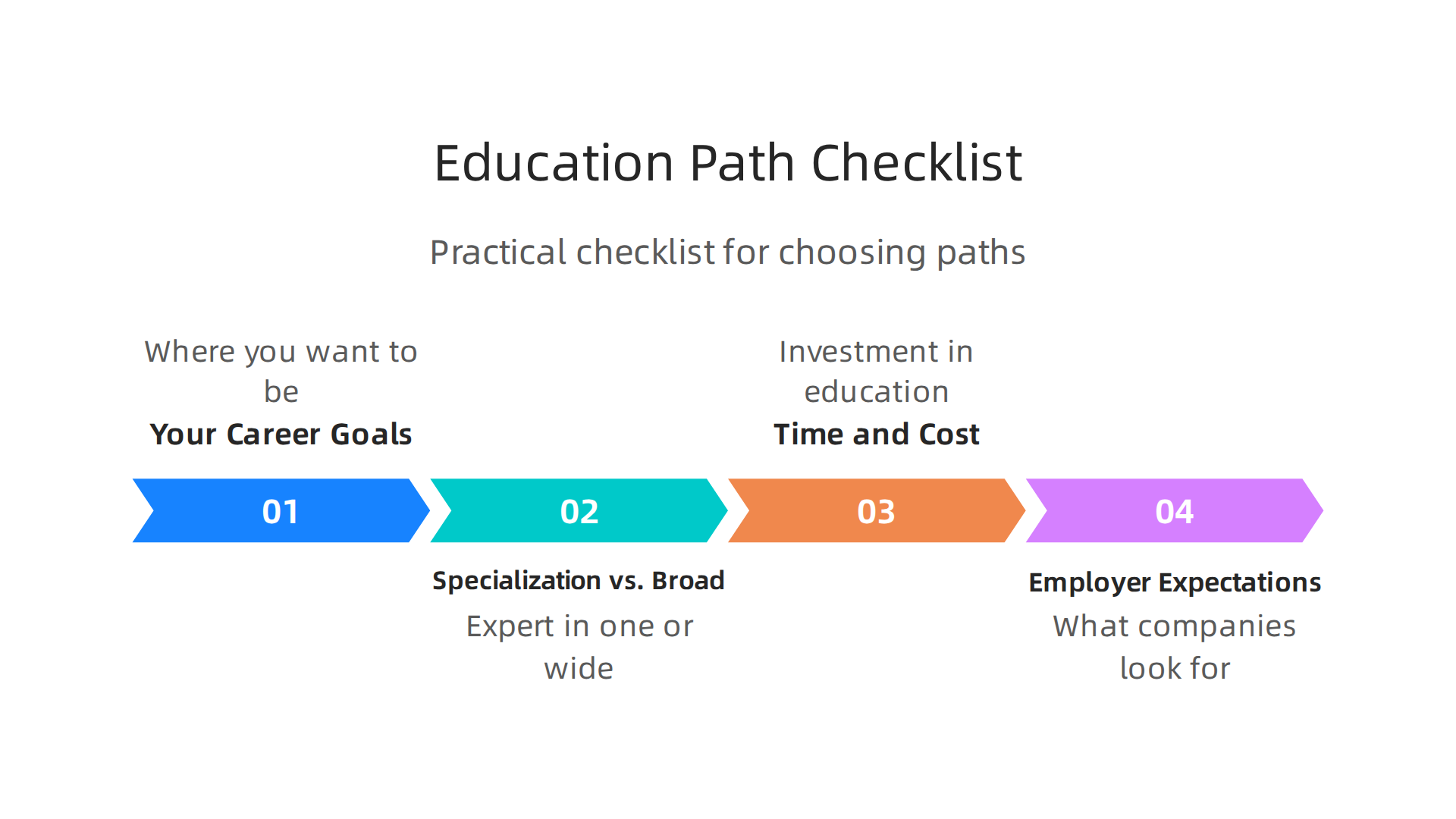
Choosing the right learning path for a career in software engineering comes down to a few key areas:
-
Your Career Goals: Think about where you want to be in a few years. Do you dream of working on deep research or complex systems? A traditional or online
software engineering degreemight be best for these roles, as they teach a lot of theory. If you want to get into hands-on development quickly, especially in areas like web or mobile apps, a bootcamp or specific certifications could be a faster route. For those thinking about leadership or very specialized architectural roles, sometimes a more advanced degree or a longer career path with a solid educational base is preferred. You can also explore options to define developer levels and build clear engineering career paths to better understand the progression. -
Specialization vs. Broad Knowledge: Do you want to be an expert in one specific technology right away, like AI development or cloud architecture? Then a microcredential or bootcamp focused on that area makes sense. If you prefer a wide understanding of computer science principles that can be applied to many different areas, then a full
degrees in software engineeringprogram will give you that broad base. In 2026, many job listings specifically look for experts with deep knowledge, especially in AI-related roles, rather than just general experience, as reported by MetaIntro. -
Time and Cost: How much time and money can you put into your education?
- Traditional/Online Degrees: These usually take 2 to 4 years for an associate in software engineering or a bachelor’s, sometimes more for higher
degrees of software engineering. They can be expensive, but they offer in-depth learning and a well-recognized credential. - Bootcamps/Certifications: These are often much shorter, from a few weeks to several months, and typically cost less. They are designed for quick entry into the job market.
- Traditional/Online Degrees: These usually take 2 to 4 years for an associate in software engineering or a bachelor’s, sometimes more for higher
-
Employer Expectations: What are the companies you want to work for looking for? While some larger, more traditional companies might still prefer candidates with a formal degree, many tech companies today value practical skills and a strong portfolio. They want to see what you can actually build. However, for certain types of jobs, like those in defense or very specialized engineering fields, an accredited degree is often a must. Accreditation shows that a program meets high standards for what students should learn by graduation, covering knowledge, skills, and behaviors needed in the field, as defined by organizations like ABET (Accreditation Board for Engineering and Technology) for engineering programs.
When to Prioritize Degree Type vs. Skills, Certifications, or Experience
It’s not always a choice between one or the other. Often, it’s about combining them.
-
When a Degree Shines: A formal degree, especially one that is accredited, gives you a strong foundation in theory, problem-solving, and advanced computer science concepts. This is very important for roles that involve complex system design, research, or architecting large software solutions. It can also open doors to higher-level positions or further academic study, like an online PhD program for engineers. Look for programs that meet strict criteria for what students are expected to know and do upon graduation, which you can find in official accreditation guides like the Criteria for Accrediting Engineering Programs, 2025 – 2026.
-
When Skills, Certifications, and Experience Lead the Way: For many entry-level and mid-level software development jobs, especially in agile startups or roles focused on specific technologies, having a strong portfolio of projects, relevant certifications, and real-world experience can be more important than the type of degree. Companies want to see that you can actually build and solve problems. You can gain these skills through bootcamps, online courses, personal projects, and open-source contributions.
Ultimately, the best approach often involves a mix. A foundational software engineering degree can give you a strong base, while specialized certifications and ongoing hands-on project experience will keep your skills sharp and make you a competitive candidate in the fast-moving tech world of 2026.
Staying informed about the latest shifts in technology is crucial for any developer or hiring manager.
Get clear daily AI updates from The AI Newsletter Worth Reading.
Summary
This article explains why knowing the different software engineering degrees matters for anyone building a tech career in 2026. It defines what makes a software engineering program distinct from computer science and software development, and it outlines the typical paths — associate, bachelor’s, and master’s — including common coursework, capstone projects, and degree names (BS, BEng, BA). The piece also explains accreditation (especially ABET) and why it matters to employers, then compares alternative routes like bootcamps, microcredentials, and online degrees. You’ll learn which master’s specializations (AI/ML, cybersecurity, cloud, architecture) are most in demand and how to weigh time, cost, and employer expectations. The article ends with a practical checklist to help you choose the right path and guidance on combining formal degrees with hands-on projects and certifications to stay competitive.