
Computer Science Jobs 2026 What the Data Shows About Demand Skills and Salaries
· 15 min read

The Evolving Computer Science Job Market: What You Need to Know
If you are looking into computer science jobs right now, you probably feel a mix of excitement and uncertainty. The field is moving fast. Artificial intelligence is changing how we build software. Remote work has reshaped where and how teams cooperate. And economic shifts keep pushing companies to adjust their hiring plans.
Here is the good news. The demand for skilled professionals remains strong. According to the Bureau of Labor Statistics, employment in computer and information technology occupations is projected to grow much faster than the average for all occupations through 2034. That means real opportunity for people who prepare the right way.
But the key word is "right way." Computer engineering jobs today require more than just knowing how to write code. Employers want people who understand AI tools, security practices, and modern development workflows. The world of computer science and engineering is broader than ever before. You can explore more facts about computer science growth and learning paths to help plan your next steps.
This article will walk you through what is actually happening in the job market. We will look at real data from trusted sources. We will explore which roles are growing fastest and which skills give you the best chance of landing a great position. And we will help you build a smart career strategy for 2026 and beyond.
Staying informed is the first step to making good decisions. Whether you are a student choosing a major, a professional thinking about a career change, or someone already in the field who wants to stay ahead, this guide is for you.

And if you want to stay on top of the latest changes in AI and technology, you can get clear daily AI updates from The Deep View Newsletter to keep your knowledge fresh.
Let us start with the big picture: where the jobs are, how many exist, and what the future really looks like for computer and information science professionals.
The State of CS Hiring in 2026
So what does the job landscape actually look like right now? The short answer is this: there are plenty of computer science jobs available, but companies are being choosy about who they bring on board.
Let us start with the big numbers. The U.S. Bureau of Labor Statistics projects that overall employment in computer and information technology occupations will grow much faster than the average for all occupations from 2024 to 2034. On average, about 317,700 new openings are expected each year. That is a lot of opportunity.
But here is the catch. The growth is not spread evenly across every role. Some specialties are booming while others are growing more slowly.
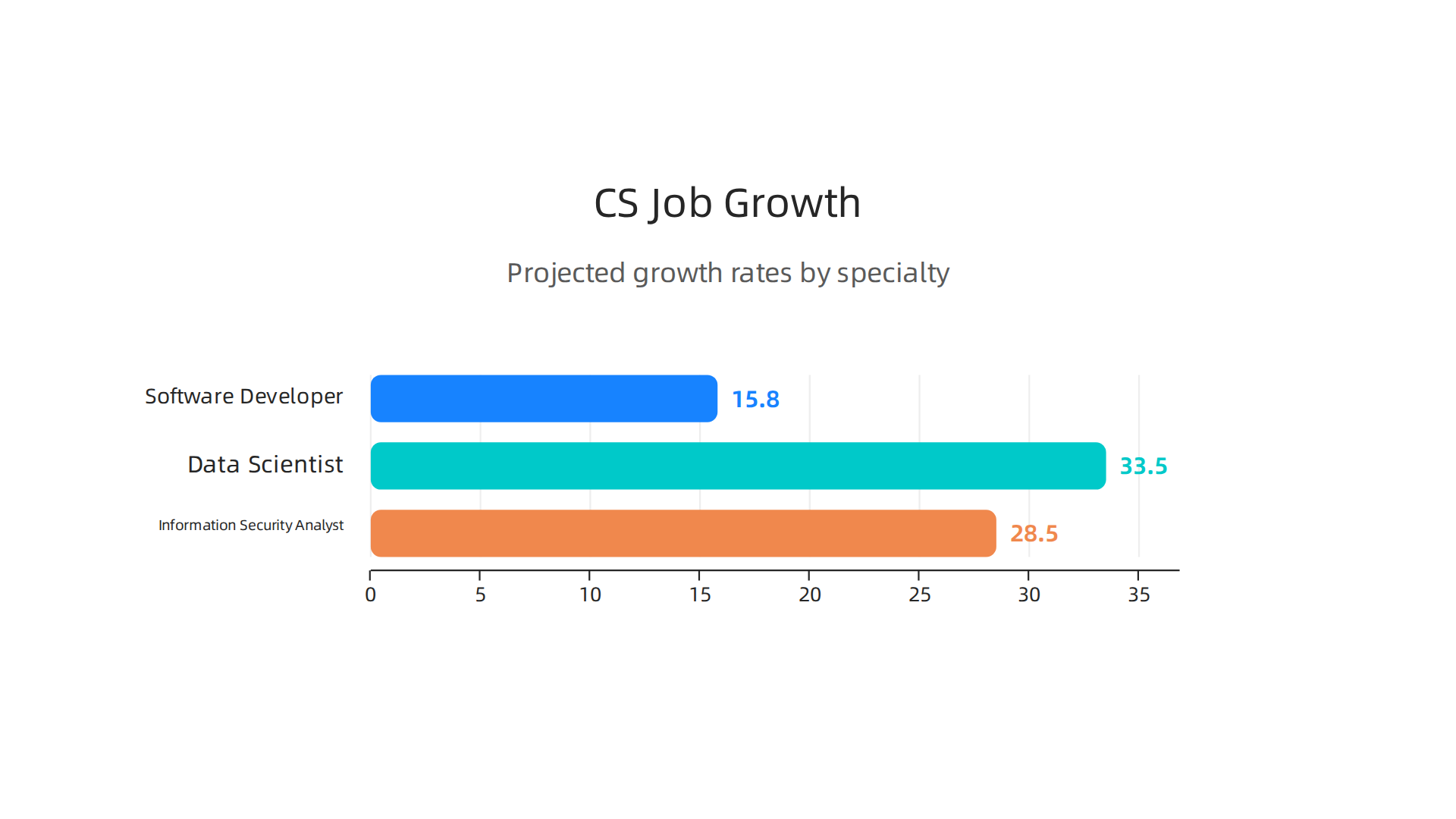
For instance, software developer roles are projected to increase by 15.8 percent, adding roughly 267,700 new positions. Data scientist jobs are expected to surge by 33.5 percent, and information security analyst roles by 28.5 percent, according to a discussion of BLS forecasts on Reddit. Those are the kinds of numbers that tell you where the market is heading.
Employers are looking for candidates with specialized skills. General coding knowledge is still valuable, but it is no longer enough. Companies want people who understand artificial intelligence, cybersecurity, cloud computing, and modern development workflows. If you have deep expertise in one of those areas, you will have a much easier time landing a great role.
That selectivity also shows up in where the jobs are located. Traditional tech hubs like San Francisco, Seattle, and New York still have high concentrations of openings. But remote work has changed the game. Many companies now hire from anywhere in the country, or even globally. That means you do not have to move to a high-cost city to get a top computer and information science position. You can work from a smaller city or a rural area and still earn a competitive salary.
At the same time, some companies are calling people back to the office a few days a week. So the landscape is mixed. If you prefer remote work, you can find it. If you want an in-office experience, that is available too. The key is knowing what you want and targeting employers that match your style.
The bottom line for 2026: the number of computer science jobs is strong, but the bar is higher than before. To stand out, you need to build skills that match what employers actually need. And if you are wondering where to start, it is worth learning how AI tools are becoming the new standard for developers in 2026. That knowledge will serve you well no matter which direction you choose.
Up next, we will look at the fastest-growing roles in detail and exactly what skills employers are hunting for right now.
Highest-Demand Computer Science Roles
Not all computer science jobs are growing at the same rate. Some roles are absolutely exploding right now. If you want to put your energy where the demand is, these are the fields to focus on.
AI and Machine Learning Engineer
Artificial intelligence is reshaping everything. Companies are racing to build, train, and deploy AI models.

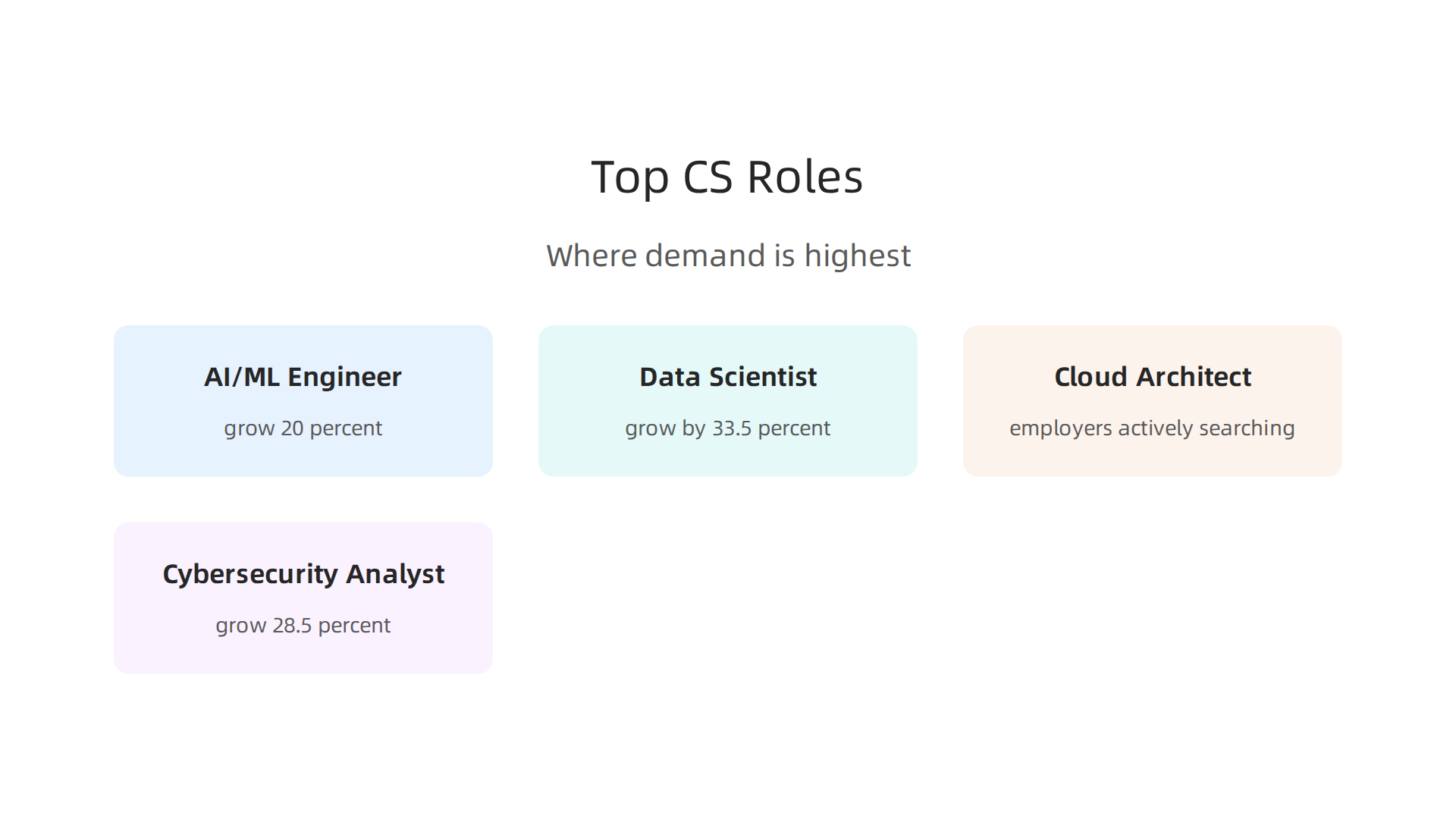
That means they need engineers who understand deep learning, natural language processing, and model optimization. The Bureau of Labor Statistics projects employment for Computer and Information Research Scientists will grow 20 percent from 2024 to 2034, which is much faster than average. The median pay in 2024 was over $140,000 a year. If you want to break into this space, it helps to start early. A great next step is to learn how to study AI for software development so you can build the right skills from the beginning.
Data Scientist
Data is everywhere. Every company, from healthcare to retail, needs people who can make sense of it all. Data scientists use tools like Python, SQL, and statistical modeling to uncover patterns and drive decisions. The BLS projects that data scientist roles will grow by 33.5 percent, adding about 82,500 new positions. That is according to the Reality of US BLS High Job Growth Forecasts for Computer Science discussion. The median salary sits around $112,590, making it one of the most rewarding paths in computer science and engineering.
Cloud Architect
As more businesses move their operations online, cloud infrastructure becomes critical. Cloud architects design and manage the systems that keep applications running smoothly. They work with platforms like AWS, Azure, and Google Cloud. According to the Best IT and Tech Jobs for 2026 list, employers are actively searching for candidates with cloud expertise. The related role of computer network architect pays a median of $130,390, and demand stays strong.
Cybersecurity Analyst
Cyber threats are growing more sophisticated every day. Companies need experts who can protect their data and systems. Information security analyst roles are projected to grow 28.5 percent over the next decade. That is one of the fastest growth rates in tech. The Top Tech Jobs in 2026 list ranks information security analyst as the number four best job overall, with a median salary of $124,910. If you enjoy solving puzzles and staying ahead of threats, this could be your path.
Other Roles on the Rise
Software engineering is still solid, but demand for entry-level positions has shifted. Many computer science grads are finding great opportunities in IT, systems analysis, and even finance. The Class of 2026 spotlight: Computer science majors from Handshake shows that students are applying their technical skills to a wider variety of roles than ever before. That flexibility is a superpower.
To stay on top of the fast-changing AI landscape, many developers rely on daily briefings like The AI Newsletter Worth Reading. It delivers clear AI updates straight to your inbox so you never miss a major shift.
Next, we will look at exactly what skills you need to land these roles and how to build a learning plan that works.
Essential Skills for CS Professionals in 2026
Landing one of the top computer science jobs takes more than just a degree. You need the right mix of hard skills and soft skills that employers actually look for.
The good news is you can build these skills step by step.
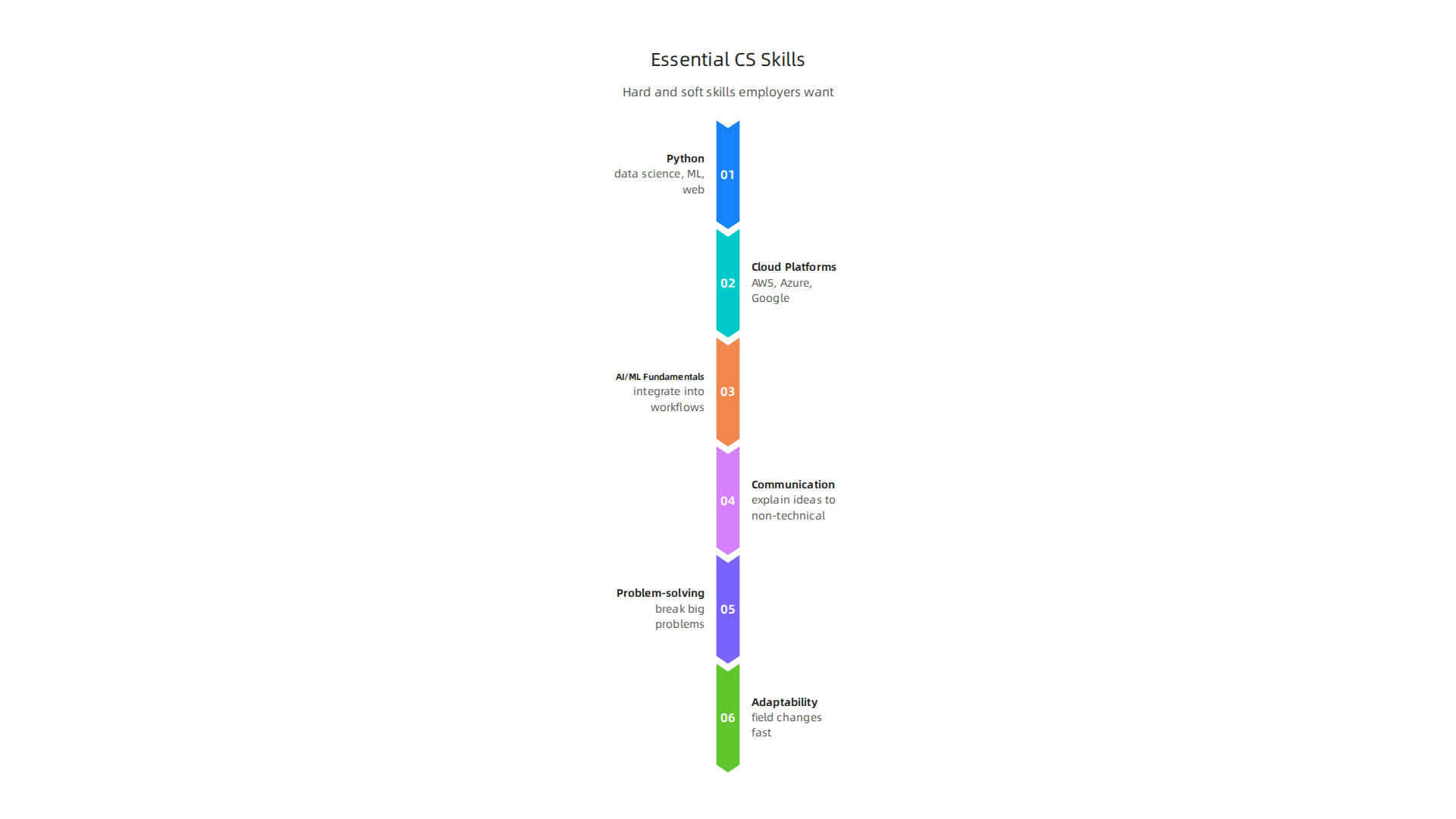
Let’s start with the technical side. Python is everywhere in 2026. It shows up in nearly 18 percent of all tech job listings. That is because Python works for data science, machine learning, web development, and even cybersecurity. If you only learn one language, make it Python. Cloud platforms like AWS and Azure are also huge. Companies need people who can design, deploy, and manage cloud systems. Understanding Docker and Kubernetes is becoming just as important. The experts at ONLC explain that serverless computing and containerization are now central to modern software development. Those are the cloud skills that make you stand out.
AI and machine learning fundamentals are no longer optional. Even if you are not training models, you need to know how AI tools work and how to integrate them into existing workflows. The ability to use AI coding assistants and understand prompt engineering is a big plus.
Now for the soft side. Communication is the number one soft skill employers want in computer science. You might write brilliant code, but if you cannot explain your ideas to non-technical team members, your value drops.

Problem-solving is just as critical. Computer science is about breaking big problems into small pieces and finding smart solutions. Adaptability keeps you relevant. The field changes fast. What is hot today might be old news next year. The NU article on computer science skills describes adaptability and continuous learning as essential traits for any professional who wants to stay ahead.
If you are wondering how to start building these skills, a great place is a resource that lays out practical learning paths. Check out our guide on computer science growth and learning paths. It shows you the most effective ways to develop both technical and soft skills for the 2026 job market.
Combine Python and cloud knowledge with good communication and a problem-solving mindset. That is the formula for thriving in computer science and engineering roles this year.
Salary and Compensation Trends for CS Jobs
Now that you know what skills to build, let’s talk about what you can earn. The money in computer science jobs keeps going up, especially for people with the right specializations.
If you are just starting out, the numbers look great. According to the National Association of Colleges and Employers (NACE), the average starting salary for a computer science bachelor’s graduate is $81,535 in 2026. That is the highest of any college major. Master’s graduates start even higher at $94,212. Computer science and engineering grads are in the strongest position in years.
Experienced professionals earn much more. The median salary for computer and information research scientists sits at $140,910, according to the BLS. But that is just base pay. The real story is in total compensation. Many top companies offer stock options, annual bonuses, and profit sharing. That easily pushes total pay past $180,000 for senior roles.
AI and cybersecurity skills push salaries even higher. Companies are willing to pay big premiums for people who can work with machine learning or secure cloud systems. A report from Robert Half shows that AI and machine learning engineers saw salary increases of over 4 percent this year. That is more than double the average raise for other tech roles.
So where does total compensation come from? Let’s break it down.
Total pay usually includes your base salary plus several extras. Bonuses are common, often 10 to 20 percent of your base. Stock options or restricted stock units (RSUs) can add tens of thousands of dollars each year. Some companies also offer signing bonuses and relocation help.
If you want to reach the top of the pay scale, consider getting certified in high demand areas. A software engineer certification that pays off can open the door to higher offers. Certifications in cloud architecture, cybersecurity, and AI are especially valuable in 2026.
Here is a quick look at how experience affects pay for computer science jobs:
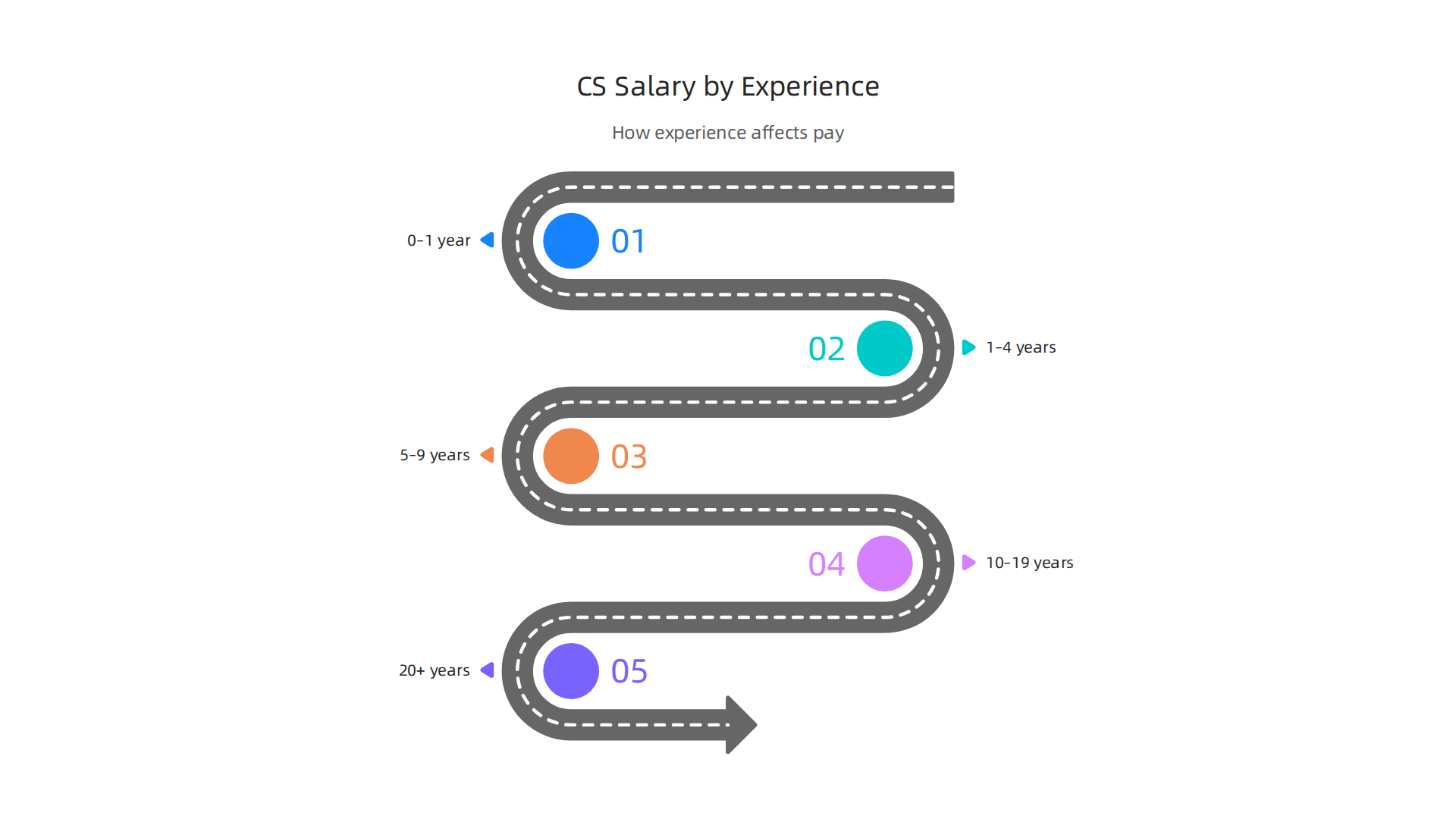
- 0–1 year: $71,000
- 1–4 years: $82,000
- 5–9 years: $108,000
- 10–19 years: $128,000
- 20+ years: $136,000
These numbers come from the Coursera salary guide for 2026, which pulls data from PayScale and the BLS.
Keep in mind that location matters too. Salaries in cities like San Francisco, New York, and Seattle are often 20 to 30 percent higher than the national average. Remote work also lets you earn big city pay while living in lower cost areas.
The key takeaway is this: computer science and engineering roles pay well, and they are paying better every year. The fastest salary growth comes from specializing in AI, cybersecurity, or cloud computing. Add strong communication and problem solving skills, and you will be in the top tier of earners.
To stay ahead of these trends, you need to keep learning. Markets change fast. The best way to know what skills will pay off next is to follow reliable daily updates. That is why many professionals subscribe to The AI Newsletter Worth Reading. It delivers clear daily AI news that helps you spot opportunities before everyone else.
The Impact of AI and Automation on CS Jobs
You have probably heard the scary headlines. AI is coming for software jobs. Robots will replace programmers. If you are studying computer science right now, you might feel worried. But here is what the data actually shows.
The truth is more interesting than the fear. AI and automation are changing computer science jobs, not killing them. Routine tasks like writing boilerplate code, running basic tests, and processing data are becoming automated. That part is real. But for every routine task AI takes over, new and more interesting roles appear.
According to experts at Chapman University, the shift is happening right now. AI will take over some of the repetitive tasks, which means computer scientists can focus on more meaningful and complex work instead of fixing code all day. The article titled Will AI Take Over Computer Science Jobs? explains that the outcome is not job loss, it is job evolution.
So what does this evolution look like? Companies are creating brand new roles that did not exist a few years ago. AI ethics engineers make sure algorithms are fair. Machine learning operations engineers manage AI systems at scale. Human-AI collaboration designers shape how people work alongside intelligent tools. These are all high value computer and information science roles that pay well.
The BCG study on how AI reshapes jobs backs this up. Their research found that over the next two to three years, about 50 to 55 percent of jobs in the US will be reshaped by AI. But reshaping is not the same as replacing. Most workers will keep their jobs while using AI tools to do better work. Some roles will change significantly, and workers will need new skills. But the overall story is one of growth, not loss.
Here is the key thing to understand. The professionals who thrive in this new landscape are the ones who learn to work with AI instead of against it. If you can use AI tools to write code faster, debug smarter, and design better systems, you become more valuable, not less.

Employers in 2026 are willing to pay premium salaries for people who combine strong computer engineering skills with AI fluency.
This means you need a plan. Upskilling is not optional anymore. You have to keep learning. That is why staying informed matters so much. The best way to stay ahead of these fast changes is to watch industry trends closely. If you want to understand how these new roles are shaping up, check out this guide on how to study AI for software development in 2026. It gives you a clear path to build the skills employers want most right now.
The bottom line for computer science jobs in 2026 is simple. AI is not taking your future. It is changing what your future looks like. The old roles that focused on repetitive coding are shrinking. But the new roles that combine human creativity with AI power are growing fast. If you invest in learning those hybrid skills, you will be in high demand for years to come.
Summary
This article explains the current computer science job market in 2026, combining BLS data, industry reports, and hiring trends to show where demand is strongest and what employers now expect. It covers which roles are growing fastest—like AI/ML engineers, data scientists, cloud architects, and cybersecurity analysts—along with the technical and soft skills that make candidates competitive. You’ll learn how AI and automation are shifting job tasks rather than eliminating work, why specialization (AI, cloud, security) boosts pay, and how remote hiring changes location flexibility. The piece also breaks down salary ranges, total compensation components, and practical steps for building a career plan, including certification and learning-path recommendations. After reading, you’ll understand which skills to prioritize, which roles to target, and how to create a focused plan to land higher-paying CS positions in 2026.