
Choose Online Courses for Career Development That Deliver Real Impact
· 19 min read

The world of software development moves at lightning speed. New tools, ways of building things, and especially advancements in AI pop up all the time. For developers and product teams, this fast pace can feel like a huge challenge. It’s tough to keep up with everything and know what to learn next to help your career. There’s so much information out there that it’s easy to feel lost.
Staying current is not just about personal growth; it’s also about making sure your team and projects succeed. With the market for online learning platforms growing, many companies like Coursera and Udemy offer courses to help you learn new skills Online Learning Platforms Market Report 2026. But how do you pick the right ones? How can you find online courses for career development that truly make a difference?
This guide is here to help you cut through the noise. We will give you a clear, smart way to choose online courses and learning paths. Our goal is to help you boost your career development and make your team’s work even better. We’ll explore how to find valuable learning experiences, from solving tough coding challenges to mastering new coding techniques. Whether you’re interested in improving your coding skills or learning about the latest AI trends, choosing the right course can be a big step forward.
Ready to find the best ways to grow your skills? If you are looking to choose the best learning path, read our guide on choosing the best software development course for 2026.
Staying informed about the fast-changing world of AI is also key.
Get clear daily AI updates from The AI Newsletter Worth Reading.
1) Understanding Current Developer Skill Gaps and Priorities
Now that we know how important it is to keep learning, let’s talk about what skills are most wanted right now in 2026. Knowing this helps you pick the best online courses for career development. It’s like having a map to show you where to go next in your learning journey.
Many employers are looking for a mix of technical skills and other important abilities. When we look at job postings, some clear trends pop up. Cloud computing, like working with AWS or Google Cloud, is a top skill companies want Software Engineering Skills in Demand 2026 (Real Data). Also, Artificial Intelligence (AI) and Machine Learning (ML) skills are super important. Python, a programming language, is often mentioned because it’s key for AI development, along with automation and handling data Reveal Survey Identifies the Most In-Demand Technology Jobs. Other key technical skills in demand include SQL, CI/CD (which helps teams deliver software faster), and Docker Global Software Engineering Jobs Outlook 2026: Key Trends, In …. These are the tools that help modern teams build and ship code more efficiently. If you’re wondering how AI is changing things, you can learn more about AI for Software Development in 2026.
But it’s not just about coding skills. Companies also value "adjacent" skills, which are those that help you work better. Things like good communication, problem-solving, and understanding how a product works from a business side (product thinking) are very useful. Working in an agile way, where teams adapt quickly to changes, is also highly valued.
So, how do you figure out what you need to learn?
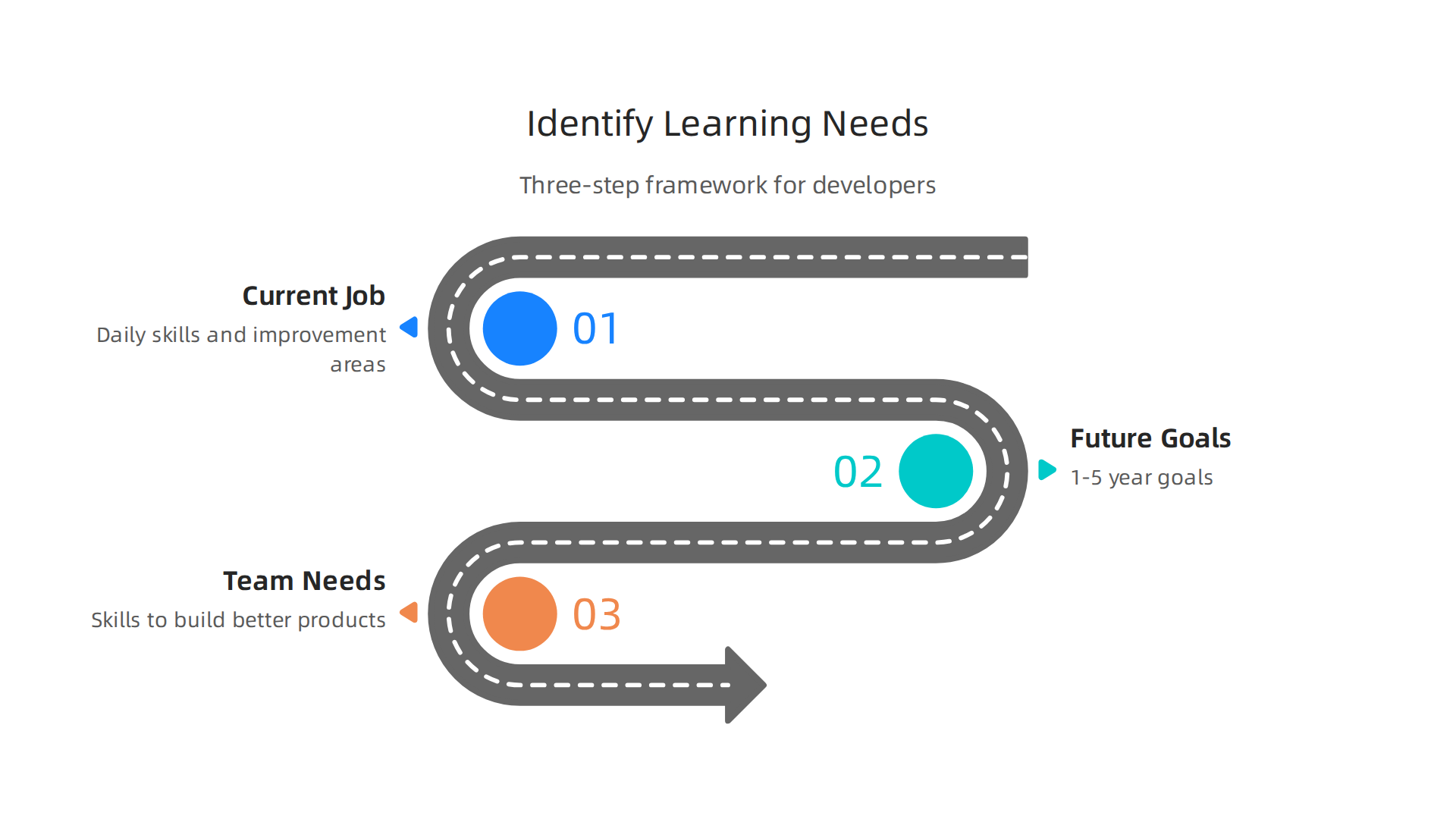
- Look at Your Job: What skills do you use daily? Where do you feel you could be better or faster?
- Think About Your Goals: Where do you want to be in one year, or five years? What kind of role do you dream of?
- Check Your Team’s Needs: What skills would help your team build better products or solve more coding challenges?
Once you know your gaps, you can map them to online courses for career development. For example, if you want to get into AI, an online course that teaches Python for machine learning could be a great step. Or, if you want to get better at testing, find a course focused on that. You can even use apps like mimo coding or join a coding town community to practice your skills daily. This way, you turn big learning goals into smaller, manageable steps. To dive deeper into specific AI learning paths, check out our guide on How to Study AI for Software Development in 2026.
Once you know what new skills you want to learn, the next big step is figuring out where to learn them.

There are many types of online places that offer online courses for career development. Each one is a bit different, like choosing different kinds of schools. Let’s look at the main types so you can pick the best fit for you in 2026.
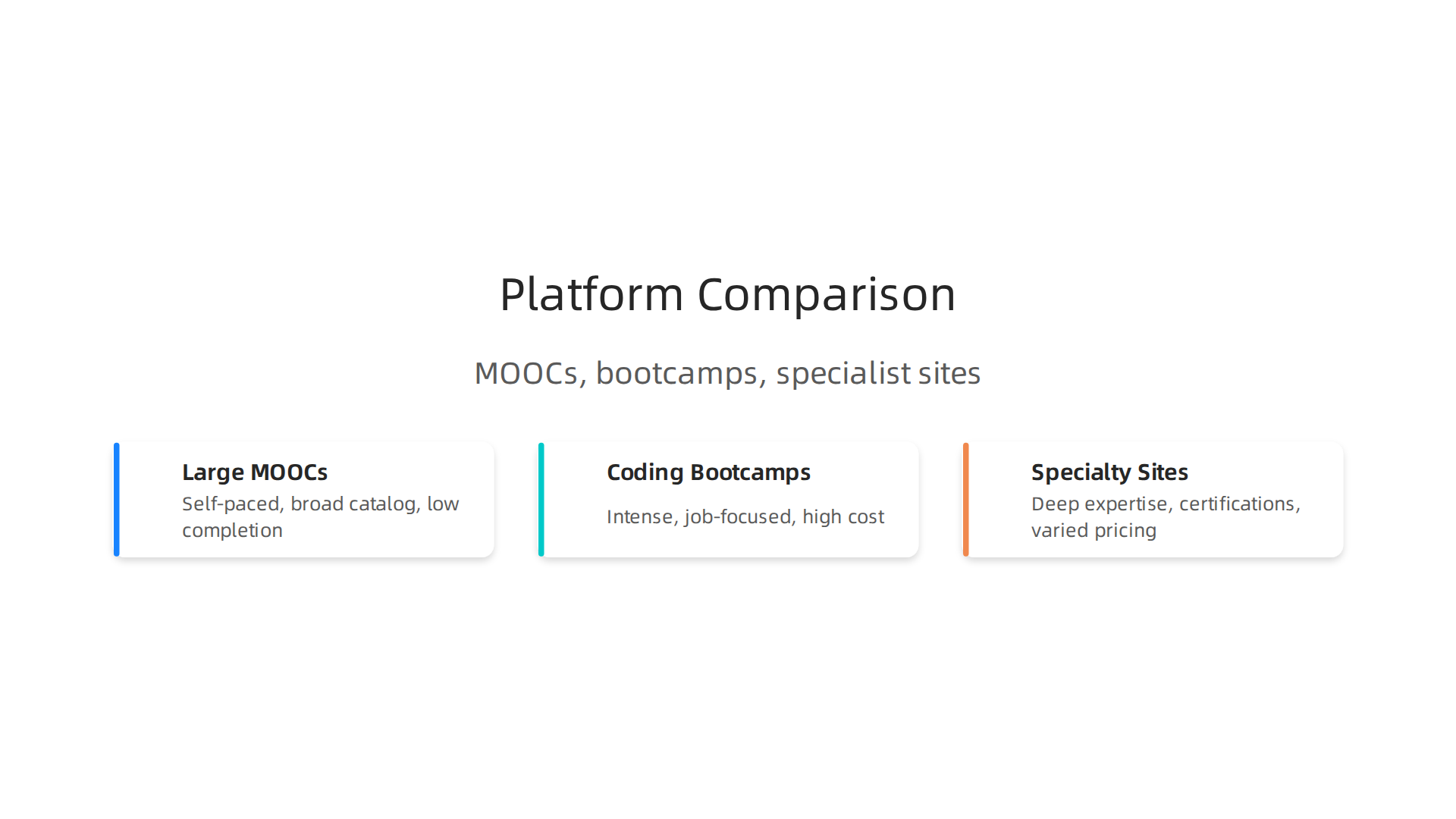
Large Online Course Providers (MOOCs)
These are like big online universities. Names you might know include Coursera, edX, and Udemy. Many famous companies like upGrad and Simplilearn also offer courses on these platforms, as mentioned in the Online Learning Platforms Market Report 2026.
- Good things: They have a huge number of courses, often on many different subjects. You can learn at your own speed. Sometimes, parts of the courses are free, and you pay extra if you want a certificate.
- Things to think about: It can be hard to finish these courses. Reports show that many people who start MOOCs don’t finish them. The average completion rate can be low, sometimes less than 15% for free courses, but it jumps to over 60% if you pay for a certificate or join a structured program MOOC Statistics 2026: Learners, Platforms & Completion Data. Courses with strong communities or live sessions often have much higher completion rates, sometimes 50% to 70% 113 Fresh eLearning Statistics 2026: Courses, Creators & AI.
Coding Bootcamps
These are special programs that teach you a lot in a short, intense time. Think of them as a fast track to getting a job in tech.
- Good things: They focus on real-world skills that employers want. They often have strong support from teachers and classmates. Many bootcamps also help you find a job after you finish. Because they are more involved, people are much more likely to complete them.
- Things to think about: Bootcamps usually cost more money and take up a lot of your time each day. They are not for everyone because they are so fast-paced.
Specialty Sites and Company Training
Some websites focus on just one area, like cloud computing or a certain programming language. Also, big tech companies like Amazon or Google offer their own training for their tools.
- Good things: You can get really deep knowledge in one specific area. If you want to master a specific skill, these sites are great. Official company training can also give you special certifications that employers value.
- Things to think about: They might not cover a wide range of topics. The cost can be different, from free to very expensive.
How to Choose the Best Platform
When picking from all these online courses for career development, think about:
- What you want to learn: Do you need a quick skill update, or a deep dive into something new?
- Your time: Do you have a lot of free time for a bootcamp, or just a little for a self-paced MOOC?
- Your budget: How much money can you spend?
- Do you need a certificate? Some jobs like to see official papers.
Sometimes, a mix of different types of learning works best. You might take a MOOC to learn the basics and then join a small "coding town" community or use an app like mimo coding to practice your coding challenges daily. The most important thing is that the platform helps you reach your learning goals.
To stay on top of the fast-changing world of tech, especially with new AI tools, it’s wise to get updates often.
Check out The AI Newsletter Worth Reading to get clear daily AI updates from The Deep View Newsletter.
When you pick a place to learn, you also need to think about what kind of "paper" or proof you’ll get at the end. These are called microcredentials, certificates, or bootcamps. They all show employers you have new skills, but they do it in different ways.
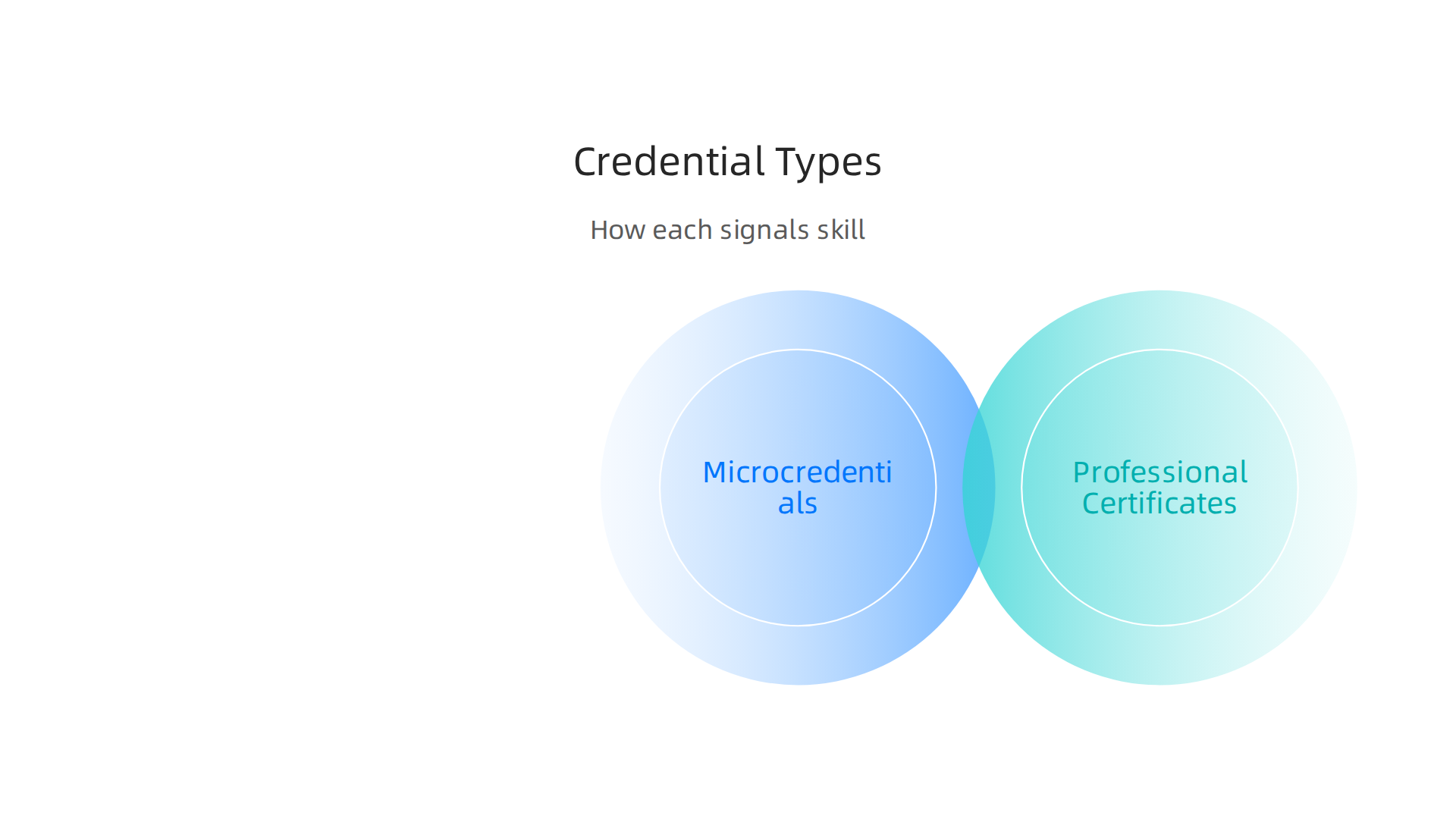
It’s like asking: does this piece of paper truly show what I can do, or just that I finished something?
Microcredentials
These are small badges or certifications that show you’ve learned a very specific skill. Think of them as quick proof for a single ability. Employers really like them. In fact, almost all employers, about 96%, say that microcredentials strengthen a candidate’s job application in 2026. Many are even willing to offer higher starting pay to people who have them. They show you’re good at a certain thing and that you keep learning. Another report found that 72% of employers are more likely to hire someone with an industry microcredential. These are great for filling small skill gaps or showing you’ve mastered a new tool, especially when combined with practical experience.
Professional Certificates
These are a step up from microcredentials. They usually cover a wider set of skills within a certain area, like "web development basics" or "cloud computing." They prove you finished a structured program. For instance, a certified online course tells hiring managers you’ve gone through a recognized learning path. They offer good value if you’re looking to improve your skills without committing to a long degree program. These can show a good mix of completing formal learning and gaining solid understanding.
Immersive Bootcamps
Bootcamps are intense, short-term programs designed to get you job-ready quickly. They give you a certificate, but more importantly, they help you build a portfolio of real projects. This "substance" is what truly matters. Employers often value bootcamp credentials, especially when they come with actual projects and proof of work. For example, nearly three out of five people who finished bootcamps felt their training gave them a certificate or portfolio valued by employers. While a certificate from a bootcamp shows you completed the program, the real goal is to be able to "debug a broken pipeline" or "justify a modeling decision," as one expert put it, meaning you can actually do the job. Many top bootcamps also report good job placement rates, sometimes between 70% and 90%, because they focus on helping you get hired. They also help you build a portfolio of projects from various coding challenges you complete.
Choosing What’s Right For You
When picking your path, always think about both the "signal" (what the credential tells an employer) and the "substance" (the actual skills and projects you gain). Look for programs that:
- Teach real skills: Make sure the skills are current and useful in 2026.
- Help you build a portfolio: Having projects to show is often more powerful than just a certificate. This is where tools like
mimo codingor joining acoding towncommunity for practice can be really helpful. - Have good hiring results: If a program helps people get jobs, that’s a strong sign it’s worth your time and money.
The best online courses for career development combine strong teaching with practical work that leads to a great portfolio.
As you pick your learning path, understanding how to use AI tools is super important in 2026. These tools are changing how we build software, making them key for any modern developer looking for career growth. Knowing how to work with AI will make you a much more valuable team member.

Here are the main types of AI developer tools you should learn about:
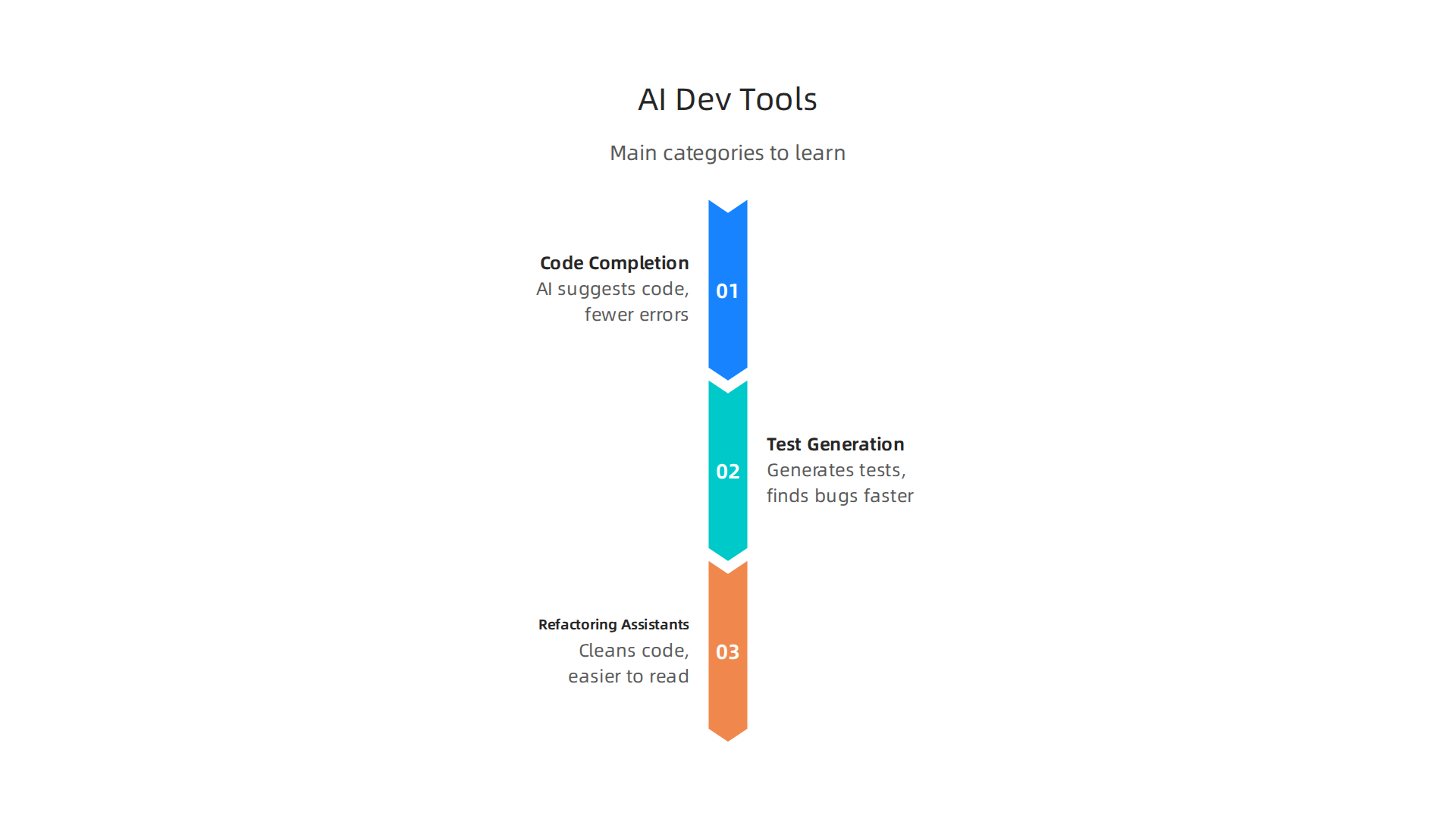
- Code Completion: Imagine AI guessing what you want to type next as you write code. It saves time by finishing lines or suggesting whole chunks of code. This can make coding faster and reduce small errors.
- Test Generation: These tools help make sure your code works correctly. They can create tests almost on their own, which helps find bugs faster and makes your software more reliable.
- Refactoring Assistants: This is like having a smart helper to clean up messy code. These tools suggest ways to make your existing code better, easier to read, and more efficient without changing what it does.
Integrating AI Tools into Your Learning
Many developers agree that AI tools help them be more productive. A study found that over 80% of people who use AI coding tools said it made them more productive, either a little or a lot Two Lenses On Ai-Assisted….
However, using AI effectively is not about letting it do everything for you. You still need to understand the code it gives you. Actually, a lot of developers, about 96%, do not fully trust code made by AI alone. Only about half always check it carefully before using it State of Code Developer Survey report: The current reality …. This means learning to check and guide AI is a big skill. You should use AI to speed up simple tasks, but always make sure you truly understand what the code does. This wise use of AI is a core part of how to use AI for software development.
To keep up with all the new AI tools and ideas, it helps to get regular updates. The AI Newsletter Worth Reading can help you stay informed.
As you learn to work smarter with AI, it is also important to think about how you learn new skills. This helps make sure what you learn truly sticks and helps your career grow. Making your learning journey effective is key, especially when you are looking at online courses for career development.
Designing an efficient learning workflow: microlearning, projects, and spaced practice
To really master new coding skills in 2026, think about these proven ways to learn:

- Microlearning: This means learning in small, focused chunks. Instead of trying to learn a whole coding language in one long sitting, break it down into tiny daily lessons. Maybe 15-30 minutes a day. This makes it easier to fit learning into your busy schedule and keeps your brain from getting tired. Many online courses are designed this way, letting you tackle coding challenges a bit at a time.
- Project-Based Practice: The best way to learn to code is by actually building things. When you work on projects, you use what you learn right away. This helps you understand how everything fits together. For example, if you are learning Python, try building a small app or a game. This active learning makes the knowledge stick better than just reading books. You can even find software engineer projects to help you get started.
- Spaced Practice (or Spaced Repetition): This is about reviewing things you have learned over time. Instead of trying to remember everything at once, you revisit topics after a few days, then a week, then a month. This helps your brain move information from short-term memory to long-term memory. It’s like reminding yourself of important ideas just when you are about to forget them.
Practical Weekly and Monthly Learning Plans
Fitting learning into your life does not have to be hard. Here are some simple ideas:
- Weekly Plan:
- Monday to Friday: Dedicate 30 minutes each day to microlearning. This could be going through a module in an online course, solving a quick coding challenge, or reading an article about a new tech trend. Python, for instance, remains a top skill in demand for developers in 2026, being cited by 56% of companies in one survey Reveal Survey Identifies the Most In-Demand Technology Jobs.
- Saturday or Sunday: Spend 2-3 hours on a project. Apply what you learned during the week. This is where you practice and build something real.
- Monthly Plan:
- First week: Focus on learning new concepts.
- Second week: Work on a small project using those new concepts.
- Third week: Review older topics using spaced practice, and maybe try some slightly harder coding challenges.
- Fourth week: Start a new learning area or deepen your knowledge in the current one.
This balanced approach helps you keep growing your skills without feeling swamped. Many developers find that structured online courses for software developers in 2026 can guide them through this type of efficient learning.
Now, let’s look at how whole teams can learn and grow together. For engineering managers and product leaders, helping your team get new skills is very important. It keeps your company strong and ready for new challenges in 2026.
Scaling learning across teams: upskilling, L&D approaches, and mentorship
To make sure your team stays sharp, think about smart ways to teach new skills. This is called upskilling.
- Internal Learning Programs and Mentorship: You can set up programs inside your company. This might mean having senior developers teach junior ones. Good mentorship helps everyone grow. You can also host small workshops or "lunch and learn" sessions. These sessions can be about specific coding challenges or new tools. By creating clear pathways, you can define developer levels within your team.
- Using External Training: Sometimes, outside experts are best. Look for online courses or bootcamps that focus on the skills your team needs. Many online courses offer small, focused lessons, much like the microlearning we talked about earlier. When you choose external training, make sure it fits your team’s goals. Certifications from these programs can be a big plus. In fact, many employers agree that microcredentials make a job application stronger, with some surveys showing 96% of employers feel this way 7 Powerful Ways Microcredentials Are Reshaping How Employers Hire.
- Measuring Learning’s Worth (ROI): How do you know if the training is working? Look at things like:
- Are projects getting done faster?
- Are there fewer errors in the code?
- Are team members using their new skills every day?
- Are your employees staying with the company longer because they feel they are growing?
- Also, consider the actual cost versus the benefits. Certifications, for example, often offer a strong return on investment for upskilling because they don’t cost too much and can be finished quickly AI Certifications vs Degrees vs Bootcamps: ROI.
Embracing these ideas helps your team master new tech. It also boosts their overall career development. You can even transform corporate training with AI-powered homework help to make learning even more effective.
Staying on top of the latest tech news is key for both individuals and teams. Get clear daily AI updates from The AI Newsletter Worth Reading.
When you’re looking at online courses for career development, it’s super important to pick good ones. You want to make sure the course is worth your time and money. Here’s a simple checklist to help you choose the best options and see if they will really pay off for you.
How to evaluate course quality, credibility, and ROI before you enroll
Picking the right online course is like picking the right tool for a job. You need to check it closely.
- Look at the Course Content: Does the course teach what you need to learn? Check the lessons and topics it covers. Are there practical exercises or coding challenges? Some platforms, like those offering "mimo coding" or "coding town" experiences, focus on hands-on learning. The best courses tell you exactly what you’ll be able to do after finishing them. This means the course has clear learning goals. Experts say that learning goals should be written from the student’s point of view, explaining what they can do upon completion Online course quality evaluation instruments: A scoping.
- Check Who is Teaching: Are the instructors experts in their field? Do they have real-world experience? Good teachers make a big difference in how well you learn.
- Look at Projects and Homework: Does the course have projects you can build? These are great for showing off your new skills. For example, if you’re taking a course on web development, you’d want to build a website. These kinds of activities are called authentic activities because they are like real work Establishing a Quality Review for Online Courses.
- See What Past Learners Say: Look for reviews and testimonials from people who have finished the course. Did it help them get a new job or promotion? Did they feel it was worth the cost?
- Understand Completion Rates: Not everyone finishes online courses. In fact, many online courses have completion rates between 10-15% across the industry 11 Best online course platforms for creators in 2026. However, courses with live sessions or strong community features tend to have much higher completion rates, sometimes reaching 50-70% or more 113 Fresh eLearning Statistics 2026: Courses, Creators & AI. Knowing this helps set your expectations and choose a course structure that fits you.
- What About Getting a Job? If your goal is career development, check if the course or platform shares how many of its students get jobs after finishing. Some bootcamps, for example, report high job placement rates, showing that employers value these types of practical training Internship vs Bootcamp – Which Actually Launches Your Tech Career.
- Consider Course Cost vs. Benefit: Think about how much the course costs and what you expect to gain. Will it help you earn more money, save time at work, or open new career doors? These benefits should outweigh the price.
By looking at these things, you can choose online courses that really help you grow your skills and boost your career. Finding the right online courses for career development is a key step to staying competitive in 2026.
Summary
This article guides software developers and engineering leaders on selecting online courses that genuinely advance careers in 2026. It explains which technical and adjacent skills employers currently demand (cloud, AI/ML, Python, CI/CD, communication and product thinking), outlines the major learning options (MOOCs, bootcamps, specialty training), and compares credential types like microcredentials, professional certificates, and immersive bootcamps. You’ll learn how AI tools (code completion, test generation, refactoring assistants) fit into both day-to-day work and learning, plus proven learning methods—microlearning, project-based practice, and spaced repetition—to make skills stick. The guide also covers team upskilling strategies, mentorship, and how to measure training ROI, and gives a practical checklist to evaluate course quality, completion likelihood, and real career value. After reading, you’ll be able to map your gaps to the right courses, pick platforms that match your time and budget, and build a weekly/monthly plan that produces real projects and portfolio evidence employers value.