
AI Ethics for Software Teams Build Trustworthy AI in 2026
· 24 min read

Why AI Ethics Matters for Software Teams in 2026
In 2026, artificial intelligence, or AI, is everywhere. It’s helping us write emails, drive cars, and even create art. Because AI is so powerful and used in so many products, it means that software teams building these tools face big new challenges. They must think about how to build AI responsibly. This is called AI ethics, and it’s super important.
Right now, many companies are adding AI to their products very quickly. Reports show that many AI projects start without proper checks or rules in place. In fact, over half of new AI projects might not have formal approval, and a lot of leaders feel that AI is growing faster than their company’s ability to manage its risks well [^1^]. This quick growth means more chances for things to go wrong if we don’t think about AI ethics from the start.

When software teams don’t focus on AI ethics, it can cause many problems.
- Product Quality: If AI systems are unfair or make mistakes often, the product won’t work well for everyone. For example, if an AI makes incorrect choices, like giving bad suggestions or showing unfair results, people won’t trust it. Many companies found inaccurate AI outputs to be a major risk this year [^2^].
- Legal Risks: Laws about AI are still new, but they are growing. If a product with AI acts unfairly or harms someone, the company can face legal trouble. This could mean big fines or even lawsuits. Problems like unfair bias, not protecting people’s data, or not being clear about how AI makes decisions are some of the main ethical concerns for businesses [^3^].
- User Trust: People need to feel safe and respected when they use AI products. If they don’t trust the AI, they won’t use the product, or they might stop using it. Building AI that is fair and clear helps people feel better about using new technology.
- Long-Term Product Success: A product that has ethical problems might do well at first, but it won’t last. Customers will eventually leave, and the company’s good name can get hurt. Thinking about AI ethics helps teams build products that stand the test of time.
For software developers and product teams, understanding how to work with AI, including things like edge AI and tools that help with code like a claude code course, is crucial. But it’s equally important to know how to build these tools safely and responsibly. Getting a handle on topics like mastering AI response design evaluation and safe implementation can help ensure better outcomes. This means thinking about ethical rules every step of the way, from planning to building to launching.
If you want to stay up-to-date with all the fast changes in AI and technology, there’s a great way to do it. Get clear daily AI updates from The AI Newsletter Worth Reading.
[^1^]: EY survey: autonomous AI adoption surges at tech companies as oversight falls behind
[^2^]: AI Ethics and Bias Statistics 2026: What Businesses Must Know
[^3^]: AI Ethical Concerns in 2026: What Enterprises Must Address
Core Principles of AI Ethics: What Developers Need to Know
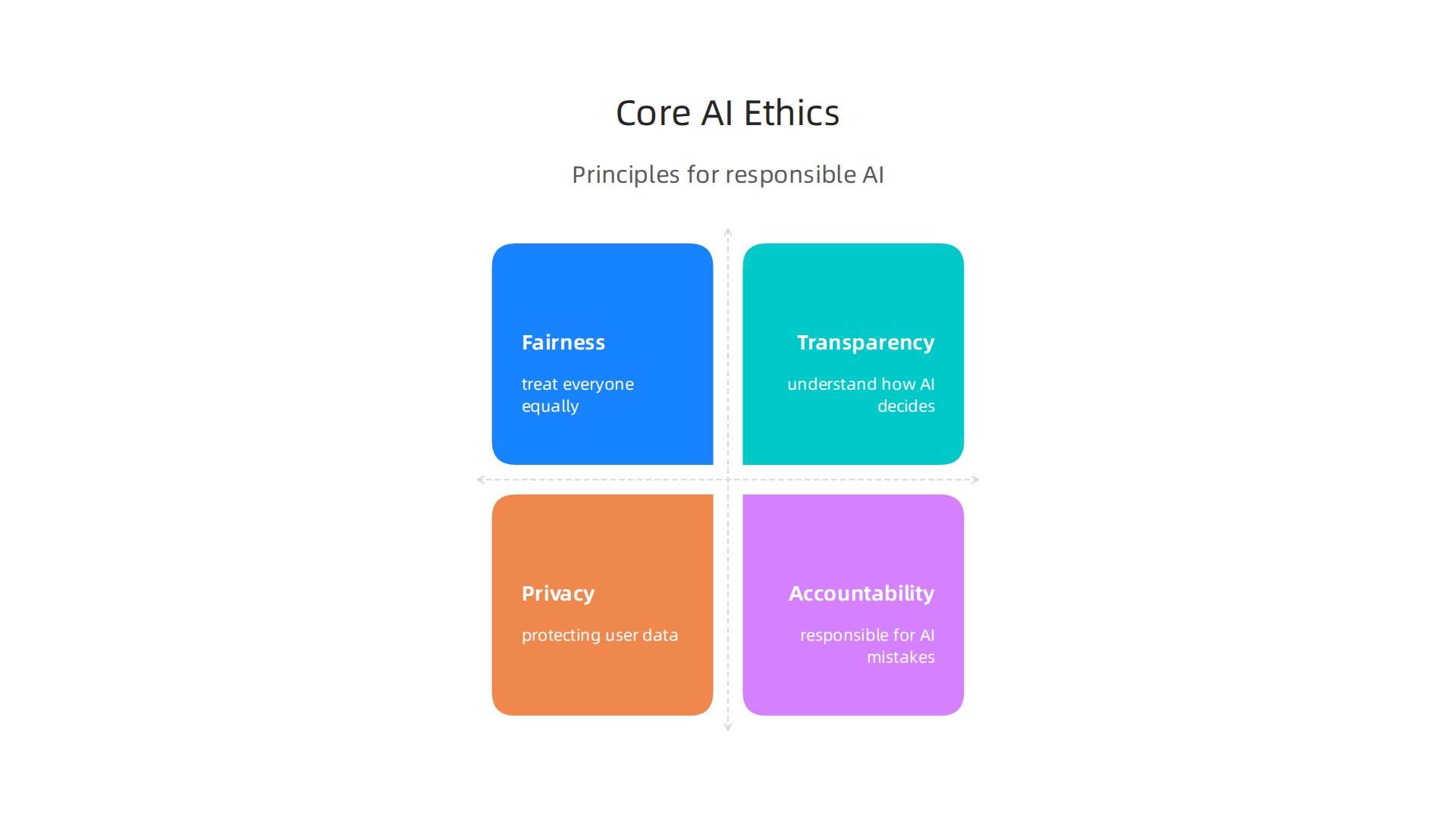
To build AI tools that people trust and that work well, software teams need to follow some basic rules. These rules are the core principles of AI ethics. They guide how we think about and build AI products.
Many groups around the world, like UNESCO, have put forth clear ideas about these principles Recommendation on the Ethics of Artificial Intelligence.
Let’s look at the most important ones:
- Fairness: This means that AI systems should treat everyone equally. They should not show bias against certain groups of people. For developers, this means checking the data used to train AI models very carefully. If the data is not fair, the AI won’t be fair either. It’s important to build and test AI to make sure it works fairly for all users AI Governance 2026: Guide to Responsible & Ethical AI Success.
- Transparency: People should be able to understand how an AI makes its decisions. This is also called "explainability." For developers, this means designing AI systems that aren’t black boxes. They should be able to show why a certain result was given. This helps build trust and allows us to fix problems more easily.
- Privacy: AI systems often use a lot of personal data. Protecting this data is very important. Developers must make sure that user data is kept safe and private. This involves using strong security measures and only collecting the data that is truly needed. Thinking about how user control and privacy drive mobile success is a good starting point.
- Accountability: If an AI makes a mistake or causes harm, someone needs to be responsible. For software teams, this means having clear steps for reviewing AI systems and fixing issues. It’s about knowing who is in charge of different parts of the AI system and making sure there are ways to correct problems.
These principles guide the design and building choices for engineers and product teams. When working on projects, whether it’s building large AI systems or using smaller tools like edge AI, these ethical ideas should always be considered. This helps ensure that your AI is not only smart but also good and safe. If you’re looking to build trustworthy systems, especially for important uses, learning about how to make them reliable is key. You can explore topics like how to build trustworthy Doctor AI systems.
For example, when using tools for code like a claude code course or other AI assistants, developers should check the output for potential biases or unfairness. They should also understand how the AI arrived at its suggestions. This helps to maintain strong AI ethics throughout the development process. Learning about how Anthropic AI for Developers supercharges your coding workflow can also help you understand how to use these tools responsibly.
Identifying and Mitigating Bias in Models
When we talk about making AI systems fair, a big part of that is finding and fixing bias. Bias in AI means the system gives unfair results to certain groups of people. This goes against the core idea of ai ethics we discussed earlier. Actually, many worry about this. For example, in 2026, about 74% of companies worried about AI giving wrong answers, and bias is a key reason for this problem AI Ethics and Bias Statistics 2026: What Businesses Must Know.
So, how do software teams find these unfair biases?

Ways to Find Bias in AI
Developers need to look for bias at different stages of building an AI:
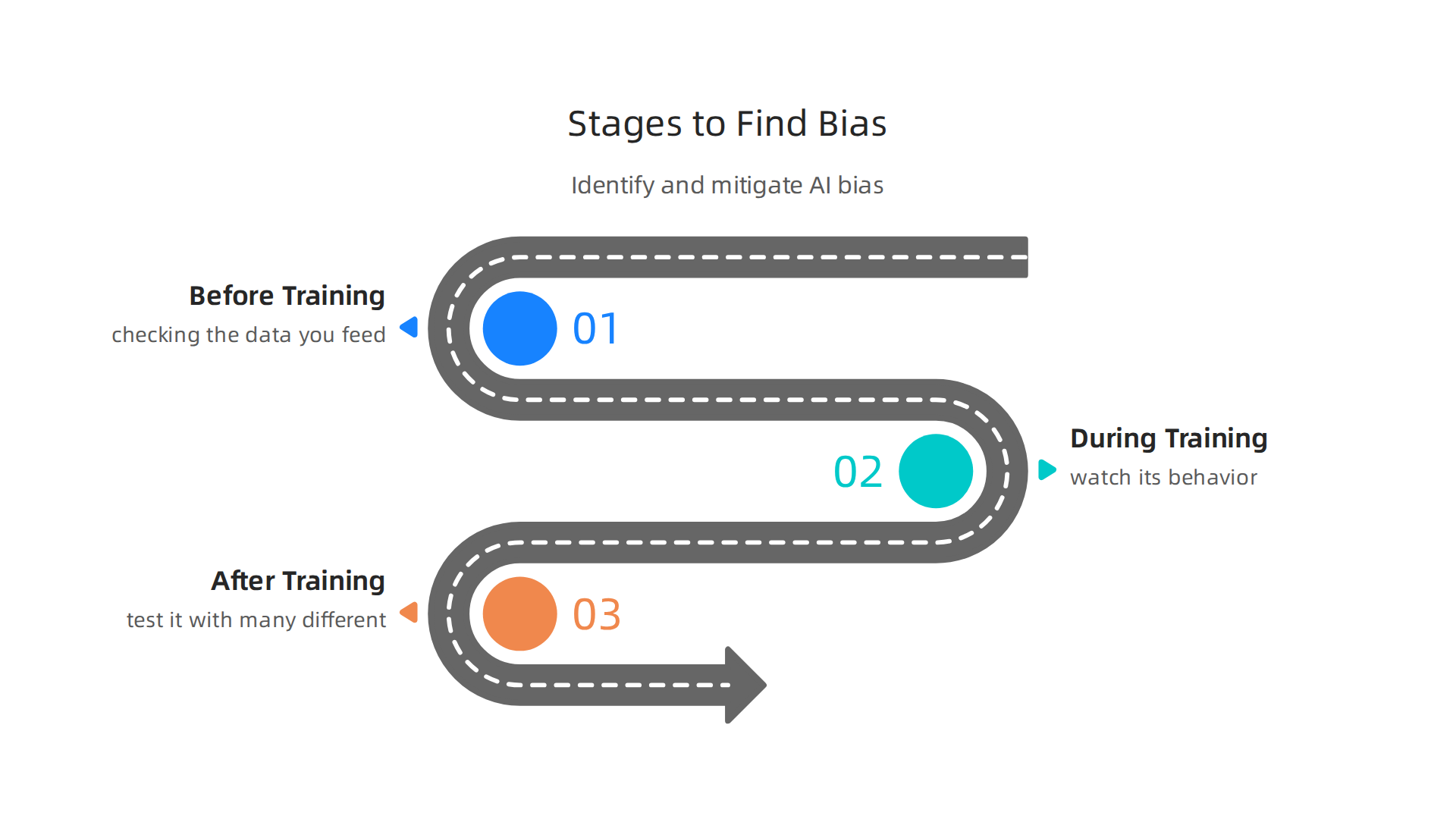
- Before Training (Pre-processing): This is about checking the data you feed the AI. If your data mostly shows one group of people doing something, the AI will learn that pattern and might be unfair to others. You can use tools to look at the data and see if it is balanced. If not, you might need to collect more diverse data or adjust the existing data.
- During Training (In-processing): While the AI is learning, you can use special methods to watch its behavior. Some tools can help see if the AI is starting to lean too much towards one type of answer for certain groups.
- After Training (Post-processing): Once the AI is built, you can test it with many different examples. Think of it like a strict test to see if it acts fairly for everyone. Techniques like "Explainable AI" (XAI) can help show why an AI made a certain choice, which helps uncover bias Detecting and Mitigating Bias in Large Language Models.
How to Make AI Models Fairer
Finding bias is the first step. The next is fixing it. Here are some ways to do that:
- Fixing Data (Pre-processing Strategies): If your training data is biased, you can try to make it more balanced. This might mean adding more examples for groups that are not well represented. You could also make fake data that looks real but helps balance things out Bias recognition and mitigation strategies in artificial intelligence.
- Changing How AI Learns (In-processing Strategies): You can adjust the AI’s learning process. This involves using special math rules that tell the AI to try and be fair as it learns. This helps it not pick up on unfair patterns from the data.
- Adjusting Results (Post-processing Strategies): Even after the AI has given an answer, you can still check it. If the AI’s answers seem unfair, you can apply rules to make them more balanced before showing them to people. This helps ensure the final outcome is fair.
These strategies are important for any AI project, from big systems to smaller ones like edge ai. Making sure your AI is fair takes ongoing work. It’s about building trust and sticking to good ai ethics. Developers who apply these methods help make sure their AI tools, like those you might build using a lightning ai platform, serve everyone well.
Staying informed about the newest ways to build fair and safe AI systems is very important for developers in 2026. For daily, in-depth updates on AI and technology, consider subscribing to The AI Newsletter Worth Reading.
Making AI fair is one piece of the puzzle. Another big part is making sure we understand how AI makes its decisions. This is called explainability and transparency. When an AI system can clearly show its steps or reasons for an outcome, it helps build trust. It also helps us check if the ai ethics we put in place are actually working as planned. Many global guidelines, like those from UNESCO, highlight transparency and explainability as core principles for responsible AI Recommendation on the Ethics of Artificial Intelligence – AI.
What Does Explainability and Transparency Mean?
Simply put, explainability is about making AI’s "thought process" visible. It’s like asking a student to show their work on a math problem, not just give the answer. Transparency means knowing what data went into the AI and how it was built. Together, they help developers and product teams understand, debug, and improve AI systems.
Tools to Make AI Decisions Clear
Developers and product managers have a few ways to make AI more understandable:
- Model-Agnostic Tools: These are like special magnifying glasses you can use on any AI model to see why it made a certain decision. Two popular ones are SHAP and LIME. They can show which parts of the input data were most important for the AI’s answer. This is useful for complex models where it’s hard to look inside directly. For example, these tools can help identify bias patterns in large language models Detecting and Mitigating Bias in Large Language Models.
- Interpretable Models: Some AI models are simpler by design. Think of decision trees or simple rules. These models naturally show how they reached an answer because their steps are easy to follow. They don’t need extra tools to explain themselves.
- Good Documentation: This is about writing down clear notes about the AI. What data was used? How was the model trained? What are its limits? Good records help everyone involved, from the people who built the AI to the people who use it, understand its behavior. This is crucial for maintaining
ai ethicsthroughout the entire development process. You can learn more about clear communication in development in a developer’s guide to AI-assisted code generation in 2026.
When Explainability Matters Most
Sometimes, an AI might work really well but be hard to explain. Other times, it’s easy to explain but not super accurate. This is a trade-off that product teams and developers need to think about:
- High-Stakes Situations: When AI is used in important areas like healthcare (deciding treatments), finance (approving loans), or law enforcement, explainability is super important. We need to know why the AI made a decision, especially if it affects people’s lives. In these cases, it’s often better to choose a more explainable, even if slightly less "perfect," model.
- Lower-Stakes Situations: For things like suggesting movies you might like, explainability might not be as critical. If the AI recommends a bad movie, it’s not a huge problem. Here, you might choose an AI that performs very well, even if its inner workings are a bit of a mystery.
Balancing performance and explainability is key. Modern platforms, including those built with lightning ai, offer tools and frameworks to help manage this balance, even for specialized systems like edge ai where computing power might be limited. For developers looking to deepen their understanding of how to make AI systems transparent and trustworthy, a Claude code course could be a great resource to learn more about advanced AI tools.
Building on the idea of clear AI decisions, we also need proper rules and roles to make sure AI is used safely and fairly. This is called AI governance. It’s about setting up who is responsible for what, creating clear rules, and making sure everyone follows them.

Actually, many companies are using AI very quickly. But sometimes, the rules and oversight for using AI safely do not keep up. A report from 2026 found that over half of department-level AI projects in companies didn’t have official approval or proper checks.

This means AI adoption is growing faster than the ability to manage its risks EY survey: autonomous AI adoption surges at tech companies as oversight falls behind. This makes having good ai ethics rules super important.
Key Roles for Responsible AI
To make sure AI is used in a good way, companies often set up special roles. These roles help keep ai ethics at the front of every project:
- AI Ethics Lead: This person guides the team on what is right and fair when building and using AI. They help create the company’s rules for AI.
- Model Owner: Think of them as the boss for a specific AI model. They are in charge of how that AI works, its purpose, and making sure it meets ethical standards.
- Data Steward: This role looks after all the data that AI uses. They make sure the data is collected properly, kept safe, and used fairly. This helps prevent bias in AI.
These roles work together, often as part of an AI governance committee, to make big decisions about AI use and make sure everyone understands their part. Such committees should include people from different parts of the company, not just tech experts AI Governance Playbook For Boards.
Smart Policies and Processes for Engineering Teams
Setting up rules for ai ethics does not have to slow down work. Instead, it can make things better and safer. Companies can use simple ways to add ethics into their daily work:
- Policy Templates: These are like ready-made rule books that teams can use and adjust. They help engineers and product teams know what to do without having to start from scratch. There are many free templates available to help set up these rules 39 Free AI Governance & Policy Templates (2026).
- Lightweight Processes: These are simple steps that fit easily into how teams already work. For example, before launching a new AI feature, a team might do a quick check to see if it follows all the
ai ethicsguidelines. This makes sure ethics are part of the process from the start, rather than an afterthought.
By having clear roles and easy-to-follow rules, engineering teams can build AI that is both powerful and responsible. It helps them build better products and grow their skills in AI, which is a big part of mastering the overall software development lifecycle models AI and best practices for 2026.
To stay on top of the latest in AI and how it’s shaped by these important rules and roles, consider reading our daily updates.
Get clear daily AI updates from The AI Newsletter Worth Reading.
To truly make ai ethics a part of how we build things, it’s important to put ethical checks right into the software development lifecycle (SDLC). This means thinking about fairness and responsibility from the very start of a project, not just at the end. It’s like adding safety checks at every step of building a house, instead of just inspecting it once it’s finished.
Integrating Ethical Reviews into the SDLC
Adding ai ethics reviews into the SDLC helps teams make sure their AI products are fair and trustworthy.
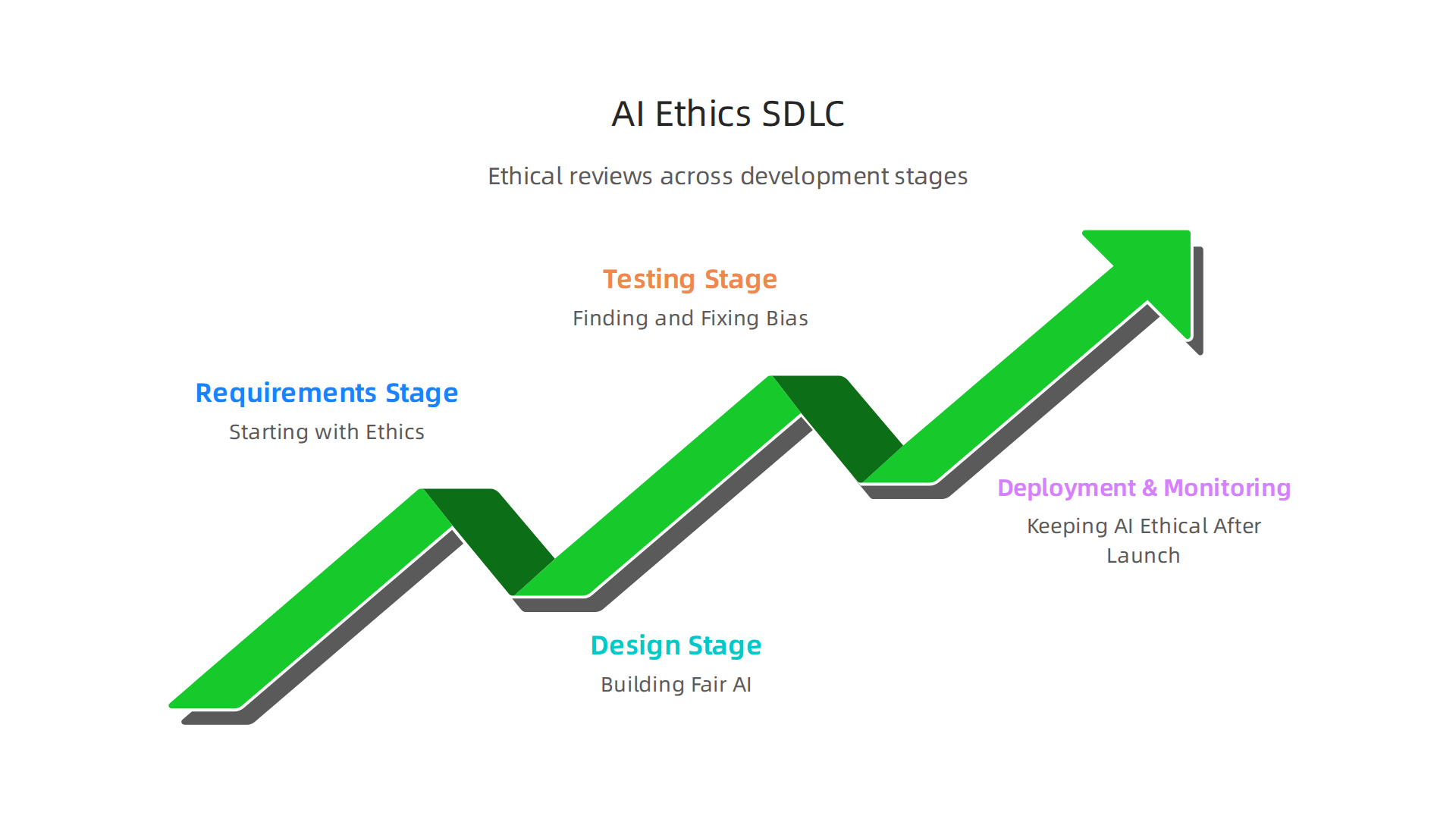
This process does not have to be long or difficult. Instead, it can be a series of small, smart checks.
Requirements Stage: Starting with Ethics
When a new AI project begins, and teams are figuring out what the AI needs to do, that’s the perfect time to bring in ai ethics.
- Ask ethical questions: Before any code is written, teams should ask: Who will this AI help? Who might it affect badly? How can we make sure it treats everyone fairly?
- Define clear goals: Make sure the AI’s purpose is clear and aligns with ethical values.
Design Stage: Building Fair AI
In the design phase, teams plan how the AI will work. This is where bias can creep in, often from the data used.
- Think about data: Check if the data is fair and balanced. Biased data can lead to biased AI. Ways to find problems include looking for bias and unfairness in machine learning models Bias and unfairness in machine learning models: a systematic literature review.
- Design for transparency: Plan how the AI will explain its decisions. This is part of making
ai ethicseasier to understand. Tools like Explainable AI (XAI) can help show why an AI makes certain choices. This is especially important for complex models or those running on devices likeedge aisystems.
Testing Stage: Finding and Fixing Bias
Once the AI is built, it needs careful testing. This goes beyond just checking if it works correctly.
- Test for bias: Actively look for unfair results or treatment toward different groups. Many strategies exist to spot and fix these issues Bias recognition and mitigation strategies in artificial intelligence.
- Use XAI tools: These tools help explain the AI’s predictions and can show if there are hidden biases. This is a critical step for all AI models, including those built with platforms like
lightning ai. - Scenario testing: Run the AI through many different situations to see how it acts. Make sure it performs well and fairly in all cases.
Deployment and Monitoring: Keeping AI Ethical After Launch
Even after an AI is launched, the work is not over.
- Continuous checks: Keep watching the AI to make sure it stays fair and ethical over time. AI can change as it learns, and new biases might appear.
- Feedback loops: Have a way for users to report problems or concerns. This helps teams quickly fix any ethical issues that come up.
Adding these ethical checkpoints across each stage helps teams build better AI. It also means fewer surprises later on. To learn more about how different development styles work with AI, you can explore guides on choosing the right approach for your projects, such as SDLC Models Pick the Best.
Putting ethical checks into every step of creating AI is very important. But what about when AI helps us write code itself? Using AI coding assistants, like those for lightning ai projects or even for more general development, brings its own set of special rules and things to think about. This is all part of ai ethics in a very practical way.
AI-Assisted Coding: Ethics, Licensing, and Developer Workflows
When we use AI to help write code, we gain speed, but we also open up new questions. It’s like having a very smart helper who sometimes forgets where they learned things or might even make things up. Developers need to be careful with these tools in 2026 to avoid problems later on.
Practical Ethical Issues with AI Coding Assistants
There are three main things to watch out for when using AI to write code:
- Where the AI Learned (Training Data Provenance): AI models learn by looking at huge amounts of existing code. This code often has rules about how it can be used, like licenses. When an AI gives you code, it might be similar to something it "saw" during its learning. The problem is, the AI doesn’t always tell you where that piece of code came from. This can make it hard to know if you’re allowed to use the code without breaking any rules. Developers wish for tools that could show them the source or citations for the code an AI provides them Developer Perspectives on Licensing and Copyright Issues Arising.

- License Risk: Since AI can’t always tell you where its code came from, you might accidentally use code that has a special license. This could force you to share your own code, or even pay money, if you use it in your project. This is a big worry, as AI-generated code might even strip away the original license information, a problem sometimes called "license laundering" AI License Laundering: How Code Generators Strip Open Source Obligations. Many organizations don’t properly check AI-generated code for these risks before using it 68% of Codebases Contain License Conflicts and AI-Generated Code Is Making It Worse.
- Hallucinations: Sometimes, AI tools can make up facts, code, or explanations that look real but are completely wrong. This is called "hallucination." If you’re not careful, using hallucinated code could cause serious bugs or security holes in your software. This is why always checking the AI’s output is key.
Developer Workflows for Review, Attribution, and QA
To handle these issues, developers need to change how they work:
- Review and Attribution: Always look closely at any code an AI assistant gives you. Don’t just copy and paste. Treat it like code from someone you don’t know well. Check if it makes sense, if it’s correct, and if it might have any license problems. If the code is clearly from an open-source project and the AI helps you use it, make sure you give proper credit if needed.
- Quality Assurance (QA) and Testing: AI-assisted code needs very strong testing. You must check that the code does what it’s supposed to do and that it doesn’t break anything. This is even more important for complex
edge aisystems where mistakes can be costly. Use all your regular testing tools and methods, plus extra checks for security and ethical fairness. - Documenting AI Use: Keep a record of when and how you used AI to help write code. This means noting which AI tool you used, what prompt you gave it, and what parts of its output you kept and changed. Having this record can help if questions about licenses or ownership come up later. Companies should have clear rules for using AI-assisted coding and document both the AI’s contribution and the human changes made AI-Assisted Coding: Intellectual Property and Hidden Risks.
By taking these steps, teams can use AI coding assistants more safely and ethically. This helps ensure that the software they build in 2026 is trustworthy and of high quality. For developers eager to improve their AI skills, understanding prompt engineering for tools like Claude can be very helpful. To learn more about how AI transforms development, check out our guide on AI software development in 2026.
Staying informed about these fast-moving trends is crucial. Get clear daily AI updates directly to your inbox with The AI Newsletter Worth Reading.
After understanding how to use AI coding assistants ethically, the next big step is making sure these good practices continue over time. It’s not enough to just start with ai ethics in mind; we need ways to check and make sure our AI systems stay fair, safe, and private, always. This means constantly watching how AI behaves and having plans in place to fix things if they go wrong.

Measuring, Monitoring, and Continuous Compliance
Keeping AI ethical is like taking care of a garden. You can’t just plant seeds and walk away. You need to water, weed, and check on it regularly. For AI, this means setting up ways to measure its ethical performance, watching these measures closely, and making sure everyone follows the rules all the time.
Key Metrics and Monitoring Signals
To know if an AI system is acting ethically, we need specific things to track. Think of these as health checks for your AI:
- Bias Drift: AI models can change their behavior over time as they get new data. This change might cause them to become unfair or biased without anyone noticing. Monitoring for "bias drift" means constantly checking if the AI is starting to treat certain groups differently, even by accident.
- Fairness Metrics: These are special measurements that show if an AI system is making fair decisions across different groups of people. For example, if an AI helps approve loans, fairness metrics would show if it’s approving loans equally for people of different backgrounds, ensuring no group is unfairly left out.
- Privacy Incidents: AI systems often handle sensitive personal information. Monitoring for privacy incidents means keeping a close eye on any unexpected access to data, data leaks, or other problems that could put people’s private information at risk. Following established principles helps manage these risks AI Governance Best Practices: Frameworks & Principles.
These checks help us spot problems early. It’s especially important for complex systems, like those using edge ai, where decisions happen very quickly and might be hard to trace.
Automated and Manual Audit Approaches
Watching metrics is good, but sometimes you need a deeper look. This is where audits come in. Audits are like a thorough health exam for your AI, and you can do them in different ways:
- Automated Audits: These use special tools and software to constantly scan AI systems for problems. They can automatically check for certain biases, security holes, or if the AI is following specific rules. This is like having an automatic alarm system for your AI’s ethical health.
- Manual Audits: Sometimes, you need people to look at things. This involves experts carefully reviewing the AI’s code, its data, and how it makes decisions. They might talk to users or look at how the AI affects real people. Human review is crucial for finding subtle ethical issues that automated tools might miss. Organizations should have clear policies and roles for managing AI risks throughout its journey The AI Governance Playbook: Practical Steps for Risk Aware Organizations.
Combining both automated and manual checks helps create a strong safety net for AI. It ensures that businesses are not only following the rules now but are also ready for new challenges. Having a clear structure for AI governance, including defined roles and responsibilities, is key to making sure these audits happen correctly and consistently AI Governance Playbook For Boards. For more on making sure AI systems are built to be trusted, you can learn about Mastering AI Response Design, Evaluation, and Safe Implementation.
By doing these things, companies can build and use AI tools, even specialized ones for lightning ai projects, with greater confidence. This helps ensure that all AI systems developed in 2026 are responsible and trustworthy.
Summary
This article explains why AI ethics is essential for software teams in 2026 and shows practical ways to build responsible AI. It covers core ethical principles — fairness, transparency, privacy, and accountability — and explains how bias appears across data and model stages, with concrete pre-, in-, and post-processing fixes. You’ll learn which explainability tools to use (SHAP, LIME, interpretable models), when explainability matters most, and how to set clear governance roles like AI Ethics Lead, Model Owner, and Data Steward. The guide shows how to weave ethical reviews into each SDLC phase, handle risks from AI-assisted coding (licensing, hallucinations), and set up monitoring, audits, and metrics such as bias drift and fairness checks. After reading, teams will know how to reduce legal and trust risks, implement lightweight processes and templates, and keep AI systems safe and reliable over time.