
How to Use AI in Civil Engineering A 2026 Implementation Guide
· 20 min read

Introduction: Why AI matters for civil engineering now
Imagine building bigger, stronger, and safer bridges or planning entire cities with less guesswork. That’s what artificial intelligence, or AI, is starting to do for civil engineering right now in 2026.

Fast changes in AI are bringing lots of new chances. These include better ways to design buildings, test how they will hold up using computer models, watch construction as it happens, and manage big projects from start to finish.
It’s easy to hear a lot of buzz about AI, but sometimes it’s hard to tell what’s real and what’s just talk. Civil engineering teams need good, clear advice to pick out the useful AI tools from the ones that sound exciting but don’t actually work well. Our goal is to help you see past the hype. We want to show you how AI can truly make a difference in your daily work. Whether you are a project manager or a controls engineer, understanding AI can help you make smarter choices.
This article will help you understand how to use AI in civil engineering. We will look at real examples of how AI is being used. We will also talk about what kind of data you need for AI training and what rules you should follow. Finally, we will give you easy steps to start using AI in your own projects. This will help you find reliable ways to put AI to work, moving toward a future where "superhuman AI" tools make complex tasks much simpler. If you want to dive deeper into how to pick the best AI tools, consider learning more about Mastering AI Response Design Evaluation and Safe Implementation.

AI is not just a tool for the future. It’s here now, and it’s changing how we build our world. Understanding How to Use AI for Software Development in 2026 can also provide helpful lessons for applying AI in civil engineering. For daily insights into AI and broader technology topics, you can get reliable information by subscribing to The Deep View Newsletter.
Why AI matters for civil engineering teams
AI is not just a cool new thing; it’s a powerful helper that can change how civil engineering teams work every day. It offers real benefits that make projects better, faster, and safer.
Here’s why AI is so important right now in 2026 for your team.
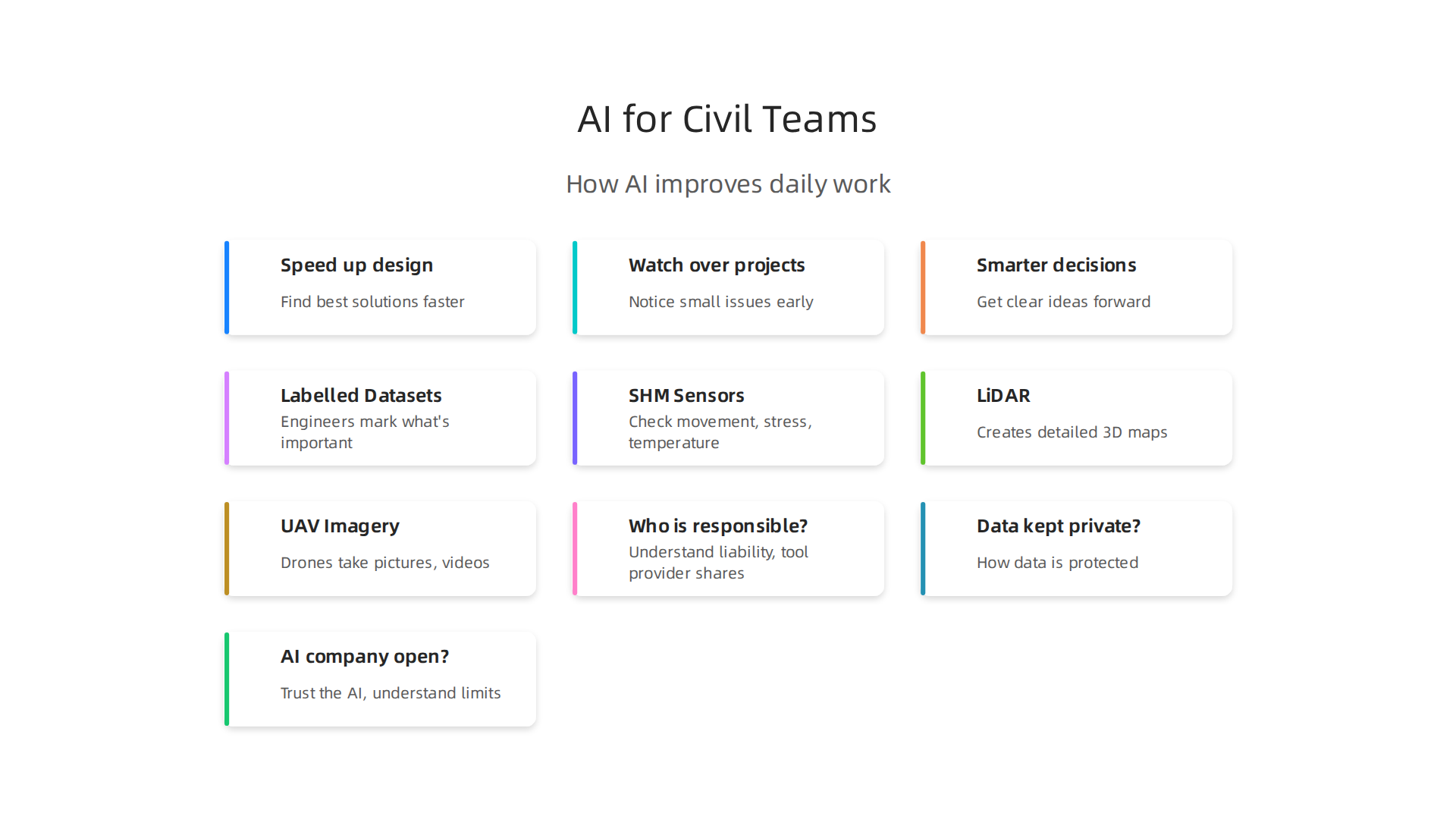
First, AI can greatly speed up how you design things. Instead of taking a long time to try out different ideas by hand, AI tools can test many designs very quickly. This helps you find the very best solutions for bridges, buildings, or other structures. It means your team can finish the design part much faster and with more confidence. For example, firms that use AI for design, like those using Building Information Modeling (BIM) with AI, can cut project costs by 10 to 25 percent and deliver projects 15 to 30 percent faster. They can even lower safety problems by more than 40 percent, showing how much ai in civil engineering helps overall efficiency and safety at once AI for Construction in 2026: ROI, Costs, and Tools.
This kind of superhuman AI helps engineers solve problems that were too big or took too long before.
Next, AI is great for watching over projects and predicting problems. Imagine having a smart assistant constantly checking your construction site or a finished building. This helps a controls engineer monitor everything. AI can notice small issues before they become big, costly problems. This is called predictive maintenance. It helps keep structures and equipment safe and working well, reducing unexpected stops in work. For instance, computer vision systems, which are a type of AI, can reduce on-site safety problems by 35% in just a year AI in Construction: Implementation Playbook 2025.
Finally, AI helps your team make smarter decisions. Every project has choices about how much it will cost, how long it will take, and what risks might come up. AI can look at huge amounts of information and give your team clear ideas about the best path forward. This way, you can make better trade-offs and manage risks more wisely. If you are looking to integrate these kinds of smart tools, exploring what the Top AI Companies: A 2026 Guide to Partners, Tools, and Team Roles offers can be a great next step.
Core AI applications: design automation, simulation, and construction
Now let’s look at the main ways AI is being used in civil engineering in 2026. It’s not just a general helper; AI works in very specific parts of projects, making them better from start to finish.
Smarter Design with AI
One big area is design. AI helps engineers create structures in ways we couldn’t before.
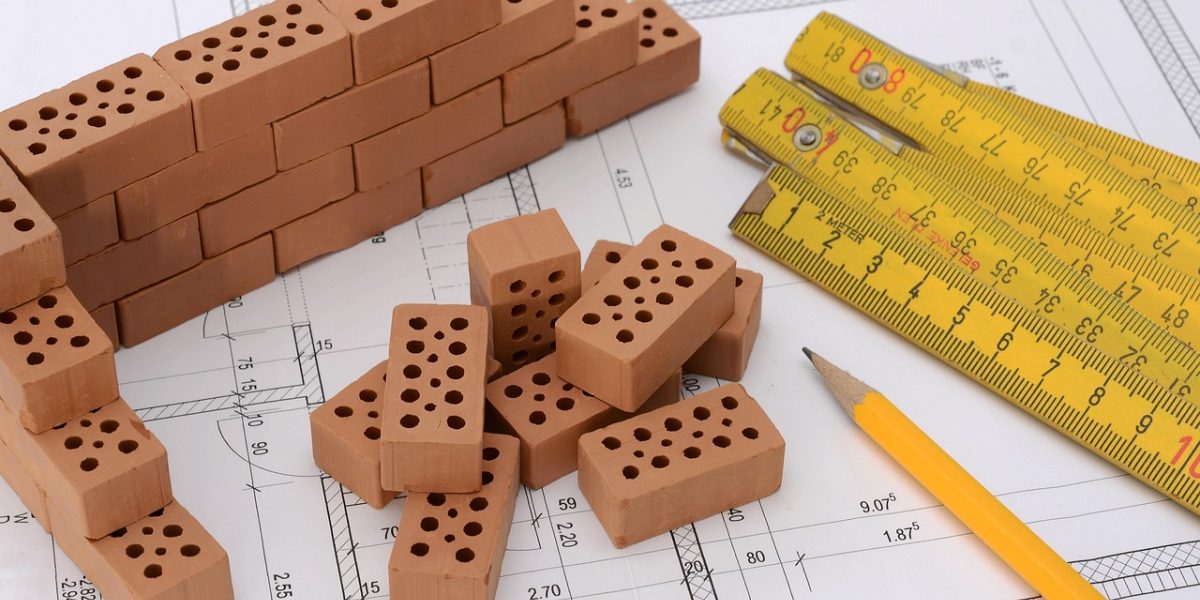
This is called generative design and topology optimization. Think of it like this: instead of drawing a bridge beam by hand and guessing the best shape, AI can quickly test thousands of shapes. It finds the strongest shape that uses the least amount of material. This means less waste, lower costs, and designs that are very strong and efficient. This speeds up how quickly you can try out new ideas for buildings and bridges.
Faster and Better Simulations
Another powerful use for ai in civil engineering is speeding up simulations. Civil engineers often need to test how a design will act under stress. This might involve how water flows around a new dam or how a tall building sways in the wind. These tests can take a long time to calculate. AI uses special methods like "physics-informed machine learning" and "surrogate models." This means AI learns the basic rules of physics and then makes smart guesses about how things will behave. It’s like having a super-fast brain that can predict outcomes without doing every single complex calculation from scratch. This makes simulations, such as fluid dynamics or structural analysis, much quicker. Even with these powerful tools, getting good data ready for AI is still a big challenge, as noted in the state of engineering AI in 2026 report.
AI for Construction Site Monitoring
During construction, AI becomes an extra set of eyes and hands. Computer vision systems use cameras to watch the worksite. They can spot if workers are wearing safety gear or if equipment is in the right place. Robotics can also help with tasks that are dangerous or take a lot of time for people. This improves safety, keeps track of how much work is done, and makes sure everything is built to the right quality. It’s like having superhuman AI constantly checking everything, helping teams manage their projects more smoothly. To best use these tools, civil engineers need proper ai training. If you’re wondering how to gain these skills, you can learn more about how to study AI for software development in 2026.
These core applications show how AI is changing civil engineering. From the first idea to the finished project, AI helps teams work smarter, safer, and faster. To stay ahead in AI and tech, make sure to Get The Deep View Newsletter.
AI tools are very helpful in civil engineering, but they are only as good as the data they use. Think of it like cooking: even the best chef needs fresh, good ingredients. For ai in civil engineering, these "ingredients" are high-quality data.
The Foundation: Quality Data and Sensor Feeds
To make AI models reliable, we need lots of good information. This information comes from two main places:
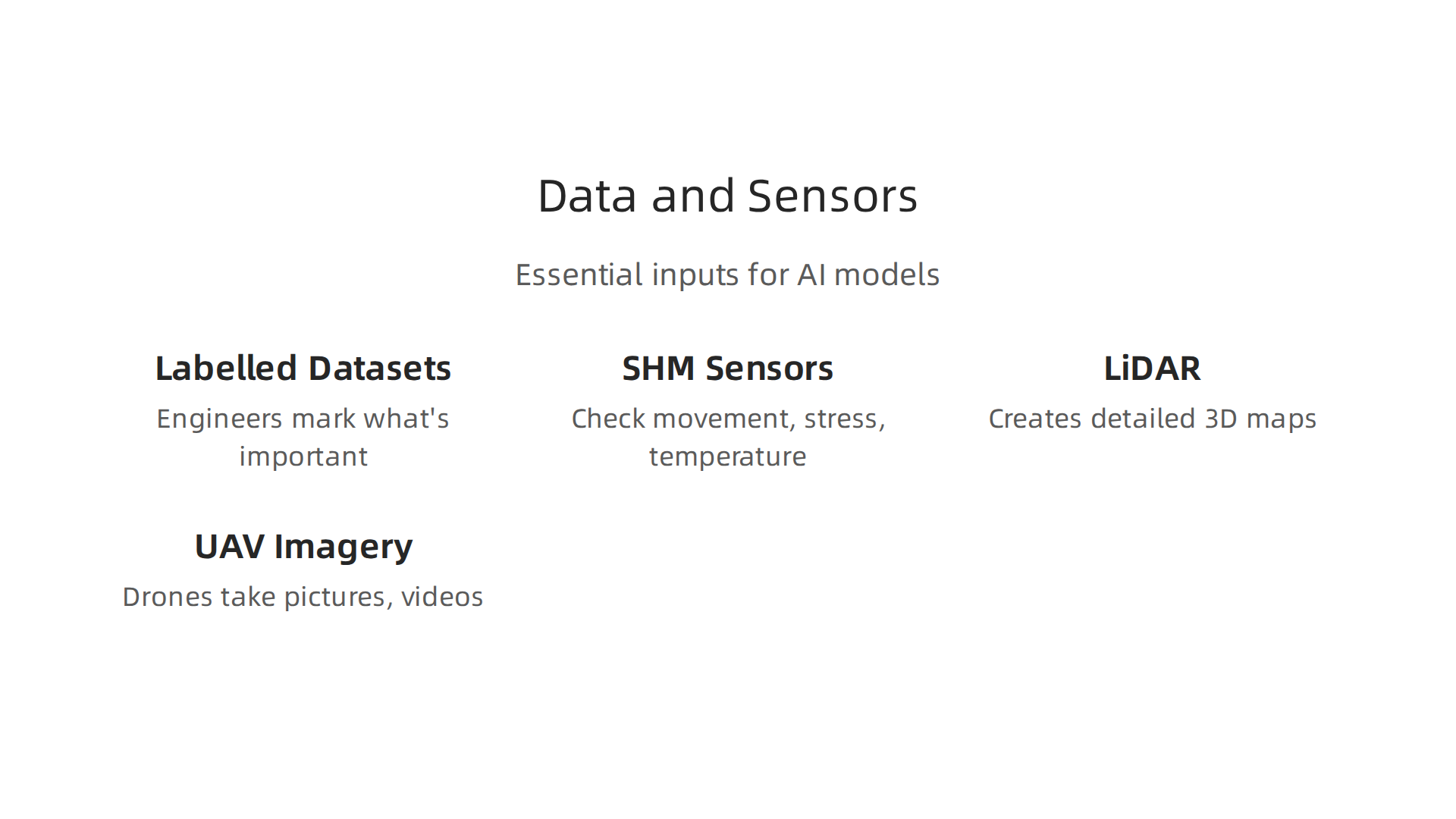
- Labelled Datasets: These are like textbooks full of examples. Engineers carefully mark what’s important in these examples. For instance, pictures of cracks in a bridge would be labeled as "crack" so the AI learns what a crack looks like. These datasets help AI understand what it’s seeing or analyzing.
- Sensor Feeds: These are like the eyes and ears of a project. They collect live information. Some important types of sensors include:
- Structural Health Monitoring (SHM) Sensors: These tiny devices are put on bridges or buildings. They constantly check for changes in movement, stress, or temperature. This helps spot problems early.
- LiDAR: This uses lasers to create very detailed 3D maps of an area. It’s great for seeing how land changes or for checking structures. New LiDAR datasets are often released, providing fresh information for engineers in 2026, as seen with some recent releases in April 2026.
- UAV Imagery: Unmanned Aerial Vehicles, or drones, fly over construction sites or existing structures. They take many pictures and videos. This imagery can be combined with LiDAR to create better 3D maps for checking how things are holding up, as shown in studies on LiDAR and UAV Photogrammetry Techniques for Optimizing 3D Mapping. Drones are especially useful for inspecting bridges and other infrastructure.
Making Data Ready for AI
Even with great data, it needs to be organized and cleaned. This involves:
- Data Governance: These are the rules for how data is collected, stored, and used. Without clear rules, data can become messy and unreliable. For example, standards are needed for how to describe defects in a bridge inspection, as highlighted in a Drone Bridge Inspection & SHM Report.
- Storage: Where do you keep all this data? It needs to be stored safely and in a way that’s easy to get to.
- Preprocessing Pipelines: This is like preparing food before cooking. Data needs to be cleaned, sorted, and put into the right format for the AI to understand. This makes sure the AI models work well and give results that can be trusted. Building trustworthy AI systems is key, especially in important fields like civil engineering, and you can learn more about how to build trustworthy systems for high stakes industries.
When these steps are done right, the AI models can give accurate and useful information. This helps civil engineers make better choices.
When Data is Hard to Find
Sometimes, getting enough real-world data is tough. But there are smart ways to get around this:
- Synthetic Data: This is fake data that looks and acts just like real data. It’s created by computers. This is useful for training AI when real examples are rare or costly to get.
- Transfer Learning: Imagine you learned to ride a bicycle, and now you want to learn to ride a motorcycle. You don’t start from zero; you use what you already know about balancing and steering. Transfer learning is similar: an AI model that learned from one type of data can use that knowledge to learn new, related tasks faster, even with less new data. This helps improve
ai trainingfor specific civil engineering challenges.
By using these methods, engineers can still build powerful AI models even when perfect data is not always available. It’s all about ensuring the AI has the best possible information to make smart decisions, which is vital for any controls engineer working with these advanced systems. Understanding how to design and evaluate what AI models say is also important for safe use, and you can dive deeper into Mastering AI Response Design Evaluation and Safe Implementation.
After getting all that good, clean data, the next big step for ai in civil engineering is to make it work with the tools engineers already use every day. Think of programs like BIM (Building Information Modeling) and CAD (Computer-Aided Design). These are like the engineer’s digital drawing board and planning table. AI doesn’t replace these tools; instead, it makes them even more powerful.
How AI Boosts Design and Planning
AI helps with tasks that can be boring or take a lot of time. For example, BIM models can get very complex. AI can:
- Clean models automatically: It fixes mistakes and tidies up drawings without human help.
- Spot clashes: It finds where different parts of a building design might hit each other. This is called "clash detection."
- Generate designs: It can quickly create many new design ideas. This helps engineers find the best solution faster.
These AI helpers make design much quicker and more exact.
Easy Ways to Add AI
How does AI talk to the programs engineers already use? Mostly through special connections called APIs (Application Programming Interfaces) and plugins. Think of an API as a unique language that two computer programs can use to talk to each other. Plugins are like small add-on tools that fit right into your existing software.
Using these methods to connect AI is the easiest way. Engineers don’t have to learn a whole new system. It just adds smart new features to the tools they already know. This allows civil engineers to keep their familiar workflows while adding AI’s benefits. For more on how AI changes how you build and ship code, you might want to read about AI software development in 2026.
Speaking the Same Language
For AI and existing software to work well together for a long time, they need to speak the same language. This is called "interoperability." It means different computer programs can share information easily. Standards like IFC (Industry Foundation Classes) are very important here. They are like universal rule books for how building information should be shared.
If everyone follows these standards, data can move smoothly between AI tools, CAD, and BIM. This makes projects run better. This also helps with legal and safety requirements for AI in construction, which are becoming very clear in 2026. For instance, the EU AI Act becomes very important for high-risk AI systems in construction. It requires a lot of logging and careful design for trust and safety, as highlighted by expert analysis on the EU AI Act and AI-Generated Code. Even with these new tools, the engineer’s judgment is still key. Professional groups like ASCE agree that AI is a tool, not a replacement for human expertise, according to a 2026 Engineer’s Guide to PE Stamp and AI Liability.
As AI becomes more a part of how we build things, especially in civil engineering, we need to talk about some very important topics: rules, safety, and doing things the right way. We already touched on the EU AI Act in the last section, which is a big deal for how AI is used. Now, let’s dive deeper into keeping things safe and fair in 2026.
Regulation, Safety, and Ethics: Compliance and Risk Management
When AI helps make important engineering choices, like designing a bridge or a building, we must be able to check exactly how it came up with its answers. This means that every step of the AI’s thinking needs to be clear, like an open book. We call this "model explainability." It’s essential that engineers can validate, or prove, that the AI’s suggestions are safe and sound. We can’t just trust a machine without understanding its logic, especially when people’s safety is on the line. Different groups are working on AI Safety Frameworks & Standards to help with this.
Rules for AI are changing quickly. In 2026, many new laws and guidelines are coming into play. For example, the EU AI Act has special rules for "high-risk" AI systems, which includes many uses in construction. These rules often say that AI systems must keep detailed records of their operations. This makes sure that engineers can always go back and audit the AI’s decisions, helping to manage risks.
It’s not just about what the law says. Professional groups also have rules. They agree that AI is a very powerful tool, almost like superhuman AI in some ways, but it can never take the place of a human engineer’s judgment and responsibility. Engineers still have to sign off on projects, and that means they are fully accountable. The landscape of AI laws in 2026: the current EU–US landscape shows us that regulations will keep evolving to match AI’s fast growth.
When a company decides to buy or use AI tools for its civil engineering projects, there are a few important things to think about:
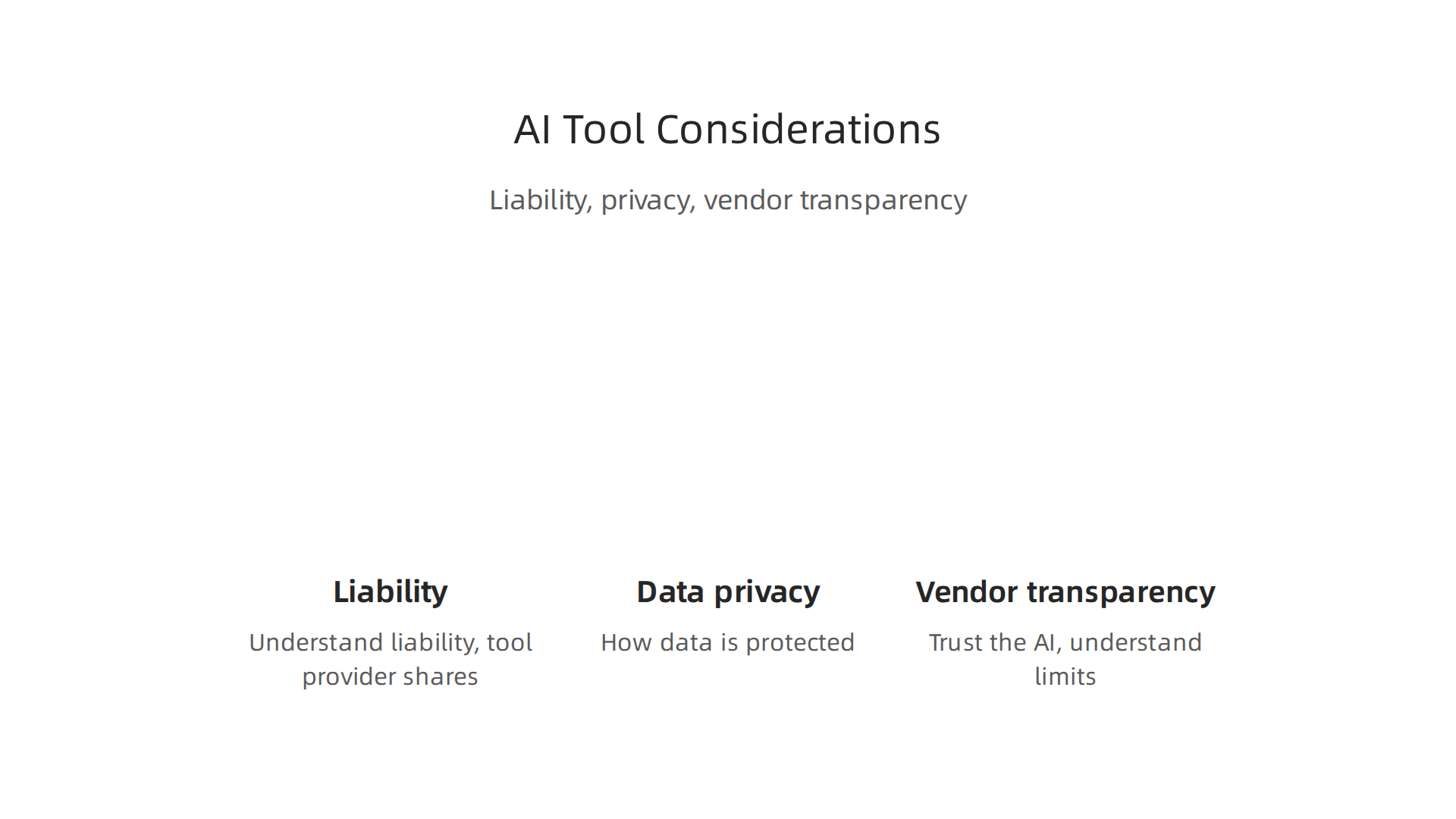
- Who is responsible if something goes wrong? This is called liability. It’s crucial to know if the AI tool provider shares responsibility or if it’s all on the engineering firm.
- How will our data be kept private? AI tools often need a lot of data for AI training. Firms need to know how that data is protected.
- Is the AI company open about how their tool works? This is called vendor transparency. It helps engineering firms trust the AI and understand its limits.
Thinking about these things helps manage the risks when bringing AI in civil engineering. It’s all about using AI smartly and safely while meeting all the rules.
Using AI wisely and safely is just the start. The next big step is figuring out how to bring these smart tools into daily civil engineering work. This means having a clear plan for using new technologies, getting your teams ready, and picking the best tools. Let’s look at how to build a roadmap for putting AI into action in 2026.
Implementation roadmap: tooling, teams, and pilot-to-scale strategies
When you want to start using AI in civil engineering, it’s best to begin with small, focused projects.
Think of these as "pilot projects." These pilots should have clear goals you can measure, so you know if they are working well. For example, you might try using AI to help design a small part of a bridge and see if it makes the process faster or more accurate. Starting small helps you learn without taking big risks, and it lets you show real success before doing more. A good plan for using AI often starts with five steps, including picking a pilot project that shows a clear return on investment (ROI) and then measuring what you learn AEC AI Roadmap: 5-Phase Guide for Mid-Market Firms.
Next, you’ll need the right people and skills. Bringing AI into your work means you might need new team roles. This includes people who are good with data, called data engineers, and those who build the AI, known as machine learning engineers. But it’s not just about hiring new people. Your current civil engineers are super important because they know the field best. They will become the "domain experts" who guide the AI. Companies should also help their existing civil engineering teams learn about AI through special training. This helps everyone grow their skills and makes sure they know how to work with these new tools. Learning how to study AI for software development can offer good insights for civil engineers, too How to study AI for software development in 2026.
Choosing the right tools is also very important. The AI tools you pick should make it easy to see how they got their answers, which we talked about before as "model explainability." They should also let you easily check past work and make sure it can be done the same way again (this is called reproducibility). Tools that fit well with your existing project management systems, like those used in software development, can make things much smoother. This includes systems for keeping track of different versions of a project and for making sure new changes are always tested properly. Finding the best tools means looking at what works for other construction firms and what fits your specific needs AI for Construction in 2026: ROI, Costs, and Tools. Many companies offer AI solutions, and understanding the range of choices can help your team pick the best partners and systems Top AI Companies: A 2026 Guide to Partners, Tools, and Team Roles.
By starting with small pilots, training your teams, and selecting the right tools, you can slowly but surely bring AI into more of your civil engineering projects. This step-by-step approach helps ensure that AI is used safely and effectively, improving how we build things in 2026 and beyond.
After putting AI tools and trained teams into action, the big question is: are they actually making a difference? This is where measuring their impact comes in. To really know if AI in civil engineering is helping, you need to look at both numbers and other important outcomes.
How to Measure AI’s Impact in Civil Engineering
To see the real value of using AI, you should look at clear numbers. This includes:
- Saving Money: How much less did a project cost because of AI? Firms using AI in construction in 2026 are often seeing project costs go down by 10% to 25% AI in Construction: A 2026 Guide for Firm Leaders & PMs.
- Faster Work: Did the project finish sooner? AI-powered tools can help speed up project delivery by 15% to 30% AI for Construction in 2026: ROI, Costs, and Tools.
- Fewer Mistakes: Are there fewer defects or issues? AI can help catch problems early. For example, using drones with AI for bridge inspections can give very precise information that traditional methods might miss Case Study: UAV-Based Load Analysis for Bridges.
But it’s not just about the numbers. Other good things happen that are harder to measure directly:
- Better Safety: AI can spot dangers on a worksite. This means fewer accidents and a safer place for everyone. Cost overruns and safety problems are key areas where AI shows big benefits Construction AI Statistics 2026.
- More Trust: When projects are done better and safer, clients and the public trust your work more.
- Happier Teams: When AI takes over boring or risky tasks, your civil engineers can focus on more interesting and important work. This can lead to a more satisfied team.
To really know if AI is making these changes, compare what happens before using AI to after using it. You can also compare a project using AI to a similar project that doesn’t use it. This helps you be sure that the improvements are truly because of the AI.
After each project, write down what you learned. What worked well? What could be better? This helps you create good guides for future projects. Building these trustworthy systems with AI is key for high-stakes industries like civil engineering Doctor AI in Practice: How to Build Trustworthy Systems for High-Stakes Industries. This way, every time you use AI in civil engineering, you get better and better, moving closer to almost superhuman AI abilities in problem-solving. This kind of ai training helps build a strong foundation for future success.
Want to keep learning about how AI is changing industries like civil engineering and software development?
Stay ahead with daily expert insights and analysis.
Sign up for The Deep View Newsletter
Summary
This article explains how AI is reshaping civil engineering in 2026 and gives practical guidance for teams that want to adopt it safely and effectively. It covers the core applications—generative design, fast physics-informed simulation, and construction site monitoring—while showing why good data, sensors, and preprocessing are essential for reliable models. You’ll learn how to connect AI to existing BIM and CAD workflows, what legal and ethical requirements (like explainability and the EU AI Act) to watch for, and how to run pilots, build skills, and measure ROI. After reading, you’ll have an actionable roadmap to start small, scale responsibly, and prove value with measurable results.