
Choosing Top IT Companies in Austin Your 2026 Business Guide
· 21 min read

Why Austin Matters for Software Teams and Founders in 2026
Austin, Texas, is no longer just known for live music and good food. In 2026, it stands out as one of the fastest-growing tech hubs in the United States, often called "Silicon Hills." This city has seen huge growth in its startup world. For example, in 2025, companies in Austin received a record $7.19 billion in funding from investors, showing how much people believe in its tech future Austin Startup Funding Surges to Record $7.19B in 2025.
This booming environment means a lot of new opportunities.

Many software teams and founders are looking to join this exciting scene, whether by moving their business or finding the right partners here. In fact, a big part of this growth comes from companies focused on artificial intelligence. Roughly two-thirds of all startup money in Austin during the first half of 2026 went to AI companies Two-Thirds of Austin’s Venture Investment Is Flowing Into AI. This makes Austin a hotspot for anyone interested in AI for business.
However, with so many IT companies in Austin, it can be tricky to find the perfect fit for your needs. How do you choose reliable mobile software development companies? How do you make sure you get top-notch end user services that truly help your business grow? It’s a big decision, and getting it right means better projects and less wasted time.
This article is here to help you make smart choices. We will give you clear information to compare different IT companies in Austin. You will find tips on how to hire the best teams, a checklist to help you evaluate partners, and insights into new trends that will shape the future of software in Austin and beyond. If you want to keep up with the fast pace of tech, especially with how much AI is changing things, consider subscribing to The AI Newsletter Worth Reading to get clear daily AI updates from The Deep View Newsletter. Learning how to select the best partners, especially in fast-moving fields like AI, is key to success. For more guidance on this, check out our guide on Choosing AI Companies: A Technical Guide for Smart Partner Selection in 2026.
Austin at a Glance: Size, Key Sectors, and Notable Companies
Austin’s rise as a tech hotspot means it has a wide variety of software companies. Beyond the strong focus on AI for business that we just discussed, the city’s tech scene includes many important sectors.
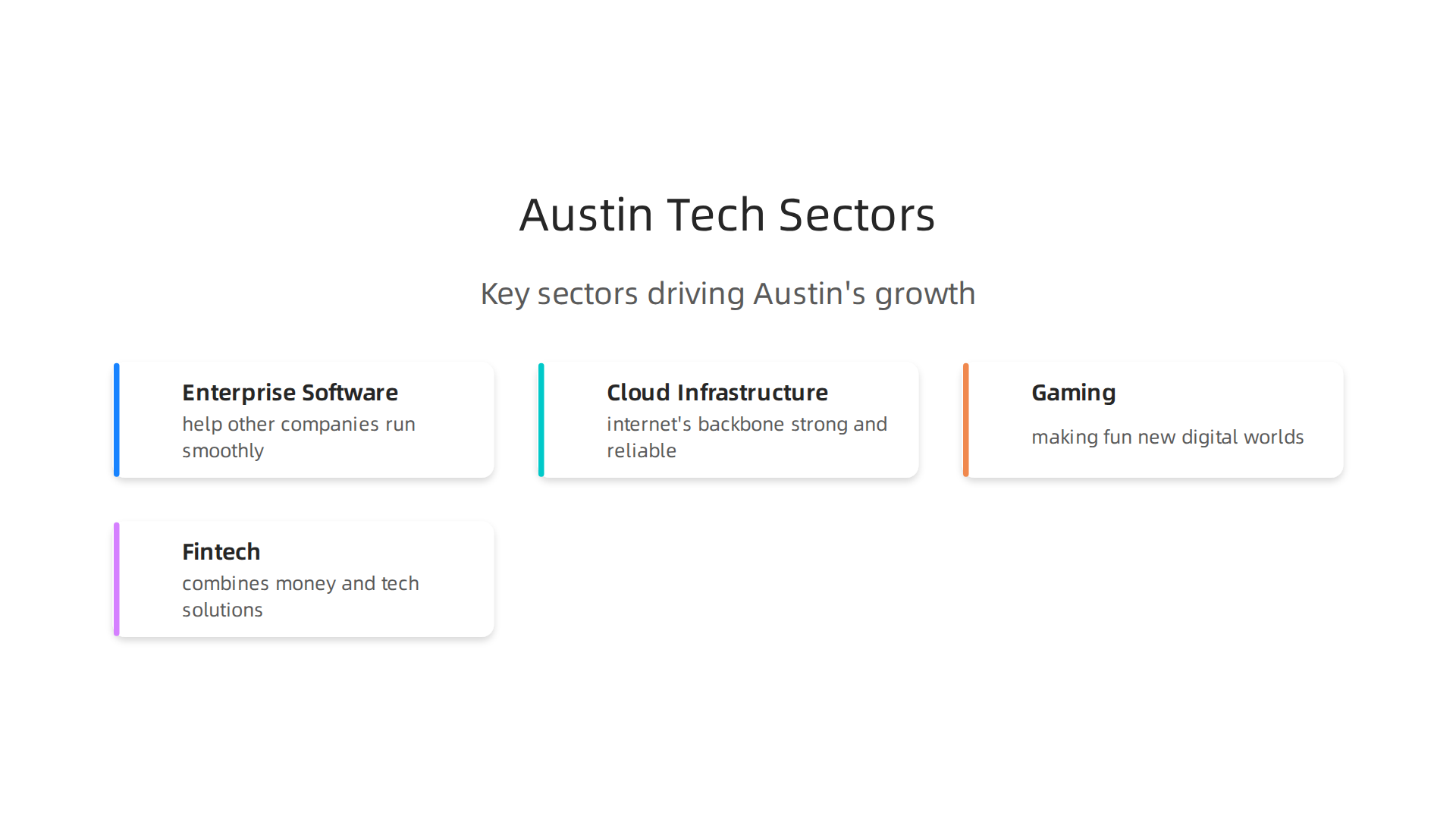
You will find a lot of enterprise software businesses here, which help other companies run smoothly. There are also many firms working on cloud infrastructure, making sure the internet’s backbone is strong and reliable. Gaming is another big area, with studios making fun new digital worlds. And don’t forget financial technology, or fintech, which combines money and tech to create new banking and payment solutions.
When you look for IT companies in Austin, you will see a mix of big, well-known names and smaller, fast-growing companies. Austin is home to large, established tech giants like Dell, which has its roots nearby, and Samsung, with its important semiconductor operations. But it also has many exciting startups and "scale-ups" that are growing quickly. You can find thousands of tech companies in Austin, with many specializing in software development, cloud services, and AI. For example, some of the top software development companies in Austin for 2026 include Sophylabs, Praxent, and Frog Design, known for their work in custom software, fintech, and enterprise solutions Top 10 Software Development Companies in Austin (2026). This mix of company sizes is important because it affects how you choose the right partner. A startup might offer fresh ideas and flexibility, while a larger firm might provide more stability and a wider range of services.
The city’s tech world also thrives thanks to a strong local support system. Austin has many accelerators that help new companies grow, as well as co-working spaces where founders and teams can share ideas. Universities like the University of Texas at Austin play a big role by providing new talent and research. Big companies also have their research and development teams here, pushing for new discoveries. All these parts work together to create a lively place for innovation, helping all types of IT companies in Austin succeed.
Understanding this rich environment helps you make better choices when looking for partners. Whether you need expert mobile software development companies or reliable end user services, knowing Austin’s landscape is key. It allows you to find teams that not only have the right skills, but also fit your business goals and values. For business leaders looking to navigate this complex landscape, it’s wise to consider guides on how to choose enterprise IT services in 2026.
Austin’s growing tech world also means a busy job market for people with special skills. The city is a big draw for talented workers, especially from places like the University of Texas at Austin. This university is a major source of new engineers and tech experts. For example, the University of Texas at Austin has teamed up with Samsung to train people for the semiconductor industry, which is a key part of Austin’s tech economy UT and Samsung Partner to Develop Talent Pipeline for Texas Semiconductor Ecosystem.
However, even with many smart people, finding the right talent can be tricky for it companies in austin.

One big challenge is the high demand for certain skills. In 2026, while Austin’s tech sector is still adding jobs, there’s a special need for people in areas like AI for business and specialized software that works with chips Austin’s Tech Sector Is Hiring Fast in the Wrong Places: The | KiTalent. This means there’s a shortage of experts in these new and complex fields.
Hiring teams also face competition. Many companies, both big and small, are looking for the same talented people. Keeping good employees can also be hard because other businesses are always offering new chances. You need to think about how to attract both experienced senior engineers and new junior software engineer talent. If you’re looking for guidance on bringing in newer talent, you can read about the junior software engineer 2026 skills hiring career roadmap.
When it comes to finding people, companies in Austin use different ways. They post jobs online, work with special hiring agencies, and even rely on connections from their teams. Sometimes, hiring local people in Austin is the best way to keep team members close. But for very specific skills or if a company needs to save money, they might hire remote teams or look for talent in other places. This is a big decision for businesses, and there are many tips available on how to hire a full stack developer in 2026, which can apply to other roles too.
Keeping up with the fast pace of the tech world, especially in AI, is key for both companies and job seekers.
Get clear daily AI updates from The Deep View Newsletter.
The AI Newsletter Worth Reading
Costs & Compensation: Comparing Austin to Other U.S. Hubs
After looking at how to find skilled workers, let’s talk about money. When it companies in austin think about growing, they need to look at costs.

This includes what they pay their staff and how much it costs to run an office. Austin is often seen as a place with lower costs than super-expensive cities like San Francisco or New York City. But how big is that difference, really?
Comparing Salaries: Austin vs. Big Tech Cities
In 2026, salaries in Austin are still a bit lower than in places like the San Francisco Bay Area or New York City. For example, a software developer in the Bay Area might earn 27% to 40% more than the national average, while in Austin, it’s about 10% to 15% more than the national average Developer Salary Benchmarks 2026.
Some reports show Austin software engineers earning an average of around $127,199 a year. This is less than San Francisco ($172,626) or New York ($151,767) but more than cities like Atlanta ($96,000) or Chicago ($108,000) for similar roles Software Engineer Salary by City 2026. For a full stack developer, Austin’s median salary is around $129,000, while San Francisco and New York City are closer to $157,000 to $158,000 Full Stack Developer Salary in 2026.
However, for very specific jobs, especially those in ai for business or advanced software, the pay can be very high everywhere. Some data even suggests Austin can be among the highest-paying cities for certain software engineers, with median base salaries reaching $277,000, just shy of San Francisco’s $280,000 in those top roles Highest-Paying Cities for Software Engineers (2026). This means that while Austin generally has lower costs, highly sought-after talent can still command big paychecks.
Contractor Rates and Office Costs
When we look at contractors, Austin also tends to be more affordable than the Bay Area. For example, a mobile developer working as a contractor in Austin might charge about $73 per hour, while in the San Francisco Bay Area, the rate jumps to $95 per hour Mobile Developer Contract Rate in United States 2026. Similarly, a backend developer in Austin might charge $79 per hour, compared to $105 per hour in the Bay Area Back-End Developer (Java / Go / Node.js) Contract Rate in United States 2026. These differences can add up for mobile software development companies or those needing many specialized contractors.
Office costs in Austin are also generally lower than in major hubs. This means that it companies in austin might spend less on rent and other running costs, which helps balance out their overall budget.
Total Costs and What It Means
For companies looking to hire, the total cost matters. Austin offers a real chance to save money on salaries and office space compared to cities like San Francisco or New York. This is called "cost arbitrage," where you save money by choosing a location with lower prices.
However, there’s a catch. Sometimes, saving money on salaries might mean you have fewer choices for very specific, top-level talent. If a company struggles to find the exact skills they need in Austin, they might face higher turnover, meaning people leave more often. This can add new costs for hiring and training.
To make smart choices about hiring and overall costs, it helps to understand different job levels and roles. Learning about how companies define developer levels can help businesses create clear career paths and manage salaries better.
When picking a partner firm, like for end user services or other tech needs, you should look at their rates and overhead. Sometimes, a firm in a lower-cost city like Austin or even some houston it companies might offer better overall value. But always make sure they can give you the quality and talent you need. For business leaders wondering about service providers, there’s advice available on how to choose enterprise IT services in 2026.
After thinking about the costs of hiring and running a business in Austin, the next big step is finding the right partners. Choosing the right IT company to work with is super important, especially if you want to make sure you get good quality for your money. It’s not just about saving cash; it’s about finding a team that truly helps your business grow. For many businesses, selecting a tech vendor is a critical choice that can affect how well projects turn out and how much money is made in the long run.
So, how do you find and check out potential IT companies in Austin to make sure they are a good fit for your needs? Here’s a simple guide.
Your Checklist for Vetting IT Companies
When looking for the best IT companies in Austin, you need a plan to check them thoroughly.
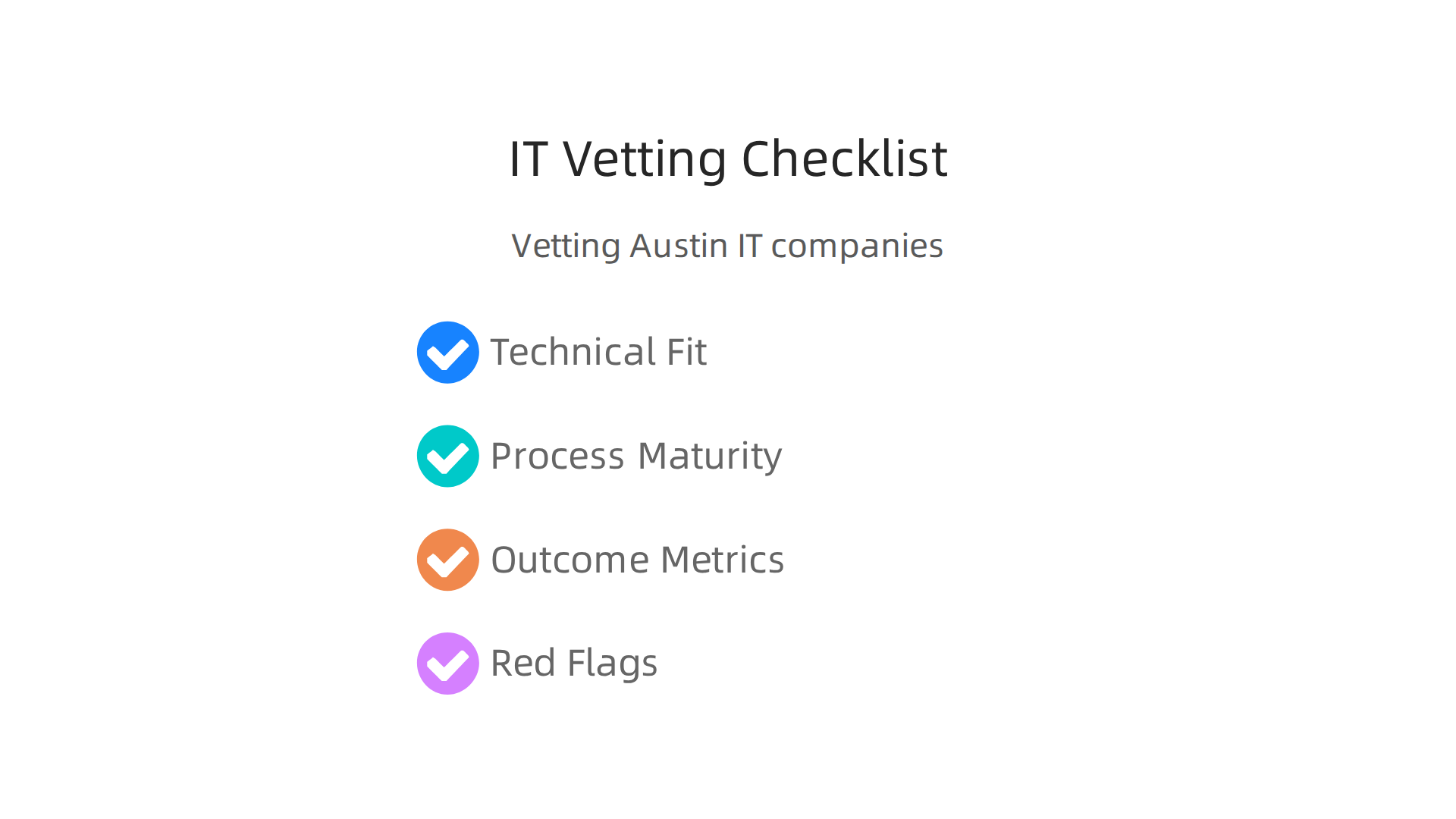
This plan helps you find out if a company can really do what it promises.
1. Technical Fit & Code Quality Signals
First, you want to make sure the company has the right skills for your project.
- Look at their past work: Do they have experience with projects like yours? If you’re building a new app, have they worked with other mobile software development companies before? Many top software development companies in Austin will show off their past successes. You can find some of the Top Software Development Companies in Austin in 2026.
- Check their technical expertise: If you need help with AI for business solutions, do they have experts in artificial intelligence? Ask about the specific technologies they use.
- Ask about code quality: Good code is clean and easy to understand. While you might not read all their code yourself, you can ask about their practices for testing and making sure code is high-quality. This is important because bad code can cause big problems later.
2. Process Maturity & Communication
How a company works is just as important as what it can do.
- Project management: Do they have a clear plan for how they manage projects? Do they use tools that help them stay on track and communicate with you? A solid process helps avoid delays and misunderstandings.
- Communication: How often will they talk to you? How will they give updates? Clear and regular communication is key. They should be transparent about problems and successes. Having good communication plans is a common best practice for distributed teams, too, even if a company is local to Austin.
- Problem-solving: How do they handle issues or changes? A good company will have a clear way to solve problems without causing big delays or extra costs.
3. Outcome Metrics & Client Satisfaction
What do their past clients say about them? And do they measure their own success?
- References: Always ask for references from past clients. Talk to these clients to hear about their experiences. Did the company deliver on time and within budget? Were they happy with the results?
- Success tracking: Does the company measure how well their work helps their clients? For example, do they track how much faster a client’s website became, or how much more efficient a process is now? Setting clear service level agreements and performance metrics is a key practice for vendors in 2026.
- Long-term support: What kind of help do they offer after the project is done, like for end user services or ongoing maintenance?
Running Technical Checks and Asking Questions
When you’ve found a few promising IT companies in Austin, it’s time for deeper questions.
- Focused technical due diligence: This means digging into the details of their technical skills and approach. Ask them to show you examples of their work, not just tell you about it. For companies working with cutting-edge tech, learning about how to pick the right partners is vital. If you’re looking into advanced technology, you might also want to read our guide on choosing AI companies for smart partner selection in 2026.
- Sample RFP (Request for Proposal) questions: When you send out an RFP, include questions like:
- What core features can your solution provide for our project right now?
- How will your solution connect with our current systems?
- What is a typical timeline for a project like ours?
- How do you ensure your team stays updated on new technologies?
- You can find more helpful questions in guides on key questions for mid-market tech vendor selection strategy.
Watching Out for Red Flags
Even with a good checklist, some things should make you think twice.
- Tricky contract terms: Make sure the contract is clear and fair. Are there hidden fees? Is it hard to end the contract if things don’t work out? Understand all the details before signing.
- High employee turnover: If a company’s staff changes very often, it can be a sign of problems. This might mean projects get delayed or the quality suffers. High turnover can also affect how consistently they provide ongoing support or end user services.
- Lacking references or case studies: If a company can’t give you good examples of past work or people to talk to, that’s a warning sign.
- Promises that seem too good to be true: If a company promises a lot for very little money or in a super short time, be careful. Quality IT work takes time and effort. Always verify their claims carefully. A good vendor evaluation checklist for procurement teams can help you cover all your bases.
By following these steps, you can feel more confident when picking an IT partner. Whether you’re considering houston it companies or those in Austin, taking the time to vet them properly can save you from big headaches down the road.
Stay ahead with clear daily AI updates and dive deep into broader technology topics.
The AI Newsletter Worth Reading
After carefully vetting potential partners, the next big decision is how you will work with them. Businesses today have lots of choices for building their IT teams.
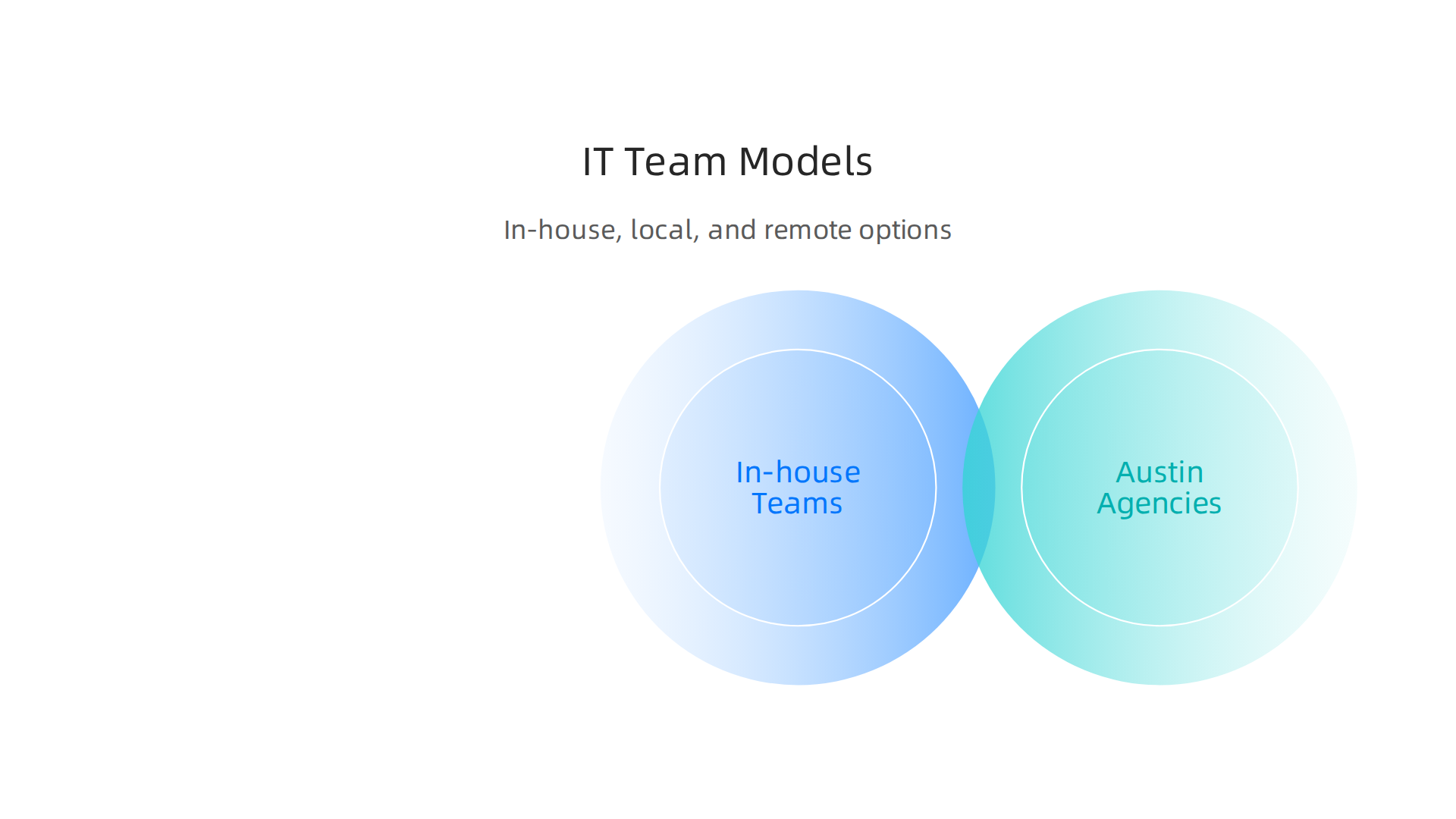
You can hire people to work right in your office, work with local it companies in Austin, or partner with teams far away. Each option has its own good and bad points, and choosing the right one can make a big difference for your project and your budget.
Trade-offs: In-House, Local Agencies, or Remote Partners
Thinking about where your team members will be located is key.
- In-house Teams: This means hiring your own staff to work in your office, like in Austin.
- Good points: You have a lot of control and can talk to them easily face-to-face. Your team members understand your company culture very well.
- Bad points: It can be expensive to hire and keep employees, especially in a city like Austin where talent is sought after. It might also be harder to find very special skills for things like
ai for businesssolutions if the local market is small.
- Austin Agencies: These are local
it companies in Austinthat you hire to do specific projects.- Good points: They know the local market and can meet with you easily. They often have different experts ready to go. Many
mobile software development companiesin Austin offer this kind of service. - Bad points: They can be more costly than remote teams. You might also have less control over their day-to-day work compared to an in-house team.
- Good points: They know the local market and can meet with you easily. They often have different experts ready to go. Many
- Remote Partners: This means working with companies or people who are not in Austin, maybe even in other countries.
- Good points: You can find the best talent from anywhere in the world, which is great for specialized needs or if you’re exploring options beyond
houston it companies. It can also save you money on salaries and office space. If you’re looking to expand your talent pool, learning how to Hire Indian Programmers might be helpful. - Bad points: Time differences can make talking tough. It takes more effort to build trust and make sure everyone is on the same page.
- Good points: You can find the best talent from anywhere in the world, which is great for specialized needs or if you’re exploring options beyond
When Hybrid Models Work Best
Sometimes, the best solution is a mix of these options, called a hybrid model. For example, you might have a small in-house team for planning and a remote team for development. This lets you get the benefits of both worlds: local oversight and global talent.
For any partnership, you need clear rules. It is very important to set up contracts, service level agreements (SLAs), and plans for sharing knowledge. Contracts should clearly state what each party will do and how much it will cost. SLAs set goals for how fast and how well the work should be done. And knowledge transfer plans make sure that if a partner leaves, your team still understands how everything works. Good Vendor Contract Management: Process, Tools & 2026 Trends can help here.
Keeping Distributed Teams Aligned and Productive
When teams are spread out, good communication and clear ways of working are super important.
- Communication: Use tools that let everyone talk easily, no matter where they are. This includes video calls, chat apps, and project management software. A guide on Best practices for distributed engineering teams: 2026 guide suggests using written updates for progress, videos for demos, and meetings for big decisions.
- Clear Goals: Make sure everyone knows what needs to be done and when. Break big projects into smaller steps so it is easier to track progress.
- Regular Check-ins: Have regular meetings or updates to keep everyone informed and to fix problems quickly. This helps prevent misunderstandings and keeps projects moving.
- Vendor Management: Keep an eye on how your partners are doing. This includes regular reviews of their work and making sure they are meeting the goals set in the SLAs. Having strong 9 IT Vendor Management Best Practices For Better ROI in 2026 can greatly improve project success. Remember to also plan for
end user servicesand ongoing support.
Choosing the right working model for your business and managing these relationships well is a big part of successful IT projects in 2026. If you’re a business leader, understanding How to choose enterprise IT services in 2026 can provide even more guidance.
Moving forward, it is also important to look at what’s next for the tech world,

especially in a fast-changing place like Austin. Knowing what is coming helps businesses plan better for their IT needs.
Future Signals: AI Adoption, Funding, and Growth Forecasts for Austin
In 2026, Austin continues to be a strong hub for technology, but with a special focus on new areas. We are seeing big changes in how businesses adopt AI, where money is being invested, and what kinds of skilled people are needed. These trends shape what many it companies in Austin can offer.
Austin’s Growing Focus on AI and Tech Talent
Austin’s job market is still growing, especially in tech. In 2026, the city added around 8,300 new tech jobs, with many of these focusing on things like AI tools and software for semiconductors. This shows a clear shift towards specialized skills. Local businesses and it companies in Austin are hiring people with deep knowledge in AI, cloud systems, and chips. This means the kind of services these companies offer are changing too. For instance, many mobile software development companies are now also offering ways to add AI to apps.
The demand for AI skills is high, and this affects how much these experts are paid. For example, AI engineers in places like San Francisco and New York have very high salaries, and Austin is also seeing strong pay for these roles. This highlights how important ai for business solutions have become. If your business wants to stay ahead, understanding these shifts is key. It means you might need to look for partners who are strong in AI, not just general IT support. For more help, consider exploring guides on choosing AI companies for smart partner selection.
What This Means for Your Business
These trends have clear impacts on how you plan your projects and choose your partners for the next year or two.
- Product Roadmaps: If you are planning new products, think about how AI can make them better. Whether it’s making tasks easier or offering new smart features, AI is a major part of AI software development in 2026.
- Hiring: When hiring for your own team or looking for
it companies in Austin, make sure they have strong AI skills. This could mean looking beyond general tech knowledge to very specific AI roles. - Vendor Selection: When choosing an IT partner, whether they are local or even like
houston it companies, ask about their AI skills and how they can help you use AI in your projects. Also, think about how they will handleend user servicesthat rely on AI tools.
Staying on top of these changes in Austin’s tech scene will help your business make smart choices and grow in the exciting world of AI.
To keep up with the fast pace of AI and tech trends, you need reliable information.
The AI Newsletter Worth Reading offers clear daily AI updates to help you stay informed.
Summary
Austin has become one of the fastest-growing U.S. tech hubs in 2026, driven by record funding and a strong shift toward AI-focused startups. This article explains the city’s industry mix—enterprise software, cloud, gaming, fintech—and why that diversity matters when you pick partners. You’ll learn how Austin compares on costs and salaries to Bay Area and New York markets, where it can save money and where top AI talent still commands premium pay. The guide lays out a practical vendor-vetting checklist covering technical fit, process maturity, references, and red flags, plus sample RFP questions and steps for technical due diligence. It also walks through trade-offs between in-house, local agencies, remote partners, and hybrid models, and highlights future signals to watch as AI investment and hiring needs evolve. After reading, you’ll be able to shortlist and evaluate Austin IT companies with greater confidence and choose a working model that fits your product, budget, and timeline.