
Best Online Web Development Courses to Learn in 2026
· 20 min read
Introduction: The Evolving Landscape of Web Development Education
Here is a stat that might surprise you. The global web development market is worth about $87.75 billion in 2026, and experts expect it to keep growing fast over the next few years. That growth creates a huge demand for people who can actually build websites and apps. And the most common way people learn these skills today? Online web development courses.
But here is the real problem. There are thousands of courses out there. From Udemy courses that cost just a few bucks to Coursera free courses that offer certificates from big universities, the options feel endless.
How do you know which one will actually help you land a job?

Not all courses are created equal. Some teach old tech. Some rush through important topics. Others assume you already know programming basics when you do not. That is why picking the wrong course can waste months of your time and leave you stuck.
This guide exists to fix that. We looked at market data, talked to working developers, and tested several popular platforms. Our goal is simple: give you clear, evidence-based criteria to find the best online web development courses in 2026. No fluff. Just practical advice you can act on.
If you want to stay ahead of the curve as you learn, getting daily updates on where tech is heading can help. The Deep View Newsletter delivers clear AI and development insights straight to your inbox each day.
And if you are also thinking about career credentials, check out our breakdown of the 2026 software engineer certification that actually pays off to pair your course work with a credential that matters.
Let us dive into what makes a great web development course in 2026.
Why Online Web Development Courses Are Booming in 2026
Why are so many people turning to online web development courses right now? The short answer is that the way we work and the way companies hire have both changed for good.
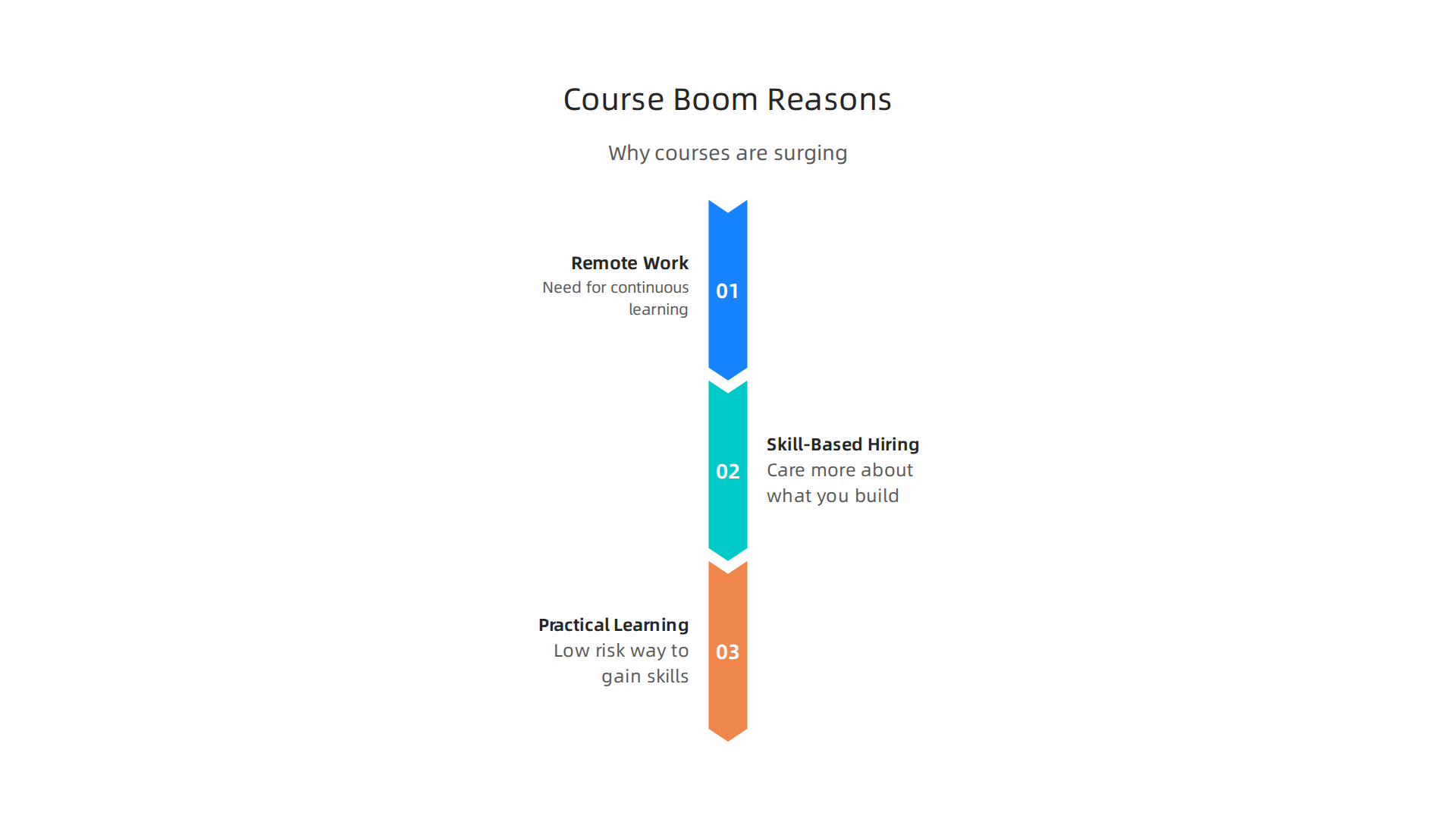
First, remote work is here to stay. And with remote work comes a need for self-directed, continuous learning. You cannot just learn once and call it done. Technology moves fast. Developers have to keep up with new frameworks, tools, and best practices. That is why millions of professionals jump into platforms like Coursera, Udemy, and freeCodeCamp every year. They want courses that fit around their schedule, not the other way around.
Second, employers today care a lot more about what you can build than where you studied. The old path of getting a computer science degree is no longer the only way in. More and more companies use skill based hiring. They look at your portfolio, your projects, and the credentials you earn from trusted courses. As an article from Coursera explains, certifications and certificates are becoming more relevant than ever in this hiring environment.
The numbers back this up. The global web development market is worth roughly $87.75 billion in 2026, according to Mordor Intelligence. That is a lot of demand for people who can actually code. Meanwhile, the online course app sector alone brought in $2.16 billion in revenue in 2025, as reported by Business of Apps. Even with a slight dip that year, the appetite for learning has not slowed down.
Platforms like Udemy courses and Coursera free courses have reported record numbers of learners signing up for web development tracks.
That is because online web development courses offer a practical, low risk way to gain real skills. You can start with free content, then pay for deeper training when you are ready.
If you are thinking about earning a credential to boost your resume, check out our guide on the 2026 software engineer certification that actually pays off. It pairs well with any course you choose.
And to stay ahead of the fast changing tech landscape, getting daily insights helps a ton. The Deep View Newsletter delivers clear, practical AI and development updates straight to your inbox every day. It is a great way to keep learning even after you finish your course.
What to Look for in a High-Quality Web Development Course
So you are ready to dive into an online web development course. That is a great first step. But not all courses are created equal. Some will help you land a job fast. Others will waste your time with outdated content. How do you tell the difference?
Here are the three things I look for before I enroll in any course.
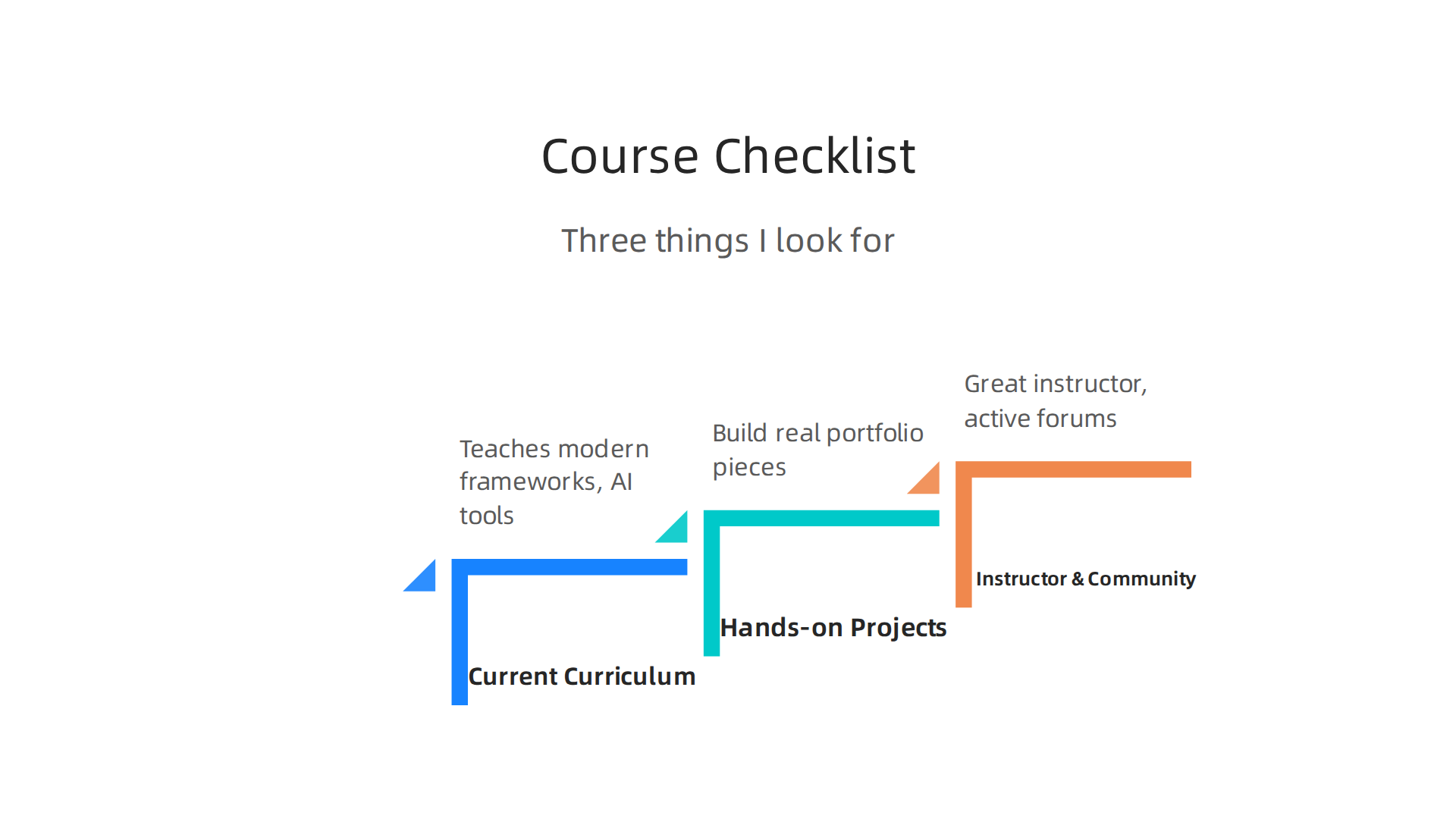
1. The curriculum must be current
Technology changes every year. What was hot in 2023 might be old news now. In 2026, a quality course should teach you modern frameworks like React, Node.js, and TypeScript. These are the tools that real companies use.
A well designed course follows strong instructional design principles. As the Lemon Learning guide on instructional design explains, good course creators use a systematic approach that blends psychology, pedagogy, and the latest tech. If a course was last updated in 2020, skip it. You want content that reflects the industry today.
Also, look for courses that include AI coding tools. Many developers now use assistants like GitHub Copilot or Claude. A modern course should teach you how to work with these tools, not pretend they don’t exist. Check out our guide on AI coding assistants in 2026 to see why this matters.
2. Hands-on projects build real skills
You cannot learn to code by watching videos. You have to build things. The best courses include project based learning where you create a portfolio piece step by step.
Look for courses that make you build at least three complete projects. This could be a to-do app, a weather dashboard, or a full ecommerce site. Working on projects helps you remember what you learn. It also gives you something to show employers.
Instructional design experts agree that active learning beats passive lectures. A quality course will force you to solve problems, not just copy code.
3. Instructor quality and community support
A great instructor makes a huge difference. Check their background. Have they worked as a developer? Do they explain things clearly? Read reviews before you buy.
Even more important is the community. When you get stuck, you need help fast. Look for courses with active discussion forums, Discord servers, or live Q&A sessions.

Courses with strong community support have much higher completion rates. You are less likely to quit when others are on the same journey.
To learn more about how to truly understand code and avoid getting stuck, read our article on grokking code with a science backed framework. It pairs perfectly with any course you take.
Finally, keep learning even after your course ends. The tech world moves fast. Staying informed is just as important as the initial training. A great way to do that is to subscribe to The Deep View Newsletter. It delivers clear daily updates on AI and development trends straight to your inbox. That way you always know what skills to learn next.
Frontend vs Backend vs Full-Stack: Choosing the Right Path
You now know how to pick a great course. But which type of developer do you want to become? Your choice between frontend, backend, or full-stack determines what languages you learn and what jobs you can get.
Let’s break it down.
Frontend: Visual and Accessible
Frontend developers build what users see and click on. If you enjoy colors, layouts, and making things look good, this is a great place to start. HTML, CSS, and JavaScript are the core tools.
Frontend is the most accessible path for beginners. You see results quickly. And JavaScript remains the undisputed king of the web according to current industry data. You can start building interactive pages after just a few weeks of learning.
Many online web development courses focus on frontend first because it’s visual and rewarding. You can find coursera free courses or paid bootcamps that teach modern frontend frameworks like React or Vue.
Backend: Deeper Systems Knowledge
Backend developers work behind the scenes. They build servers, databases, and APIs. If you like solving logic problems and understanding how data flows, backend might be your path.
Backend roles often require deeper knowledge of systems architecture and security. Popular languages include Python, Java, and Go. In fact, Python dominates the field in 2026, especially for AI and automation. Backend developers usually earn higher starting salaries because the work is more complex.
Full-Stack: Flexibility and High Demand
Full-stack developers handle both frontend and backend. They can build an entire web app from start to finish.
Startups and smaller teams love full-stack developers because they can wear many hats. You don’t need another person to fix the database or adjust the UI. You can do it all.
The trade-off is that you might not go as deep in any single area. But in 2026, full-stack skills are highly sought after at growing companies. Many udemy courses offer full-stack tracks that teach you both sides.
Specialization vs. Generalization
Here’s the honest truth. Specializing in one area can lead to higher pay. A senior backend architect often makes more than a generalist. But specialization can also limit your options. If backend jobs dry up in your area, you might struggle to switch.
Being a generalist gives you flexibility. You can adapt to changing markets more easily. Many developers start as frontend specialists and later add backend skills to become full-stack.
So ask yourself: Do you want depth or breadth? There is no wrong answer. But knowing your goal helps you choose the right course.

If you are still unsure about which direction to take, stay informed about the latest tech trends. The best way to do that is to subscribe to The Deep View Newsletter. It sends clear daily updates on AI and development trends straight to your inbox. That way you never miss what skills are worth learning next.
And if you want to validate your skills with a recognized credential, check out our guide on the 2026 software engineer certification that actually pays off. It pairs perfectly with any specialization path you choose.
Top Programming Languages and Frameworks to Learn
You picked your path. Now you need the right tools. The languages and frameworks you choose will shape your entire developer career. Let’s look at what matters most in 2026.
JavaScript and TypeScript: The Foundation
JavaScript is still the undisputed king of the web. According to the latest data, it remains the most used language for frontend and full-stack work. TypeScript is growing fast too. It adds type safety to JavaScript, which helps you catch bugs early. Many companies now require TypeScript for new projects.
If you want to build websites and web apps, you simply must learn JavaScript. It’s not optional. Most online web development courses start here for a reason.
Python: The Backend Powerhouse
Python has exploded in popularity. The 2025 Stack Overflow survey shows Python adoption jumped seven points in one year. It now dominates backend development, AI, machine learning, and automation.
In 2026, Python is the top language to learn if you want to work with AI and data. It’s also beginner friendly. You can write useful scripts after just a few weeks. If you chose the backend or full-stack path, Python should be high on your list.
The Frameworks That Rule the Web
Knowing a language is one thing. Knowing how to use it in real projects is another. That’s where frameworks come in.
React, Next.js, and Node.js are the top choices in 2026. React powers the frontend of countless apps. Next.js builds on React to give you server-side rendering and better performance. Node.js lets you run JavaScript on the server, making full-stack development with one language possible.
Employers want proof you can work with specific stacks. The MERN stack (MongoDB, Express, React, Node.js) is very common. So is the JAMstack (JavaScript, APIs, Markup). If you see a job posting asking for React and Node.js experience, that’s the MERN stack.
Many online web development courses on platforms like udemy courses or coursera free courses now offer entire tracks dedicated to these stacks. You can learn them step by step.
How to Choose What to Learn First
Start with what matches your specialization.
- For frontend, learn JavaScript, then React or Next.js. Add TypeScript later.
- For backend, learn Python or Node.js. Add a database like MongoDB or PostgreSQL.
- For full-stack, learn JavaScript first, then both React and Node.js. Python is a great second language.
The key is to build real projects. Don’t just watch videos. Build a simple to-do app, then a blog, then a small e-commerce site. Employers look for proof that you can deliver.
Keep Learning as Languages Shift
The tech world moves fast. What’s hot today might be different next year. That’s why staying informed matters. If you want clear daily updates on which languages and tools are trending, subscribe to The Deep View Newsletter. It helps you avoid wasting time on outdated skills.
And if you’re looking to validate your skills with a recognized credential, check out our guide on the 2026 software engineer certification that actually pays off. It pairs perfectly with whichever stack you choose to master.
How AI is Transforming Web Development Education
By now you know the languages and frameworks to learn. But how you learn them is changing fast. In 2026, AI is reshaping online web development courses in ways that make learning faster, smarter, and more personal.
AI Code Assistants Are Becoming Your Classroom Tutor
Remember when you had to debug a tricky piece of code alone? Not anymore. AI-powered code assistants like GitHub Copilot and Tabnine are now built directly into many course platforms. They don’t just give you answers. They explain what each line does and suggest improvements right inside your browser or IDE.
According to a roundup of the best AI tools for web development in 2026, these assistants help you write code faster and learn by doing. You can ask them "why does this function return undefined?" and get a clear explanation on the spot. That’s a huge leap from reading forum posts or waiting for instructor replies.
Many udemy courses and coursera free courses now include Copilot or Tabnine as part of their curriculum. You learn the language and the AI tool at the same time. That is a skill employers actually want.
Personalized Learning Paths That Adapt to You
One size never fit all in education. AI now changes that. Many top online web development courses use machine learning to watch your progress. If you breeze through HTML but struggle with CSS, the platform adjusts. It gives you extra practice on CSS and skips the parts you already know.
This means you spend less time on what you have mastered and more time on what you still need to learn. The result? You finish courses faster and with deeper understanding. Some platforms even use AI to predict which topics you will likely forget and review them before you move on.
Courses Now Teach AI Application Development as a Core Skill
Here is the big shift. It is not enough to just use AI tools. In 2026, developers need to know how to build applications that use AI. That is why many modern programming courses now include modules on integrating large language models, building chatbots, or adding recommendation systems.
For example, Stanford Online offers a curriculum specifically for designers and developers to leverage AI for creating positive user experiences. And the Fullstack + AI Web Development Roadmap video on YouTube is a popular starting point for learning what you need in 2026.
If you want to stay ahead, make sure your online web development courses include a section on AI application development. It is becoming a requirement, not a bonus.
You Need to Keep Learning as the Tools Evolve
AI changes fast. What is the best assistant today might not be next year. That is why staying informed matters more than ever. The best way to keep up is to get clear, daily updates on AI and development trends.
If you want to avoid wasting time on outdated tools, subscribe to The Deep View Newsletter. It delivers the most important AI news straight to your inbox so you always know what is worth learning next.
And if you are curious about how AI coding assistants actually work under the hood, check out this deep dive on AI coding assistants in 2026 and how they solve the trust problem. It will help you get the most out of these tools.
Tips for Maximizing Your Learning from Online Courses
So you have signed up for some great online web development courses. You have AI tutors and adaptive paths. But here is the truth. The best course in the world won’t help if you do not show up and engage the right way. Let’s look at three practical tips that will help you get real results.
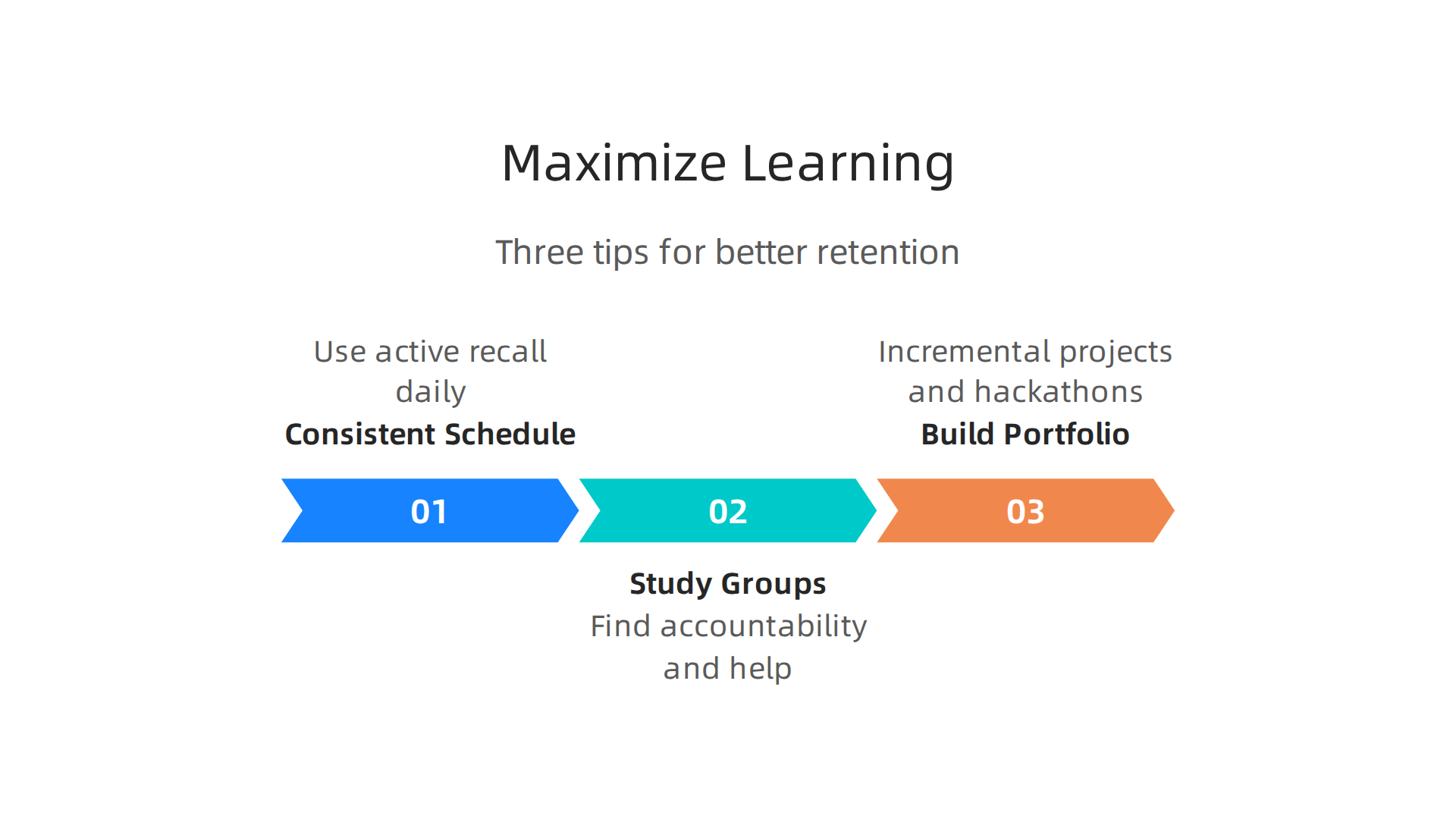
Set a Consistent Schedule and Use Active Recall
You probably know that cramming does not work. But consistent practice does. Set aside the same block of time each day, even if it is just 30 minutes. This builds a habit.
But do not just watch videos or read code. Use active recall. This means closing the tutorial and trying to write the code from memory. Or explaining a concept out loud without looking. According to research into instructional design, active recall is one of the most effective ways to move information into long term memory. It turns passive watching into active learning.
For example, after finishing a module on loops in a programming course, close the video. Write a loop that prints numbers 1 to 10. Then try a harder one. This simple habit makes your udemy courses or coursera free courses stick much better. For deeper tips on how to really understand code, check out this guide on grokking code with a science backed framework.
Join Study Groups and Online Communities
Learning alone is hard. You get stuck. You get bored. You procrastinate. But when you join a community, you get accountability.
Find a Discord server for online web development courses you are taking. Reddit communities like r/learnprogramming are also great. Post your progress. Ask questions. Help others when you can. Explaining a concept to someone else is also a form of active recall.
Many learners find that having a study buddy or a small group keeps them on track. You can agree to check in daily. Share what you built. If one of you falls behind, the other helps. This social pressure is powerful.
Build a Portfolio Incrementally and Join Hackathons
Do not wait until you finish your course to start a portfolio. Build as you learn. After each small project, add it to a GitHub repo or a simple portfolio site. Even a basic calculator or a todo app counts.
Then take it further by joining a hackathon. Hackathons force you to build something real under a deadline. You will work with others, use new tools, and solve problems you have not seen before. The experience is gold for your resume and your confidence.
Hackathons also expose you to the latest trends, like AI integration or no code tools. And they push you to apply everything you have learned.
Keep Growing Beyond the Course
The best learners never stop. Even after finishing a course, you need to stay current. The tech world shifts fast. That is where The Deep View Newsletter comes in. It delivers daily AI and development news so you always know what matters next. Subscribe today and make staying informed part of your routine.
The Role of Certifications and Credentials
So you have built a habit of active learning and started your portfolio. Good. Now the big question. Do you need a certification to get hired? The short answer is yes, but only the right kind. Let’s break down how certifications and credentials actually work in 2026.
Certifications from Big Names Still Open Doors
When a recruiter sees a certification from AWS, Google, or Meta, it signals that you have passed a tough, standardized exam. These are not just completion badges. They prove you can handle real world tasks. For example, IBM and Microsoft certifications carry serious weight in enterprise settings, according to Mimo’s guide to the best web development courses for 2026. Employers know these exams are hard to cheat. So they trust them.
That is why you should prioritize certifications that require a proctored exam. A certificate of completion from a udemy courses platform might show you watched videos. But an AWS Certified Developer badge shows you can actually build and deploy. That difference matters.
Portfolio Projects Beat Degrees in Many Cases
Here is the good news. You do not need a four year computer science degree to land a top web development job. Skill based hiring is on the rise. Employers care more about what you have built than where you studied. As Coursera’s article on web developer certification points out, certificates and certifications matter more than ever because of this trend.
Your GitHub portfolio, your hackathon projects, and your ability to solve coding challenges tell a stronger story than a diploma from an unknown school. But pairing that portfolio with a recognized certification gives you the best of both worlds. You prove you can build, and you prove you have the foundational knowledge.
Choose Certificates with Exam Based Validation
Not all credentials are equal. A simple certificate of completion from a coursera free courses might show interest, but it does not demonstrate deep skill. The Noble Desktop blog explains the key difference: certificates come from finishing a course, while certifications come from passing an exam. Always go for the exam based option when you can.
For example, the Google UX Design Professional Certificate or the Meta Front End Developer Certificate both require you to pass graded assessments. These carry more weight than a "course completed" PDF. So when you pick online web development courses, look for those that offer a path to a real certification exam.
If you want to see which certification actually pays off in 2026, check out this guide on the 2026 software engineer certification that actually pays off. It breaks down the best options for your career.
Keep Learning Beyond the Credential
Even after you earn a certification, the tech world does not stop. New frameworks, new AI tools, new best practices appear every week. The best developers stay curious. That is where The Deep View Newsletter comes in. It delivers daily AI and development news straight to your inbox. Subscribe today and make staying current part of your routine. Your certifications will stay fresh, and so will your skills.
Summary
This article is a practical guide to choosing the best online web development courses in 2026, focused on what actually helps you get hired and build real skills. It explains the booming market context, why employers now value demonstrable skills over traditional degrees, and the three core selection criteria: a current curriculum (React/Node/TypeScript and AI tooling), project‑based learning, and strong instructor plus community support. The guide breaks down the differences between frontend, backend and full‑stack paths, lists the top languages and frameworks to learn, and shows how AI tools and adaptive platforms accelerate learning. It also gives actionable study habits—consistent practice, active recall, joining communities and joining hackathons—and explains when certifications matter and which types carry weight. After reading, you’ll know how to pick courses that build a hireable portfolio, integrate AI skills, and pair learning with credible certifications so your time investment pays off.