
How to Hire a Full Stack Developer in 2026 Expert Tips for Finding Top Talent
· 20 min read

Finding the right person to hire a full stack developer in 2026 is both exciting and challenging.

Companies everywhere are on the hunt for versatile engineers who can work on both the frontend and backend of web applications. This is one of the most steadily growing IT jobs today.
Full stack developers earn between $72,000 and $235,000 in 2026 depending on experience and company type, according to the latest salary data from the Full-Stack Developer Salary: The Complete 2026 Breakdown. With that kind of range, you want to make sure you pick the right candidate.
But hiring the best person isn’t just about posting a job ad and waiting. In 2026, you need a modern approach that uses AI tools, data-driven assessments, and fair compensation packages. Even software engineering internships are getting more competitive because companies want candidates who already know modern workflows.
This guide gives you actionable strategies backed by the latest industry data. Whether you’re a startup founder or a team lead, you’ll learn how to build a hiring process that attracts top talent.
To stay ahead, it helps to keep learning about how technology is changing the developer role. Check out this article on AI as the new standard for developers in 2026 to understand what skills to look for.
Also, if you want to keep up with daily updates on how AI reshapes tech hiring and development, you might like The AI Newsletter Worth Reading.
Understanding the Full Stack Developer Role in 2026
If you want to hire a full stack developer, you first need to know exactly what that person does today. The job description from 2021 won’t cut it anymore. The role has evolved fast thanks to AI tools, cloud services, and new ways of building software.
In 2026, a full stack developer is much more than someone who writes HTML, CSS, and JavaScript.
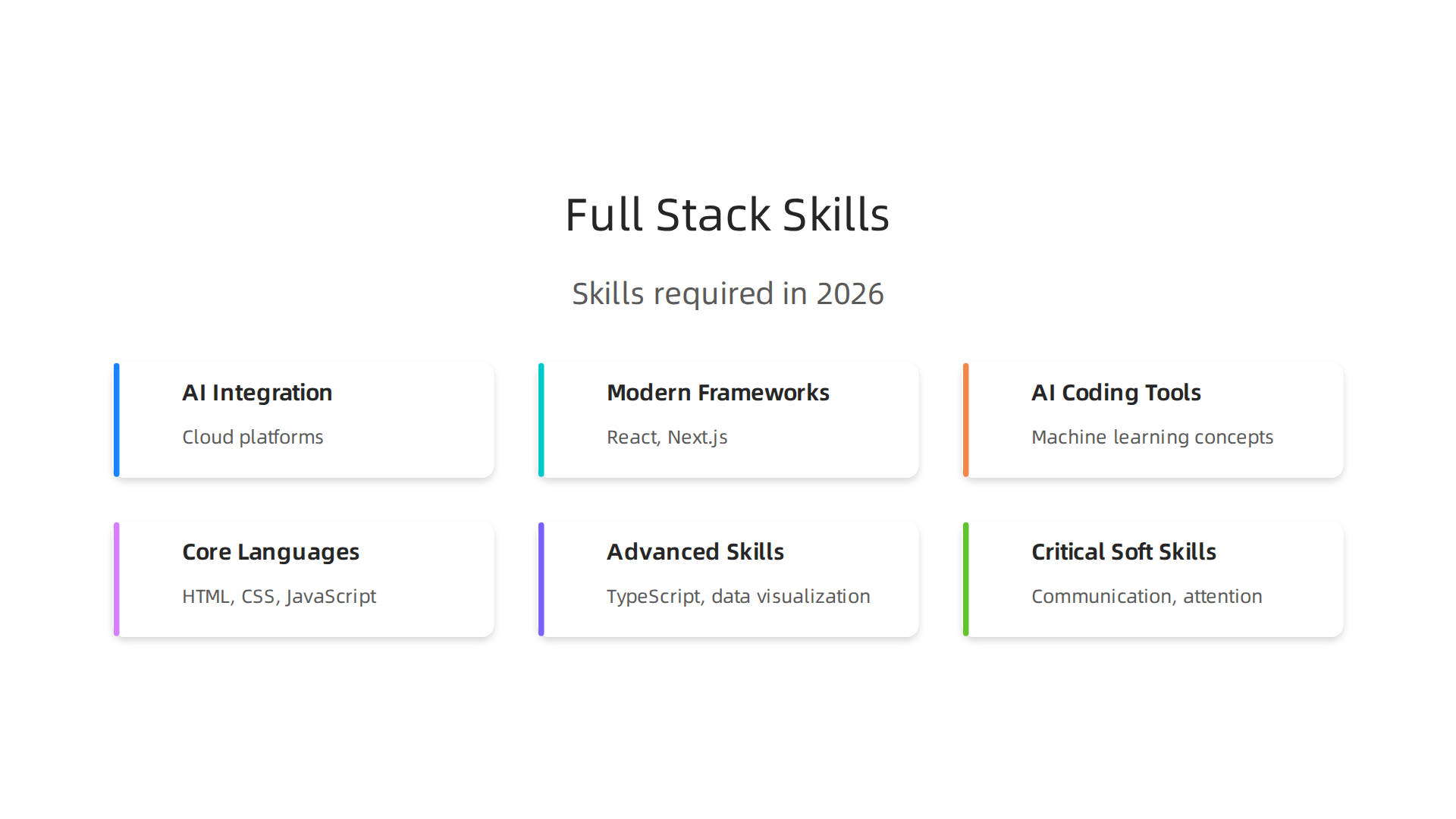
They now work with AI integration, cloud platforms like AWS and Azure, and modern frameworks such as React, Next.js, or TanStack. Many job listings now ask for experience with AI coding assistants and knowledge of machine learning concepts. This shift shows up clearly in the latest breakdown of the Fullstack + AI Web Development Roadmap for 2026, which outlines everything from Node.js to AI SDKs.
A recent analysis of job postings confirms that companies want developers who can build features that learn and adapt. The post I Reviewed Full-Stack Job Postings for 2026. Here is what they are looking for lists HTML, CSS, JavaScript, TypeScript, data visualization, and AI/ML concepts as must-haves.
Communication skills and attention to detail also rank high.
AI is not replacing full stack developers. Instead, it changes what they do daily. Developers now automate basic tasks with AI, check code quality faster, and spend more time on creative problem solving. The guide on How AI will Impact the Future of Full Stack Web Development explains that AI helps with personalization, testing, and bug detection. But it still needs a human to oversee the process and make smart decisions. If you want to see how these tools work today, read this article on AI coding assistants in 2026.
Because of this, the demand for people who can handle both coding and AI is growing fast. The Stack Overflow blog explains Why demand for code is infinite: How AI creates more developer jobs. Companies need developers who can architect systems, evaluate AI outputs, and build hybrid human-AI workflows. That means full stack developer jobs are among the most resilient IT jobs out there.
Even software engineering internships now require basic AI skills. Interns who know how to work with AI coding tools have a much better chance of getting hired.
Understanding this role depth helps you write job descriptions that attract the right people. You will know what to ask in interviews and how to test real skills. That is the foundation for making a great hire.
Once you know what a full stack developer does in 2026, the next big question is where to find them. The best candidates are not always scrolling job boards. Here are the sourcing channels that work best today.
Look Where Developers Actually Hang Out
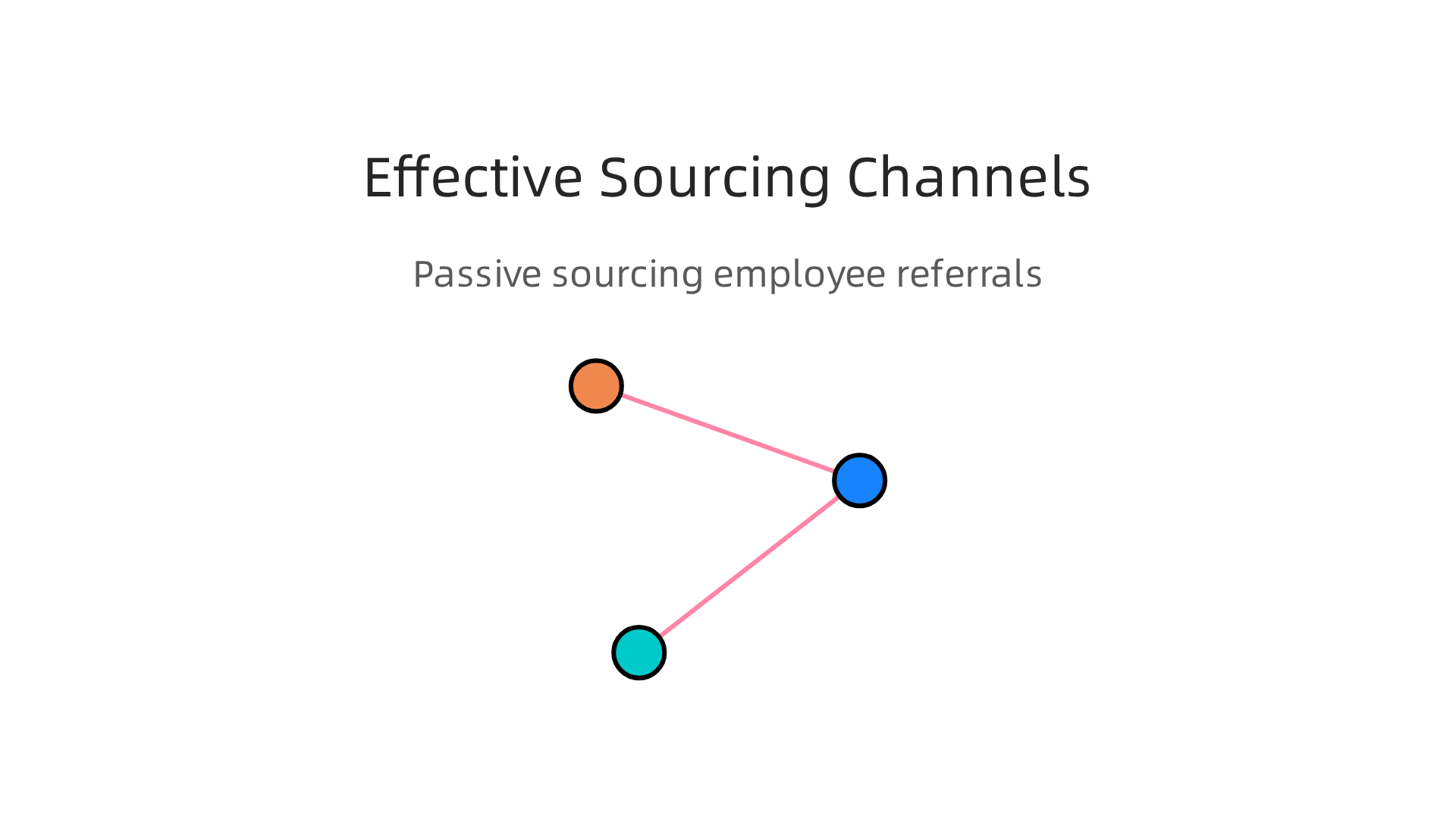
Many top developers do not actively search for jobs. They build side projects, contribute to open source, and share code on platforms like GitHub and Stack Overflow. This is passive sourcing, and it works well for finding high-quality talent. Developers who contribute to open source prove they can work with others and solve real problems. As one developer explained, building open source projects and taking part in hackathons gives candidates a big advantage over others. You can find these developers by searching GitHub for contributors in your tech stack or by looking at active discussions on Stack Overflow.
Employee Referral Programs Still Win
Asking your current team for referrals remains one of the best ways to hire trusted people. Your employees know the culture and can vouch for the skills of people they have worked with before. Referral hires also tend to stay longer and fit in faster. To make the most of this channel, give your team clear criteria for what you need. For example, if you are hiring for a role that requires AI integration skills, let them know. You can also learn more about how to evaluate technical skills by checking out the guide on the 2026 software engineer certification that actually pays off.
Paid Platforms and Niche Job Boards
If you have the budget, platforms like LinkedIn Recruiter and specialized job boards can speed up your search. Niche sites like Honeypot or full-stack specific job boards attract developers who are actively looking. Some companies also work with recruiting agencies that focus on full-stack talent. For a list of trusted firms, check out this overview of the best full-stack developer recruiters in 2026.
These agencies use AI-powered matching to connect you with candidates faster.
Staying on top of hiring trends takes time. If you want clear daily updates on AI and tech recruiting, sign up for The AI Newsletter Worth Reading. It helps you stay informed without the noise.
Crafting an Irresistible Job Description for a Full Stack Developer
You found the right channels and started getting applications. But are the applications from the developers you actually want? That depends almost entirely on your job description. A generic post that asks for a "rockstar ninja who knows everything" will attract the wrong crowd or no crowd at all. To hire a full stack developer who fits your needs, your description must be specific, honest, and forward-looking.

Name your real tech stack, not a wishlist.
Every full-stack developer in 2026 has a core technology set. If you list React, Node.js, and PostgreSQL in your job posting, you will attract developers who actually use those tools. If you list twenty different languages, you will scare away good candidates who think you don’t know what you want. Research shows that recruiters now look for candidates who are expert in one stack rather than generalists who know a little of everything. So pick your stack and own it. For example, mention that your team uses React with Next.js and Node.js, and that you expect experience with AI-assisted development tools like GitHub Copilot or Cursor. This tells candidates that you are current and that they will work with modern tools.
Show growth opportunities and work flexibility.
Top developers in 2026 care about where they can grow. Include details about mentorship, learning budgets, and paths to senior roles. Also be clear about remote and hybrid options. Many full-stack developer jobs now offer flexible schedules. If you allow fully remote work, say it. If you have a cool office with a team that meets once a week, describe that too. Developers want to know that they will not be stuck in a dead-end role.
Avoid tired buzzwords.
Phrases like "fast-paced environment," "wearing many hats," and "self-starter" are overused and meaningless. Instead, describe what the developer will actually do. Write something like: "You will build and maintain RESTful APIs, integrate AI-powered features into our core product, and collaborate with a team of five engineers using GitHub and Slack." That paints a real picture.
Highlight your AI tools and development process.
In 2026, forward-thinking developers want to join teams that use AI effectively. If your team uses tools like Copilot or Cursor for code generation and review, mention it in the description. It signals that you value efficiency and modern practices. As one analysis of 2026 job postings found, the ability to integrate AI into products is now a key differentiator for candidates. Show that your team is doing that.
Include specifics about the team and projects.
Describe the kind of projects the new hire will work on. For example, "You will help build a real-time dashboard for our logistics platform, using TypeScript, React, and AWS Lambda." This helps a developer picture themselves in the role. It also filters out people who have no interest in that domain.
A well-written job description does the hard work of filtering for you. It saves you time and gets you better matches. If you want to dive deeper into how AI tools are reshaping development workflows, check out this guide on AI coding assistants in 2026.
Technical Assessment Best Practices: Beyond the Whiteboard
You’ve written a great job description and started receiving applications. Now comes the hard part: figuring out who can actually do the work. The old approach of asking a candidate to reverse a linked list on a whiteboard doesn’t tell you much about their real skills. In 2026, the best way to assess a full stack developer is to simulate the work they will actually do.
Use realistic, modern assessment methods.
Instead of abstract algorithm puzzles, give candidates challenges that mirror your daily work. Consider these options:
- Take‑home projects that ask the developer to build a small feature end to end. This shows how they structure code, handle errors, and write tests.
- Live coding sessions with a realistic scenario, like fixing a bug in a React component or creating a new API endpoint. Watch how they think and communicate, not just whether they finish.
- System design challenges where they sketch out how they would scale an application or choose between databases. This reveals architectural thinking.
These approaches give you a much clearer picture than a timed whiteboard drill ever could.
Focus on problem‑solving and architecture, not rote syntax.
Because AI‑assisted coding tools are everywhere in 2026, knowing exact syntax matters less than understanding why you choose one solution over another. Good candidates can describe the tradeoffs they make and explain how their code fits into the larger system. According to one guide on Full Stack Developer Interview Questions 2026, modern interviews test React architecture, TypeScript fluency, and Node.js production patterns. These are real skills that translate directly to your team’s needs.
Use clear, consistent rubrics to reduce bias.
Create a scoring guide before you start interviewing. Decide what matters most: code quality, communication, testing habits, or design decisions. Share the rubric with everyone who interviews the candidate. This keeps your evaluations fair and helps you compare candidates objectively. A good rubric also improves the candidate experience because they know what to expect and how they are being judged.
If you want to dive deeper into how AI tools can help developers understand and improve code, read this overview on understanding forge code for better software with AI. It explains the modern approach to code comprehension that top candidates are already using.
And to stay on top of the latest AI tools that shape how developers work, subscribe to The AI Newsletter Worth Reading. It delivers clear daily updates so you never miss a trend.
When your assessment mirrors real work and focuses on problem‑solving, you hire developers who thrive on your team.
Cultural Fit and Soft Skills: What to Look For
Even the most technically gifted developer can struggle if they can’t work well with your team. Full stack developers rarely work alone. They collaborate with front-end specialists, back-end engineers, designers, product managers, and stakeholders. That means communication, adaptability, and teamwork are non-negotiable.

When you hire a full stack developer, look for someone who can explain their technical decisions clearly. Can they break down a complex system for a non-technical teammate? Do they listen well and ask good questions? These skills separate great hires from sources of constant friction.
Why learning agility matters more than ever.
Technology in 2026 changes fast. New frameworks, AI tools, and best practices appear constantly. A developer who thrives now must be comfortable learning on the job. They need to pick up a new library over a weekend or adapt to a different cloud provider without panic. A quick learner is worth far more than someone who knows today’s stack but resists tomorrow’s.
So how do you spot these traits in an interview? Use behavioral questions. Ask for specific examples of how the candidate handled a disagreement with a coworker or dealt with unclear requirements. The STAR method (Situation, Task, Action, Result) works well here. It gives you real stories, not generic answers.
For a structured list of questions that cover both technical and soft skills, check out these full stack developer interview questions from Coursera.
They include questions about collaboration and communication that reveal a candidate’s people skills.
You can also explore how modern developers approach learning complex codebases by reading this guide on grok code with a science-backed framework for deep comprehension. It’s a great example of the kind of learning agility you want to see.
Remember: a candidate who communicates well and adapts quickly will help your whole team move faster. Don’t skip the cultural fit conversation.
Compensation and Retention Strategies for Full Stack Talent in 2026
Once you’ve identified a candidate with the right skills and cultural fit, the next big question is: can you keep them? In 2026, full stack developers know their worth. If you want to hire a full stack developer who stays and grows with your company, you need a compensation package that matches the market and a retention plan that goes beyond pay.
What full stack developers earn in 2026.
Salaries for full stack talent are strong and climbing. According to the 2026 full stack developer salary breakdown from Scalify, senior full stack developers at FAANG companies can earn base salaries between $185,000 and $235,000,
with total compensation reaching $310,000 to $480,000 when you include equity and bonuses. Even at mid-size tech companies, senior developers pull in $138,000 to $175,000 base. Junior roles start around $60,000 to $88,000, but growth is fast.
The premium goes to developers who bring AI skills, cloud expertise, and system design capability. A candidate who can integrate AI tools into their workflow is worth 5-10% more than a specialist who only knows one part of the stack.
Retention is about more than a paycheck.
A high base salary gets someone in the door, but it won’t keep them there alone. The best retention strategies in 2026 include three key pieces:
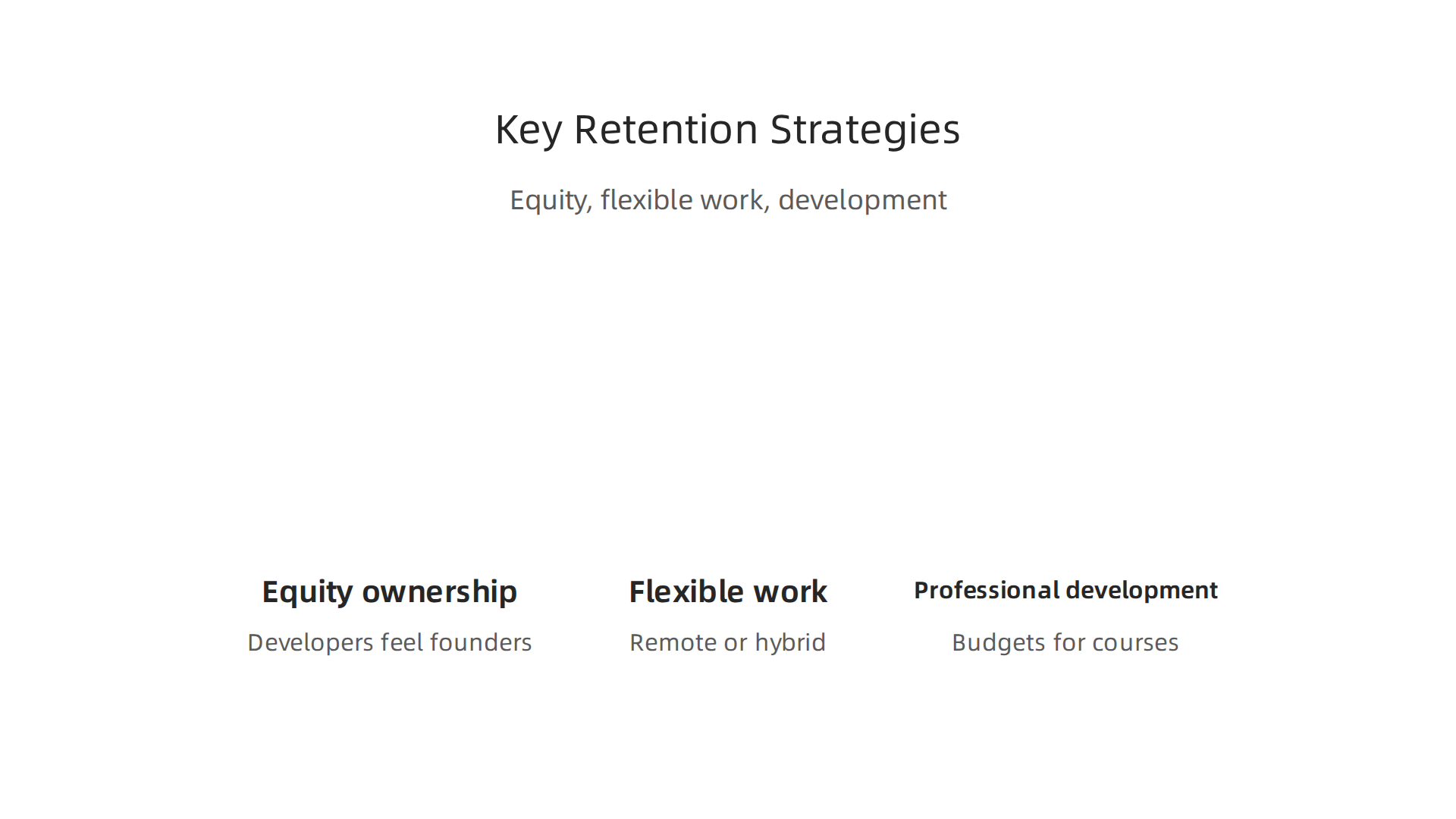
- Equity and ownership. Stock options or restricted stock units make developers feel like founders. They share in the company’s success, which naturally reduces turnover.
- Flexible work arrangements. Fully remote or hybrid schedules are now expected, not a perk. Companies that enforce strict office mandates lose top talent fast.
- Professional development budgets. Developers want to learn. Giving them a budget for courses, certifications, and conferences shows you invest in their future. It also helps you stay competitive as technology changes.
Clear career paths keep people from looking elsewhere.
Nothing makes a developer update their resume faster than feeling stuck. Offer a transparent growth ladder that shows how a junior becomes a mid-level, a senior, and eventually a staff engineer or architect. Pair that with mentorship and regular feedback.
If you want to see how AI skills are reshaping developer roles and pay scales, check out this guide on AI skills and developer compensation trends. It explains why developers who embrace AI will continue to command higher salaries.
One more way to stay ahead.
The tech landscape moves fast, and compensation benchmarks shift every quarter. To keep your offers competitive and your retention strategies current, you need reliable daily updates. That is why many hiring managers and team leads subscribe to The AI Newsletter Worth Reading. It delivers clear, daily AI and tech insights straight to your inbox so you never miss a trend that could affect your hiring strategy.
In short, paying fairly is table stakes. Equity, flexibility, learning budgets, and career growth are what turn a good hire into a long-term team member.
Avoiding Common Hiring Mistakes: Red Flags and Green Lights
Hiring a full stack developer sounds simple on paper. Find someone who can code front end and back end, make an offer, and done. But in reality, the process is full of traps. One bad hire can cost your team months of lost productivity and morale. So how do you spot the candidates who will thrive and avoid the ones who will waste your time?
Red flags to watch for
Some warning signs are easy to ignore when you are eager to fill a role. Do not let that happen. Here are the biggest red flags:
- Over-reliance on buzzwords. Does every answer include "AI-powered," "synergy," or "microservices," but the candidate cannot explain what these terms mean in practice? That is a sign they have read job descriptions but not built real systems.
- Lack of curiosity. Full stack development changes fast. The best developers stay curious about new tools, languages, and frameworks. If a candidate shows no interest in learning anything outside their current stack, they will fall behind quickly.
- Poor communication during interviews. Tech skills matter, but a developer who cannot explain their thought process or struggles to answer simple questions clearly will struggle on a team.
Green lights that signal a great hire
On the flip side, some candidates stand out immediately. Look for these signs:
- A strong portfolio. A candidate who can show you real projects, personal or professional, with clear code and working demos is worth a closer look. They do not just talk about what they can do. They prove it.
- Clear reasoning about tech choices. When asked why they used React over Vue or Node over Python, a strong developer explains the trade-offs. They do not just say one is "better." They show they understand the context.
- Ability to learn new tools quickly. Give them a small take-home problem that uses a tool they have never touched. Watch how they approach it. A candidate who researches, experiments, and asks smart questions will adapt fast on your team.
According to PayScale’s 2026 full stack developer salary data, experience level directly affects earning potential. A candidate who has shown they can grow from entry level to senior tends to have the learning mindset you want.
Do not rush the process
Hiring fast often means hiring wrong. Skipping culture fit checks or ignoring subtle red flags leads to expensive mis-hires. Take the time to verify skills, ask about real problems they have solved, and see how they think.
If you want to stay on top of the latest tools and trends that help you evaluate candidates better, consider subscribing to The AI Newsletter Worth Reading. It delivers daily AI and tech insights that keep your hiring instincts sharp.
The goal is not just to fill a seat. It is to bring on someone who will grow with your team and build great things together.
Leveraging AI in Your Hiring Process: Tools and Ethics
Now that you know what to look for when you hire a full stack developer, it is time to talk about a tool that can make the whole process smoother. AI is changing how companies find and screen candidates. Used the right way, it saves you time and helps you spot talent you might miss otherwise.
How AI can help you screen candidates
AI tools can take over the most time consuming parts of hiring. Here are a few ways they help:
- Resume screening. AI can scan hundreds of resumes in seconds and pick out the ones with the right skills and experience. No more reading through piles of applications.
- Generating interview questions. AI can create custom questions based on the job description and the candidate’s resume. This keeps interviews focused and fair.
- Initial chat interviews. Some teams use AI to do a short first round. A chatbot asks basic questions, and the candidate answers in their own time. This helps you narrow down the list before you invest human hours.
These tools work especially well when you are hiring for full stack developer jobs or software engineering internships. You get a quick view of who has the basics down.
The ethics of using AI in hiring
AI is powerful, but it is not perfect. Here is what to watch for:
- Bias in AI models. If the AI learned from past hiring data that favors certain backgrounds, it might repeat those patterns. Always check your AI tool for fairness.
- Transparency with candidates. Let people know you are using AI in the process. It is honest and builds trust. Some candidates will appreciate knowing what to expect.
The Stack Overflow blog explains that AI creates more demand for developers who understand both fundamentals and AI tools. The same idea applies to hiring. Do not let AI make the final call alone.
Combine AI with human judgment
The best hiring outcomes come from a mix of tools and people. Let AI handle the repetitive work. Then let your team do the deeper evaluation.

Talk to candidates, test their problem solving, and see how they think. This is where the green lights from the last section really come into play.
If you want to keep up with how AI is reshaping development and hiring, check out how AI has become the new standard for developers. And for daily updates on AI trends that can sharpen your hiring instincts, consider subscribing to The AI Newsletter Worth Reading. It delivers clear insights straight to your inbox.
Summary
This article explains how to hire a full stack developer in 2026 by describing how the role has evolved, what skills now matter, and which hiring methods actually work. It covers the shift toward AI‑augmented development, the modern tech stacks employers look for, and realistic assessment methods that mirror day‑to‑day work instead of whiteboard puzzles. You’ll learn where top candidates hide—GitHub, open source, referrals and niche boards—how to write clear job descriptions that attract the right people, and how to spot learning agility and communication skills. The guide also outlines competitive compensation and retention strategies (equity, flexibility, learning budgets), common red flags to avoid, and how to responsibly use AI tools in screening while keeping humans in the loop. Read it to build a repeatable hiring process that finds, evaluates, and keeps full stack engineers who can work with modern AI and cloud workflows.