
Drive Software Innovation with Strategic Research and Development
· 24 min read

Introduction: Why R&D Should Be Part of Every Software Team’s Playbook
It’s 2026, and the world of technology moves faster than ever. For software teams, keeping up with new tools, methods, and ideas can feel like a race.

You might find it hard to know which new trends are truly useful and how to turn exciting discoveries into real things your users can enjoy. We know this challenge well, especially with the big changes in Software Development Trends 2026.
This is where good research and development (R&D) comes in. R&D isn’t just for big science labs. It’s a key part of how smart software teams stay ahead. It helps you look closely at new tech, test what works, and make sure your products always get better. Without a solid plan for R&D, teams can get stuck using old ways while competitors jump forward with new ideas. This means missed chances to build better software and solve bigger problems for your customers.
This guide will show you a clear way to bring research and development into your daily work. We will help you learn how to choose the right research ideas, use smart tools like AI, and make your work steps smoother. We’ll talk about how to make sure your engineering roadmap includes time for exploring new ideas. This way, your team can use new discoveries to build amazing products. We’ll also cover systems engineering and integrated engineering approaches to make sure new ideas fit well into your existing work.
By the end of this guide, you will have a helpful plan. You’ll know how to turn new information into real value for your product and users. For example, learning about new tools like AI coding assistants 2026 can make a big difference in how your team works.
Do you want to keep up with the newest tech, especially in AI? The AI Newsletter Worth Reading offers clear daily updates.
Why R&D Matters in Modern Software Engineering
Now, let’s look at why research and development (R&D) is super important for software teams in 2026. It’s not just a fancy idea for big companies. It’s how every smart team makes sure they’re building the best products and staying ahead. Think of R&D as your team’s way to look into the future and prepare for it.
The main goals for R&D in software engineering are quite clear:
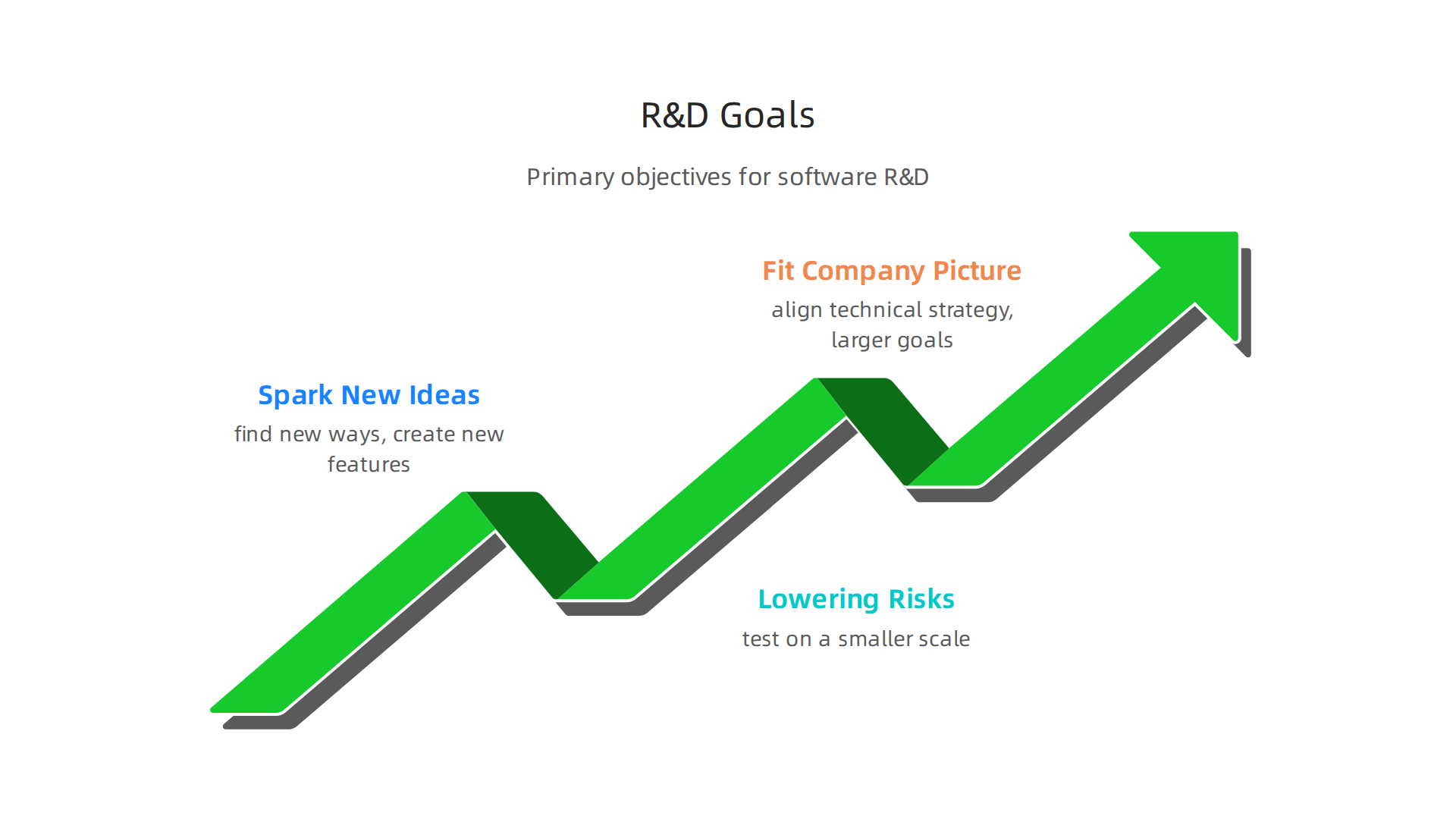
1. Sparking New Ideas and Making Things Better
R&D helps your team find new ways to solve old problems or create totally new features.

This is all about innovation. Without trying new things, software can become old and boring. For example, exploring new AI tools or coding methods can lead to breakthroughs that make your product much better. This spirit of discovery keeps your software exciting for users and helps your company grow. Many experts agree that keeping up with trends and new technology is key for developers today, as shown in reports like the 2026 Market Size, Developer Trends & Technology Adoption.
2. Lowering Risks Before Big Projects
Trying out new technology or ideas always has some risk. R&D helps reduce these risks. Before you put a lot of time and money into a new feature, R&D lets you test it on a smaller scale. You can see what works and what doesn’t. This way, you don’t waste resources on projects that might fail later. It’s like trying on shoes before you buy them; you want to make sure they fit.
3. Fitting into Your Company’s Big Picture
Every software team has an engineering roadmap that shows what they plan to build. R&D makes sure that any new ideas or technologies you discover fit well with this plan. It helps align your technical strategy. This means the time you spend exploring new things actually helps the company reach its larger goals. By thinking about systems engineering and integrated engineering, you ensure that new discoveries can be smoothly added to your existing software. This makes sure everything works together, instead of creating more problems. Learning how to properly understand forge code for better software with AI in 2026 is a great example of aligning research with practical application.
How Teams Do R&D
There are different ways to set up research and development in a company. Some companies have a separate R&D team that works on future ideas, almost like a science lab. This team might explore things that are a few years away from being ready for a product. Other companies mix R&D directly into their product engineering teams. This means regular developers spend a small part of their time each week or month trying new tools or methods.
Choosing the right way depends on your team’s size, what you’re trying to build, and how fast you want to move. For many teams, having developers spend a bit of time exploring new tech is a great start. It helps them learn, grow, and bring fresh ideas back to their daily work. This approach helps reduce the gap between new discoveries and their use in actual products.
Current Trends and Research Areas to Watch in 2026
So, we know how important research and development is for keeping software fresh and reducing risks. But what exactly are teams looking into right now, in 2026? What new ideas and tools are making big waves? Let’s explore some key areas that are shaping how software gets built. These trends are changing the game for many teams.
Big Ideas Driving R&D in Software
Several big areas are catching the eye of R&D teams this year.
Staying on top of these can really help your company’s engineering roadmap.
-
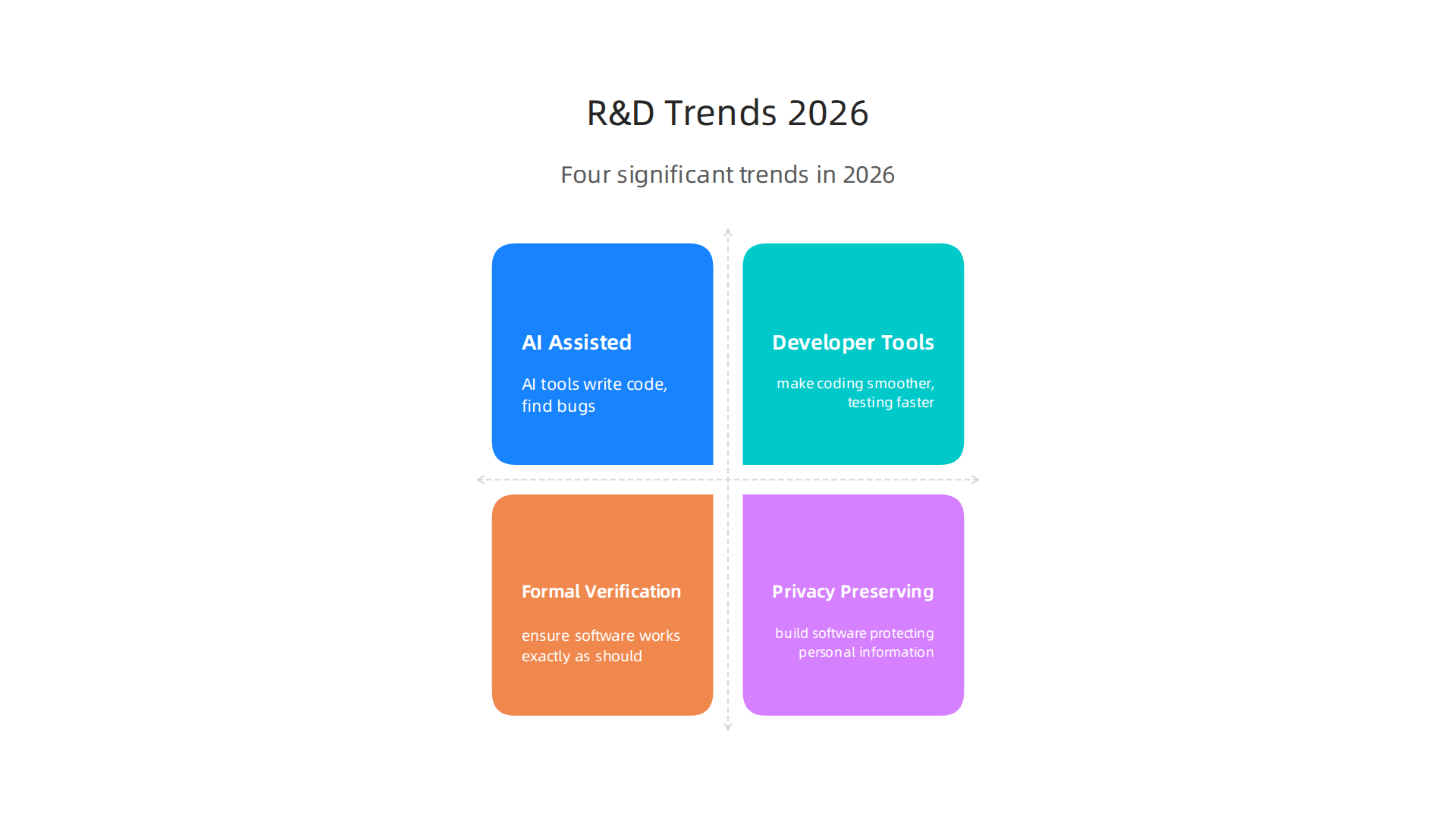
AI-Assisted Development: This is a huge one. AI tools are not just helpers anymore; they’re becoming like co-pilots for developers. They can write code, find bugs, and even suggest how to make software better. Exploring new AI models and how to use them safely is a top priority for
research and development. Many experts agree that AI is one of the top software development trends for 2026, changing how we work forever, according to insights shared in reports like Software Development Trends 2026: Enterprise Technology. Learning how to use these tools means your team can build faster and smarter. You can learn more about how these tools are solving challenges for developers in AI Coding Assistants 2026: How Cluely AI and Prompt Engineering Solve the Trust Problem. -
Better Developer Tools: Developers need tools that are easy to use and help them do their best work. R&D in this area looks at new ways to make coding smoother, testing faster, and team collaboration simpler. This includes things like new code editors, better ways to track project progress, and tools that help automate boring tasks. Making the experience better for developers often leads to more creative and effective work, a point highlighted in guides like How to Improve Developer Experience: 16 Proven Strategies and Solutions.
-
Formal Verification: This sounds complex, but it’s simply about making sure software works exactly as it should, without any hidden problems. For very important software, like systems that control planes or medical devices, it’s super important that they don’t fail. R&D is finding new math-based ways to prove that software is correct and safe, much like
systems engineeringtries to build reliable systems from the ground up. -
Privacy-Preserving Computing: With everyone worried about their data, this area is all about building software that protects personal information. This means finding ways to use data for useful things (like making AI smarter) without actually seeing or sharing the private details. Think of it like being able to count how many people walked through a door, but without knowing who each person was. This is crucial for building trust with users in 2026 and beyond.
Deciding Where to Invest Your R&D Time
With so many exciting trends, how do you choose what’s worth your team’s effort? It’s like having too many toys and only being able to play with a few. Here’s a simple way to think about it:
- Does it solve a real problem for your users? If a new technology doesn’t make your product better for the people using it, it might not be worth the deep dive.
- Does it fit your
engineering roadmap? Does this new idea help you reach your company’s bigger goals? If it takes you too far off track, it might be better to just watch it for now. - How much risk is involved? Some new technologies are very experimental. Your team needs to decide if the possible benefits are worth the time and money it might take to explore them.
- Can you learn about it easily? Sometimes, simply monitoring a trend by reading articles or watching talks is enough. You don’t have to build something new right away. Other times, a small team project or
integrated engineeringeffort is best to truly understand it.
Staying aware of these trends helps teams make smart choices about their research and development. It keeps them ready for what’s next.
For those eager to dive deeper into how artificial intelligence is changing the tech world, consider signing up for The AI Newsletter Worth Reading to get clear daily AI updates from The Deep View Newsletter.## Current Trends and Research Areas to Watch in 2026
So, we know how important research and development is for keeping software fresh and reducing risks. But what exactly are teams looking into right now, in 2026? What new ideas and tools are making big waves? Let’s explore some key areas that are shaping how software gets built. These trends are changing the game for many teams.
Big Ideas Driving R&D in Software
Several big areas are catching the eye of R&D teams this year. Staying on top of these can really help your company’s engineering roadmap.
-
AI-Assisted Development: This is a huge one. AI tools are not just helpers anymore; they’re becoming like co-pilots for developers. They can write code, find bugs, and even suggest how to make software better. Exploring new AI models and how to use them safely is a top priority for
research and development. Many experts agree that AI is one of the top software development trends for 2026, changing how we work forever, according to insights shared in Software Development Trends 2026: Enterprise Technology. Learning how to use these tools means your team can build faster and smarter. You can learn more about how these tools are solving challenges for developers in AI Coding Assistants 2026: How Cluely AI and Prompt Engineering Solve the Trust Problem. -
Better Developer Tools: Developers need tools that are easy to use and help them do their best work. R&D in this area looks at new ways to make coding smoother, testing faster, and team collaboration simpler. This includes things like new code editors, better ways to track project progress, and tools that help automate boring tasks. Making the experience better for developers often leads to more creative and effective work, a point highlighted in guides like How to Improve Developer Experience: 16 Proven Strategies and Solutions.
-
Formal Verification: This sounds complex, but it’s simply about making sure software works exactly as it should, without any hidden problems. For very important software, like systems that control planes or medical devices, it’s super important that they don’t fail. R&D is finding new math-based ways to prove that software is correct and safe, much like
systems engineeringtries to build reliable systems from the ground up. -
Privacy-Preserving Computing: With everyone worried about their data, this area is all about building software that protects personal information. This means finding ways to use data for useful things (like making AI smarter) without actually seeing or sharing the private details. Think of it like being able to count how many people walked through a door, but without knowing who each person was. This is crucial for building trust with users in 2026 and beyond.
Deciding Where to Invest Your R&D Time
With so many exciting trends, how do you choose what’s worth your team’s effort? It’s like having too many toys and only being able to play with a few. Here’s a simple way to think about it:
- Does it solve a real problem for your users? If a new technology doesn’t make your product better for the people using it, it might not be worth the deep dive.
- Does it fit your
engineering roadmap? Does this new idea help you reach your company’s bigger goals? If it takes you too far off track, it might be better to just watch it for now. - How much risk is involved? Some new technologies are very experimental. Your team needs to decide if the possible benefits are worth the time and money it might take to explore them.
- Can you learn about it easily? Sometimes, simply monitoring a trend by reading articles or watching talks is enough. You don’t have to build something new right away. Other times, a small team project or
integrated engineeringeffort is best to truly understand it.
Staying aware of these trends helps teams make smart choices about their research and development. It keeps them ready for what’s next.
For those eager to dive deeper into how artificial intelligence is changing the tech world, consider signing up for The AI Newsletter Worth Reading to get clear daily AI updates from The Deep View Newsletter.
To make smart choices real, your team needs a clear plan for how to do research and development. It’s not just about looking at new ideas; it’s about having a good system to test them, learn from them, and then use that knowledge. This is where good workflows and practical frameworks come in handy. They help guide your team’s engineering roadmap.
How to Structure Your R&D Work
Think of your R&D work like a science project. You start with an idea, test it, and see what happens. Here’s a simple way to set up your team’s research:
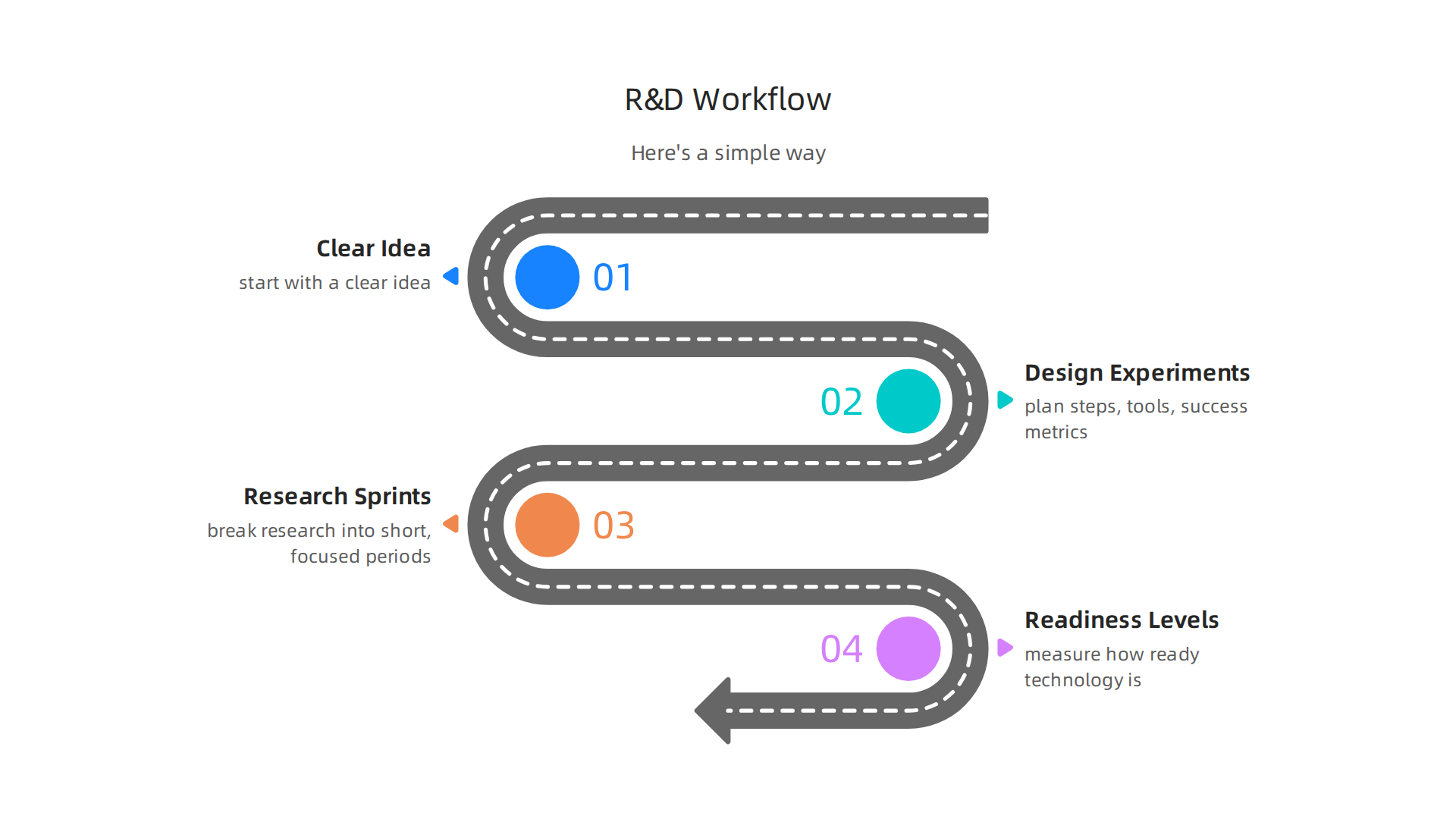
- Start with a clear idea (Hypothesis-Driven Research): Before you dive into building something new, ask a question or make an educated guess. For example, "Will using AI for code reviews make our team fix bugs faster?" This is your hypothesis. Then, design a small experiment to find out. This structured approach helps make your
research and developmentfocused and useful. - Design Your Experiments: Once you have a clear idea, plan how you’ll test it. This means figuring out what steps you’ll take, what tools you’ll use, and what success looks like. Just like in
systems engineering, where every part is thought out, R&D experiments need careful planning. For advice on building a modern software development plan, there are great guides like the 2026 Guide to a Software Development Plan. - Use Research Sprints: You can break down your research into short, focused periods, much like how product teams use sprints. Each sprint can focus on testing one small part of your idea. This helps your team stay organized and makes sure you don’t spend too much time on something that might not work out. Many teams use different ways to manage their software projects, and you can learn about many of them in a Complete 2026 Guide to Software Development Methodologies.
- Check Readiness Levels: Not all new technologies are ready for prime time. Some are still very new, while others are almost ready to be used in a real product. Frameworks exist to help you measure how "ready" a technology is, which can guide your investment. Learning about different Readiness Level Frameworks can help your team decide when something is mature enough to move forward.
Sharing What You Learn
It’s not enough to just do the research and development. The knowledge needs to be shared!

- Document Everything: Write down what you did, what you found, and what you learned. Even if an idea didn’t work, knowing why it failed is super important. Good documentation means future teams won’t waste time repeating the same mistakes.
- Transfer Knowledge to Product Teams: The goal of R&D is often to find new things that can make your products better. So, it’s vital to pass on your findings to the teams that build the actual products. This could be through clear reports, presentations, or even direct collaboration. Think of it as
integrated engineering, where research and building go hand-in-hand. When everyone understands what was learned, it helps everyone follow theengineering roadmapbetter. Sometimes, it takes a scientific framework to truly understand complex topics, such as exploring Grok Code with a Science-Backed Framework for Deep Comprehension. - Turn Research into Action: It’s great to discover new things, but the real magic happens when those discoveries turn into better software for your users. Good workflows make sure that promising research doesn’t just sit on a shelf but actually helps improve your products. This is how your initial ideas grow into useful features, like Understanding Forge Code for Better Software with AI in 2026.
By following these frameworks and practices, your team can make its research and development efforts more organized and effective. This helps make sure all that hard work leads to real improvements for your products and customers.
AI is changing how teams do research and development (R&D) in big ways. It helps teams work faster and smarter. Let’s look at where AI helps the most and what to be careful about when using it.
Integrating AI into R&D and Developer Workflows
AI tools are like super assistants for your developers and researchers. They can speed up many parts of the R&D process, helping your team follow its engineering roadmap more quickly.
Where AI Provides the Biggest Gains in R&D
- Writing Code Faster: AI can generate code for you, giving you a starting point or even completing small tasks. This means developers spend less time on basic coding and more time on tricky problems. Studies in 2026 show that generative AI is truly shaping research software development by rapidly generating initial code skeletons and queries based on natural language or existing code How generative AI is shaping research software development and …. This can also make code reviews more efficient, as teams adapt their processes for AI-assisted work Adapting Code Review Processes to the Conditions of AI-Assisted ….
- Creating Tests: Imagine AI helping to write tests for your software. It can look at your code and suggest tests to make sure everything works right. This is a big help in finding bugs early.
- Analyzing Experiments: R&D often means running many tests and looking at lots of data. AI can quickly go through all that data to find patterns or important insights that humans might miss. This helps teams understand their
research and developmentfindings much quicker.
For developers looking to make the most of AI, learning about tools like the GLM coding plan the developers guide to ai assisted code generation in 2026 can be a game-changer.
Managing Risks with AI in R&D
Even though AI is helpful, it’s important to use it wisely. There are some things to watch out for to keep your integrated engineering process strong.
- Making Sure Results Are Repeatable: When AI helps with research, we need to make sure that if we run the same experiment again, we get similar results. This is called reproducibility. One study in 2026 found that AI-assisted teams can do very well, but human-only teams are still best at assessing research reproducibility AI-assisted teams outperform AI-led teams but not human-only …. This means people are still very important.
- Watching Out for Bias: AI learns from data. If the data has biases, the AI might also show those biases. This can lead to unfair or incorrect results. We need to be careful to check AI’s outputs for any hidden biases.
- Checking AI’s Work: Just because AI creates code or finds an answer doesn’t mean it’s perfect. Developers still need to look closely at what AI produces to make sure it’s correct and safe.

There’s even a concern about "security debt" from AI-generated code, meaning it might introduce new vulnerabilities Vibe Coding’s Security Debt: The AI-Generated CVE Surge.
Using AI in systems engineering and R&D is about smart teamwork between humans and machines. It’s not about letting AI take over, but about using it to make human work better. For more insights on how AI helps solve trust issues in coding, you can explore topics like AI coding assistants 2026 how cluely ai and prompt engineering solve the trust problem.
Get clear daily AI updates from The AI Newsletter Worth Reading.
After all the hard work in research and development, figuring out how AI can help, the next big step is deciding when an idea is ready to become a real product. It’s about moving from a cool prototype to something customers can actually use. This needs clear thinking and smart decisions.
From Research to Product: Decision Frameworks and Tech Adoption
Bringing a new idea from the lab to the market needs careful planning. Even with AI making research and development faster, you still need to decide if a project is ready for the big world. This means looking at a few key things to make sure your engineering roadmap stays on track.
Making Sure Ideas Are Ready for Prime Time
When you have a new idea or a prototype from your R&D efforts, you need to ask some important questions:
- Can We Measure Success? How will you know if your new product or feature is working well? You need clear ways to measure its impact, like how many people use it, how much money it saves, or how happy customers are. Without good ways to measure, it’s hard to tell if the project is a real win.
- Can We Keep It Running? A product isn’t just built once. It needs to be maintained, updated, and fixed. Can your team easily keep it working smoothly for a long time? This is key for any
integrated engineeringeffort. - Is Our Team Ready? Do your developers and support staff have the right skills and tools to handle the new product? Sometimes, you might need to teach your team new skills. There are special guides, called readiness level frameworks, that help you check if a project is truly ready to go forward 14 Readiness Level Frameworks: The Guide to TRL, MRL, SRL, and …. If your team needs to learn new coding skills, exploring resources like best online web development courses to learn in 2026 can be very helpful.
Smart Ways to Make Decisions
Beyond readiness, good choices also depend on smart planning:
- Who Makes the Call? You need clear rules about who decides when a project moves from R&D to a real product. This is called governance. One way many companies do this is by using a system like the Stage-Gate Model, which sets up checkpoints where everyone agrees if a project is ready to move to the next step The Stage-Gate Model: An Overview.
- Is It Worth It? Before putting a lot of money and time into a new product, you should do a cost-benefit analysis. This means looking at how much the project will cost versus how much good it will do for the company and its customers.
- Does It Fit Our Goals? Every project in
systems engineeringshould help the company reach its main business goals, also known as Key Performance Indicators (KPIs). Making sure your R&D projects align with these KPIs ensures you’re building products that truly matter and push yourengineering roadmapforward.
Turning exciting research and development ideas into successful products is a journey. With clear decision frameworks and a focus on readiness, you can make sure your innovations benefit everyone.
Turning exciting research and development ideas into successful products is a journey. With clear decision frameworks and a focus on readiness, you can make sure your innovations benefit everyone. But before any idea can become a great product, it needs to be built on strong, reliable information. This means knowing how to find and trust the research and development you use.
Evaluating Sources: How to Find Reliable, High-Quality Research
In 2026, with so much information everywhere, it’s really important to know if the research you find is true and helpful. For any integrated engineering project or to guide your engineering roadmap, you need to be sure you’re using the best possible facts. Here are some simple ways to check if research is trustworthy.
Smart Ways to Check Research
When you look at new research, especially in fields like AI or systems engineering, ask yourself these questions:
- Where Does the Information Come From? Good research should be open about its data. This means you should be able to see exactly where the numbers, facts, and figures came from. If a study doesn’t tell you this, it’s harder to trust its findings. Look for clear details on how they got their information. For example, knowing the details of how surveys like the 2026 State of Data Engineering Survey were put together helps you trust the results.
- Did Other Experts Check the Work? This is called "peer review." It means other smart people who know a lot about the topic looked at the research before it was shared. They checked for mistakes and made sure the study made sense. Research that has been peer-reviewed, like papers presented at events such as the Data and Tool Showcase Track – MSR 2026, is usually more reliable.
- Can Someone Else Get the Same Results? If a study is truly good, another team should be able to follow the same steps and get similar results. If the results can’t be repeated, it might mean the first study had problems or its findings were just luck.
- Who Wrote It? Look at the people who did the
research and development. Are they experts in the field? Do they work for a known university or company? Knowing who is behind the research helps you judge its quality. - Does Anyone Have a Hidden Reason for Their Findings? Sometimes, a company might pay for research that makes their product look good. This is called a "conflict of interest." It doesn’t always mean the research is bad, but it’s important to know so you can think critically about the findings.
Keeping Track of Good Research for Your Team
It’s not enough to just find good research; your team also needs ways to use it. You can set up systems where everyone shares and discusses new findings. This might include:
- Having regular meetings to talk about important new studies.
- Using shared online spaces to collect and organize research articles.
- Creating a simple process for team members to suggest and review new sources of information.
- When using tools like AI Coding Assistants 2026 How Cluely AI and Prompt Engineering Solve the Trust Problem, it’s still important to understand the underlying data sources they rely on.
By carefully checking your sources, your team can build smarter products and make better decisions for your engineering roadmap. Staying informed about the latest, most reliable research and development helps you lead the way in software.
Want to stay on top of the latest advancements in AI and technology? Get clear daily AI updates from The AI Newsletter Worth Reading.
Summary
This article explains why research and development (R&D) should be an active part of every software team’s playbook in 2026, showing how structured exploration keeps products competitive and reduces costly risks. It covers the main R&D goals—idea generation, risk reduction, and alignment with engineering roadmaps—and surveys current focal areas such as AI-assisted development, developer tooling, formal verification, and privacy-preserving computing. The guide outlines practical ways to run R&D: hypothesis-driven experiments, research sprints, readiness-level checks, and knowledge transfer into product teams. It also explains how AI speeds up code, tests, and analysis while introducing reproducibility, bias, and security risks that teams must manage. Finally, the article gives decision frameworks for when to adopt technology, how to evaluate research quality, and how to turn promising experiments into maintainable products that match company KPIs.