
Build IoT Based Smart Parking System Code for Your City
· 18 min read
Introduction: The Urban Parking Crisis and the IoT Solution
Picture this. You have a busy day ahead, but you spend 20 minutes circling the block just to find a parking spot. Frustrating, right?

You are not alone. Studies show that searching for parking causes up to 30% of urban traffic congestion. This wastes time, burns fuel, and pumps out extra emissions. It is a big problem that keeps getting bigger as cities grow.
Here is the good news. The iot based smart parking system code revolution is here to fix it.
Smart parking systems use internet connected sensors to track open spots in real time. Drivers can see exactly where to go using an app. Less circling, less stress, cleaner air. The global smart parking systems market is already worth over USD 10 billion and growing fast. Cities and companies are racing to build this technology.
This is your chance to build it too. This guide offers a developer focused walkthrough for creating a complete system from scratch. We will cover the full stack, from choosing the right sensor hardware to writing the backend logic and deploying it. Along the way, we will look at best practices for iot application development. If you want to strengthen your foundation, brushing up on the latest skills with resources like these best online web development courses to learn in 2026 can help. We will also explore how tools like a qr scan app for android framework or glide apps can speed up the user facing side of your project.
By the end, you will have a working blueprint for your own system.
Ready to build something that makes a real difference in your city? Stay updated on the tech trends that matter while you code. The Deep View Newsletter delivers clear daily insights on AI and development to keep your skills sharp.
Let us get started.
1. Understanding the Smart Parking Ecosystem
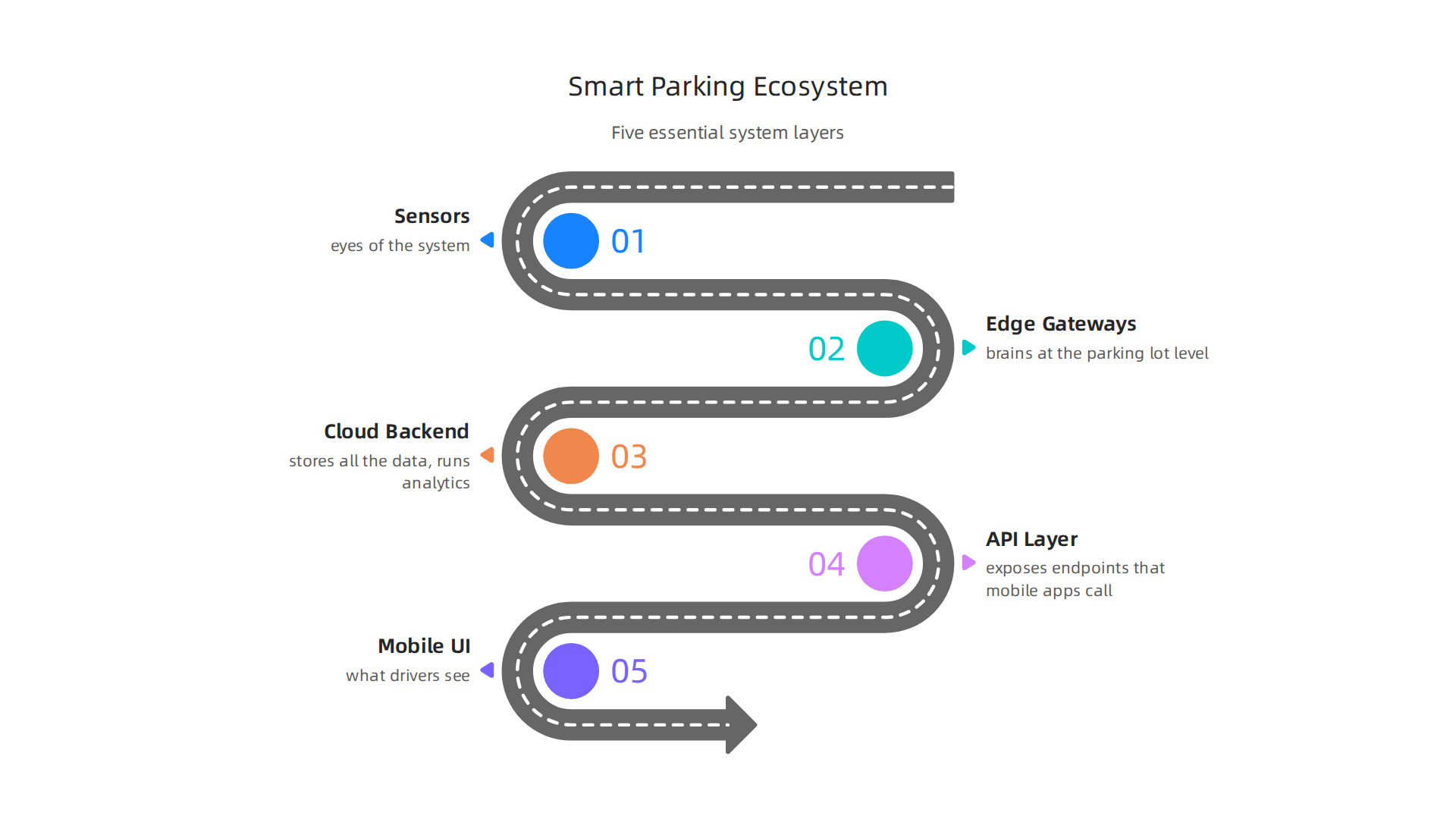
Before you write a single line of iot based smart parking system code, you need to know how the pieces fit together. Think of it like building a house. You wouldn’t start hammering nails without a blueprint. The smart parking ecosystem has four main layers that work together to turn empty spots into real-time data for drivers.
The four key components
Sensors are the eyes of the system. They sit in or near each parking spot and detect whether a car is there. Common types include magnetic sensors (sense changes in the Earth’s magnetic field), ultrasonic sensors (send sound waves), and cameras (use image processing). These devices need to be cheap, low-power, and reliable.
Edge gateways are the brains at the parking lot level. They collect data from multiple sensors, do some initial processing, and send it upstream. This reduces the load on the cloud and lets the system respond quickly even if the internet goes down for a moment.
Cloud backend stores all the data, runs analytics, and manages the system. This is where iot application development really shines. You’ll write server-side code to handle incoming sensor data, update parking availability, and manage user accounts.
API layer is the middleman. It exposes endpoints that mobile apps and websites can call. For example, a GET request to /spots returns all available spots near the user.
Mobile and web UI is what drivers see. This could be a simple web app, a custom mobile app, or even a qr scan app for android that lets drivers scan a code at the entrance to check in. If you want to build a user-facing prototype fast, tools like glide apps let you create a working app without writing much code.

How they talk to each other
The data flows through a clear pipeline: sensor → edge gateway → cloud → API → mobile app.
For communication, you’ll use different protocols for different jobs:
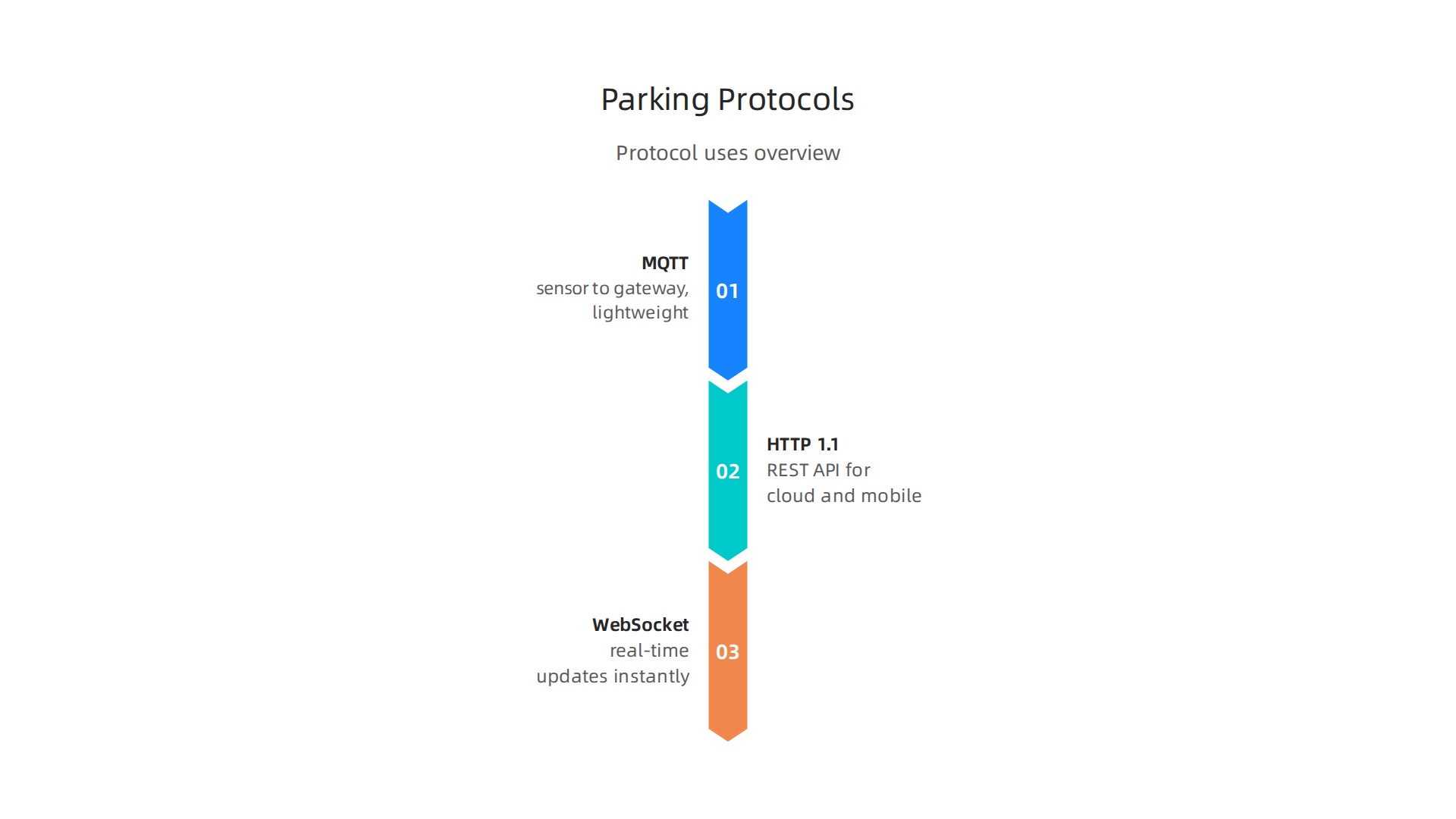
- MQTT for sensor-to-gateway messages. It’s lightweight and uses very little power, perfect for battery-powered devices.
- HTTP/1.1 for REST API calls between the cloud and the mobile app. It’s the standard way to request and send data.
- WebSocket for real-time updates. When a spot opens up, you want the driver to see it instantly without refreshing the page.
This whole ecosystem is growing fast. The global smart parking systems market was valued at over USD 10 billion in 2025 and keeps expanding every year. As you build your own system, you’ll be working with the same architecture used by commercial products.
To stay current on these technologies while you build, consider subscribing to The Deep View Newsletter for daily AI and development insights.
If you’re new to building modern apps, brushing up on the latest startup app development trends in 2026 can help you choose the right tools for your mobile UI.
2. Sensor Selection and Data Collection Techniques
Now that you see the big picture, let’s get into the part that actually touches the concrete: sensors. Choosing the right sensor makes or breaks your iot based smart parking system code. Different spots need different eyes.
Magnetic sensors (like Hall effect sensors) are the workhorses. They sit under the asphalt, sense tiny changes in the Earth’s magnetic field when a metal car rolls over, and use almost no power. They last for years on a single battery. For most lots, this is the go-to choice because they’re cheap and reliable.
Ultrasonic sensors send out sound waves and measure the echo. They give you an actual distance reading, so you can tell if the spot is empty, occupied, or even blocked by something small. The downside? They can get confused by rain, snow, or dirt. Still, they’re a solid second option.
Camera-based sensors do a lot more than spot a car. They can read license plates, recognize car colors, and even track how long a vehicle stays. But that power comes with a price: you need higher processing power and more bandwidth because video data is heavy. For a basic prototype, cameras are overkill unless you want license plate recognition for a qr scan app for android entry system.
Data preprocessing at the edge
Sensors vomit raw noise. Your first job in iot application development for parking is cleaning that data at the edge gateway. Here’s the usual pipeline:
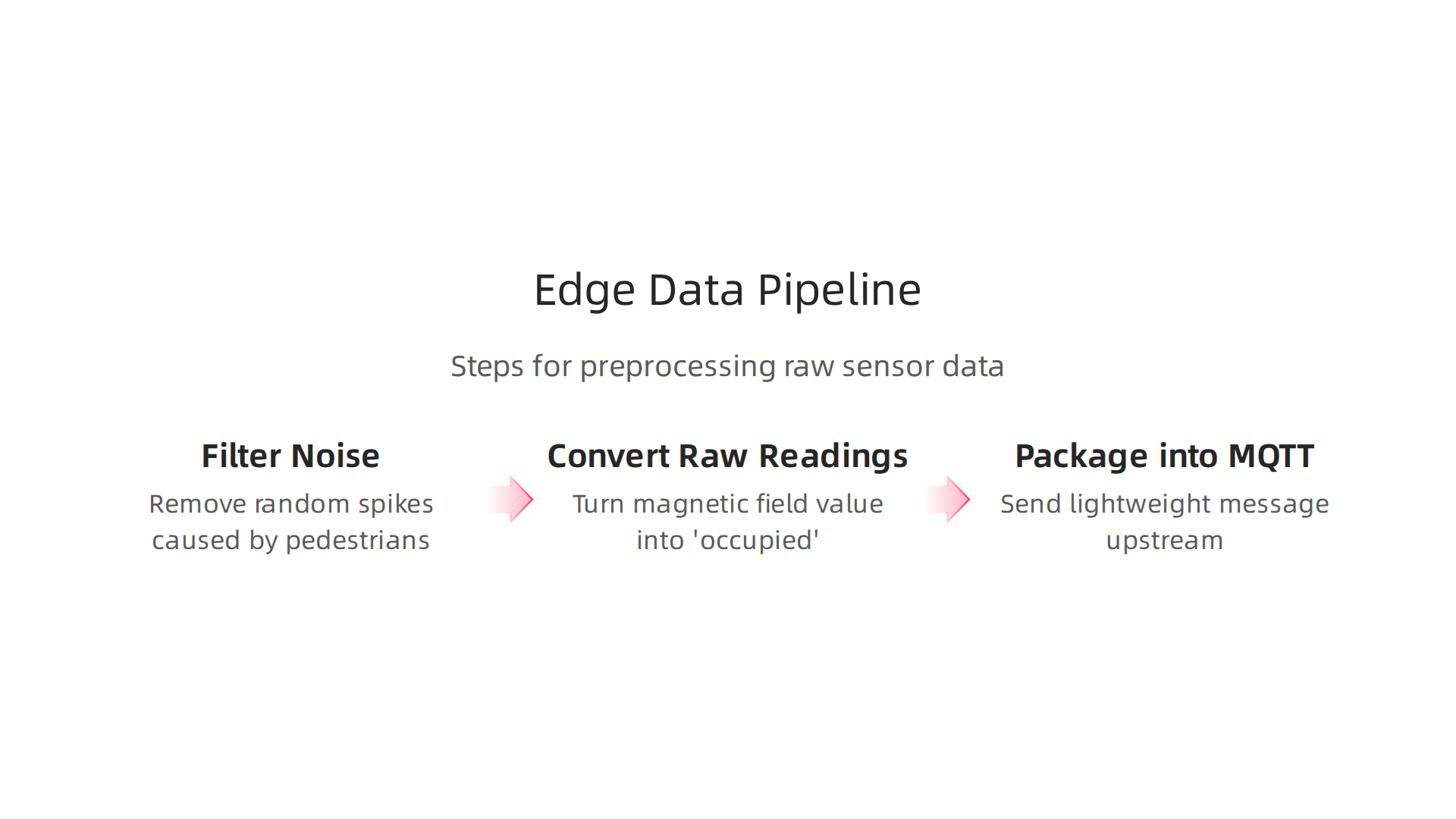
- Filter noise – Remove random spikes caused by passing pedestrians or nearby electronics.
- Convert raw readings – Turn a magnetic field value into "occupied" or "empty." For ultrasonic, turn distance into a binary yes/no.
- Package into MQTT payloads – Send a lightweight message like
{"spot_id": 34, "status": "occupied"}upstream.
Writing this preprocessing logic is where your iot based smart parking system code really begins. Getting it right means fewer false updates and happier drivers.
The smart parking market keeps growing (the global smart parking systems market was estimated at USD 10.22 billion in 2025 according to Grand View Research). As it expands, better sensors and smarter edge code will separate good systems from frustrating ones.
To speed up writing that edge code, many developers now lean on AI assistants. Learn how Anthropic AI for developers can help you write cleaner data processing scripts with less debugging.
Staying current on sensor tech and coding best practices matters when you’re building for the real world. Follow The Deep View Newsletter for daily updates on AI and development tools that make your smart parking project easier.
3. Designing the IoT Architecture: Edge to Cloud
Now that your sensors are clean and sending good data, you need a brain for the whole system.

This is where your iot based smart parking system code meets the real world. You have to decide: process data right at the parking lot, or send everything to a distant server? Actually, the best smart parking systems use both.
Edge gateways sit near the sensors in the parking lot. They do the heavy lifting of preprocessing, turning noisy sensor data into clean status updates. This local processing cuts down on lag and saves bandwidth. Instead of sending raw video or magnetic readings up to the cloud every second, the edge gateway sends only small MQTT messages like {"spot_12": "empty"}. That is why many developers pick MQTT for their iot application development projects. It is lightweight and perfect for this kind of work. A study comparing IoT protocols for a smart parking system found that MQTT worked well for low-power devices and kept network traffic low (Harperos, 2026). You can learn more about how MQTT stacks up against other protocols like CoAP and HTTP in this overview of IoT communication protocols(ALLPCB, 2026).
Cloud backend services then handle the bigger jobs. Platforms like AWS IoT Core or Azure IoT Hub manage all your devices, store historical data, and run powerful analytics. If you want to know which parking spots are most popular on Friday nights, the cloud stores that history. The cloud also handles device registration, security, and over-the-air firmware updates. This is where you can add features like a qr scan app for android to let drivers pay and enter.
The real magic is in a hybrid architecture that uses both edge and cloud. Here is how it works:
- Edge computing handles real-time decisions. For example, if a lot is full, the edge gateway can update a digital sign instantly without waiting for the cloud. It can also adjust dynamic pricing on the fly.
- Cloud computing handles long-term analysis. It looks at trends over weeks and months to help you predict busy times and plan pricing strategies.
This split creates a system that is fast locally and smart globally. The selection of the right IoT protocol is a key architectural decision that affects how well your edge and cloud talk to each other (Innocomm, 2026). If you want to learn fresh ways to write cleaner code for these gateways, check out how AI coding assistants can help you debug faster and build smarter systems.
Staying current on these architectural patterns and tools is important as the smart parking market grows. Get clear daily AI updates from The Deep View Newsletter to keep your skills sharp and your project on track.
4. Writing the Core Code: Data Ingestion and Processing
The architecture is set. Now it is time to write the code that makes your system work. When building your iot based smart parking system code, the first thing you need is an MQTT broker to handle all the messages from your sensors. Mosquitto is a popular open-source broker that runs on a Raspberry Pi or a small server. It is lightweight and easy to set up.
Your next step is writing a subscriber. You can use Python or Node.js to listen for messages from the broker. The subscriber reads incoming sensor data like a magnetic reading of 450 or a radar detection. But raw numbers are not useful for your application yet. You need to validate and transform them into occupancy events.
Here is how a simple Python script works:
- It connects to the MQTT broker on the edge gateway.
- It subscribes to a topic like
parking/lot/1/spot/12. - When a message arrives, it checks if the value is above a threshold. If yes, it marks the spot as
OCCUPIED. If not, it marksVACANT.
This kind of data ingestion is common in iot application development, and MQTT handles it well because it needs little bandwidth and runs on low-power devices (Innocomm, 2026). You can see a full comparison of MQTT and CoAP in a smart parking context in this research paper (Harperos, 2026).
After you turn the raw data into clean events, you must store them where your analytics layer can use them quickly. A time-series database like InfluxDB is a perfect fit. It is built for timestamped data and can handle millions of writes per second. You push your OCCUPIED and VACANT events with a timestamp, and InfluxDB stores them for fast queries. This lets you answer questions like "how full was the lot at 5 PM last Friday?"
If you want to write this ingestion code faster and with fewer bugs, try using an AI coding assistant to help you debug and optimize your MQTT subscriber or InfluxDB writer. It can save you hours of trial and error.
The data pipeline you build here powers everything else in your system. Your edge gateway will use this cleaned data to update signs and pricing. Your cloud backend will use the stored history for long-term predictions. You can even connect this data to a qr scan app for android that drivers use to check spot availability and pay.
To keep your skills sharp and your projects on track, get daily insights from The Deep View Newsletter. It covers the latest in IoT, AI, and software development trends.
5. Building the Smart Parking Logic: Occupancy and Reservation
Now that your data pipeline is feeding clean occupancy events into InfluxDB, it is time to build the logic that turns those events into a useful parking system. This is where your iot based smart parking system code starts to feel smart.
First, you need solid occupancy detection. For magnetic sensors, a simple threshold works well. If the sensor reading jumps above 500, the spot is occupied. Below 200, it is vacant. This approach is fast and reliable for most setups, as shown in this IoT parking project using a Raspberry Pi and IR modules (Hackster.io, 2026). For camera-based systems, you can use a machine learning model to detect whether a car is present. That takes more work but handles tricky cases like shadows or partial obstructions.
Next comes the reservation system. This is where users book a spot ahead of time. Your backend needs to manage time slots, handle expiration if a driver does not show up, and integrate with a payment gateway. Think of it like an online ticket system but for parking spaces. The tricky part is concurrency. What happens when two drivers try to book the same spot at the same moment? You need to handle these race conditions carefully. Use optimistic locking in your database or database transactions to make sure only one booking goes through. If you are building this from scratch, learning modern app building patterns can help a lot. That is why many developers check out resources like this guide on startup app development trends 2026 to see how successful apps handle real-time booking.
The logic you write here is the brain of your system. It tells drivers where to go, handles payments, and keeps everything fair. To keep your skills sharp and your projects on track, get daily insights from The Deep View Newsletter. It covers the latest in IoT, AI, and software development trends.
6. User Interface and API Development
Now that your backend logic handles occupancy and reservations, you need a way for drivers to actually use your system.

That is where the user interface and API come in. Writing the iot based smart parking system code for the frontend and API turns your sensor data into a usable app.
Start by designing a RESTful API. Your API should have endpoints for checking parking availability, creating or canceling reservations, and managing user accounts. This is the backbone that your mobile app or web dashboard will talk to. For example, the IoT parking project built with a Raspberry Pi and IR modules uses a simple API to show slot statuses (Hackster.io, 2026). You can follow a similar pattern.
Real-time updates are essential for a live parking map. Use WebSockets or Server-Sent Events to push changes to users immediately. Many IoT systems also use MQTT for this purpose. If you are using Python for your backend, the Paho MQTT client makes it easy to publish and subscribe to topics (EMQX, 2026). This keeps your map in sync as cars come and go.
For the frontend, you have choices. Build a cross-platform mobile app with React Native or Flutter so it works on both iOS and Android. Or create a responsive web app using React or Vue. If you want to launch faster, consider no-code platforms like Glide apps to build a simple version. You can also build a qr scan app for android that lets users scan a code at the gate to enter or exit. This makes the parking experience smooth and contactless.
Learning modern frontend and API skills is key for any iot application development project. If you need to brush up on web development, check out these best online web development courses to learn in 2026.
To keep your skills sharp and stay on top of IoT and AI trends, get daily insights from The Deep View Newsletter. It covers everything from APIs to real-time systems.
7. Testing, Deployment, and Scaling
You have built your user interface and API. Now you need to make sure your iot based smart parking system code works reliably under real conditions. Smart parking systems handle data from hundreds or thousands of sensors. If one part fails, drivers get frustrated. Here is how to test, deploy, and scale your system.
The testing pyramid keeps you safe. Start with unit tests for your business logic.
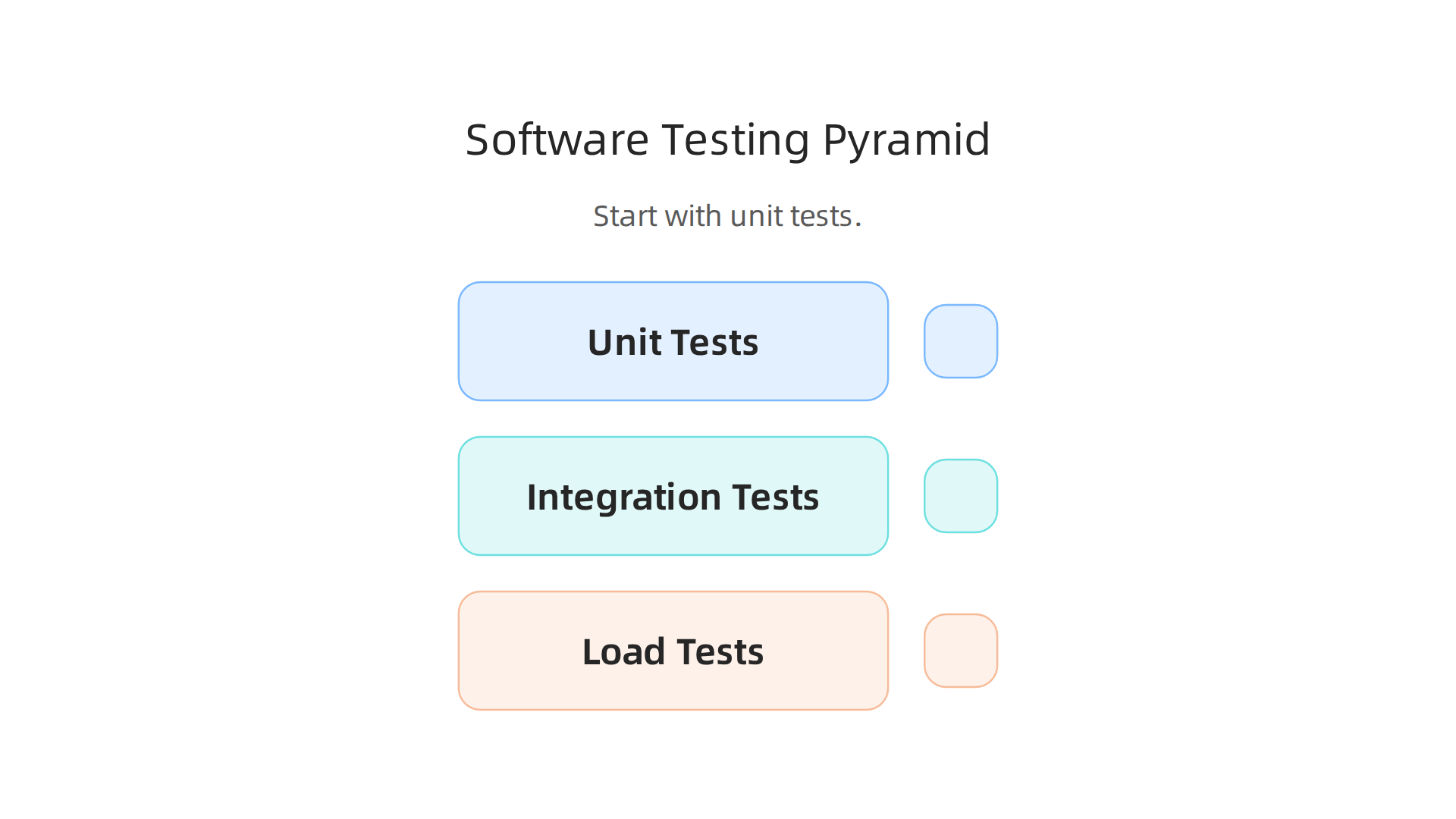
These check things like reservation rules or payment calculations. Next, write integration tests for your MQTT pipeline. Make sure your backend correctly reads sensor data and updates the database. Finally, run load tests that simulate thousands of sensors sending data at once. This helps you find bottlenecks before real drivers arrive. A scalable parking API needs this kind of thorough testing (Hardwin Software, 2025).
For deployment, containerize your services with Docker. This keeps your environment consistent everywhere. Use Kubernetes to manage containers and roll out updates automatically. A CI/CD pipeline (like GitHub Actions or GitLab CI) runs your tests and deploys changes with zero downtime.
Scaling comes next. Your API servers should scale horizontally. Add more instances as demand grows. Database sharding splits your data across multiple servers. For real-time MQTT, configure a cluster that handles high message volume. Many iot application development projects use similar patterns to grow smoothly.
Keeping up with these DevOps skills is essential in 2026. If you want to stay current with app development trends, check out these startup app development trends for 2026.
For daily insights on IoT, AI, and real-time systems, get the The Deep View Newsletter. It keeps you ahead of the curve.
8. Security and Data Privacy Considerations
You have built a working IoT based smart parking system code. Now you need to protect it. Security is not something you add later. It must be part of your design from the start.

Device Authentication
Every sensor and parking camera that connects to your system must prove its identity. You can use X.509 certificates or token-based authentication. Leaders in the field recommend these approaches to prevent fake devices from sending bad data (FTC, 2020). Without proper authentication, an attacker could spoof a sensor and show empty spots that are actually full.
Data Encryption
All data moving between your devices and servers needs encryption. Use TLS for MQTT and HTTP traffic. For data stored in your database, encrypt it at rest. You should also anonymize personal user data. This means removing names, license plates, or payment details from logs and analytics (Episensor, 2024). For example, in a smart parking system, sensors and cameras should record only whether a spot is empty or full, not a continuous video feed (IoT Security Institute, 2024).
Compliance with Regulations
If your app serves users in Europe, you must follow the GDPR. This law requires you to get explicit consent before collecting data. Users also have the right to delete their data. Make sure your system supports these requests (TrustCloud, 2026). Protecting user privacy builds trust, and for iot application development, trust is everything.
If you want to stay ahead of security and AI trends that affect your projects, we recommend getting daily, clear updates from The Deep View Newsletter. It helps you build smarter and safer systems.
Summary
This article is a developer-focused guide to building an IoT-based smart parking system from the ground up. It explains the full ecosystem—sensors, edge gateways, cloud backends, APIs and mobile/web UIs—and shows how data flows from a parking spot to a driver’s app. You’ll learn practical sensor tradeoffs (magnetic, ultrasonic, camera), how to preprocess and publish sensor data with MQTT, and how to ingest and store events in time-series databases like InfluxDB. The guide walks through occupancy detection, reservation logic, REST and real-time APIs, plus testing, deployment, and scaling strategies using containers and CI/CD. It also covers essential security and privacy measures such as device authentication, TLS encryption, and GDPR considerations. After reading, you’ll have a clear blueprint and the coding and architecture choices needed to prototype and scale a reliable smart parking solution.