
Understanding Forge Code for Better Software with AI in 2026
· 23 min read

Why ‘forge code’ matters now: the promise and the challenge
In 2026, the way we build computer programs is always getting new ideas. One important idea that many tech people are talking about is ‘forge code’. What exactly is forge code? Simply put, it’s about the computer instructions and programs that are made or looked after in shared online places. These places are often called "Git forges," like GitHub or GitLab, where many people work on code together Rethinking Trust in Forge-Based Git Security. This idea helps us understand the true meaning of code when it’s built as a team.
Working with forge code brings both good things and some tough problems. Developers and product teams today face a big challenge: there’s just so much new information and so many new tools coming out all the time.

It’s hard to keep up. It’s also tricky to figure out which new ways of coding are truly helpful and safe to use. Many teams are looking for ways to use smart tools, like AI Coding Assistants 2026: How Cluely AI and Prompt Engineering Solve the Trust Problem, to help them manage and understand all this new code. Finding trusted sources to help cut through the noise is a big need.
This article is here to help you understand all about forge code. We’ll show you how to look at new coding tools and ideas, how to start using them in your own work, and how to check if they are actually making things better for your projects. We want to make it easier for you to make smart choices in the fast-changing world of software building.
Staying on top of new developments in AI and technology can be hard. For clear daily AI updates, you might want to check out The AI Newsletter Worth Reading.

Core concepts: what constitutes ‘forge code’ in practice
To truly understand ‘forge code’, it helps to look at how it works every day.

Think of ‘forge code’ as more than just lines of text. It’s about how code is made, shared, and changed by many people working together. The real "code meaning" comes from this teamwork. When we talk about forge code, we’re talking about specific ways people build software.
Here are some key parts of forge code:
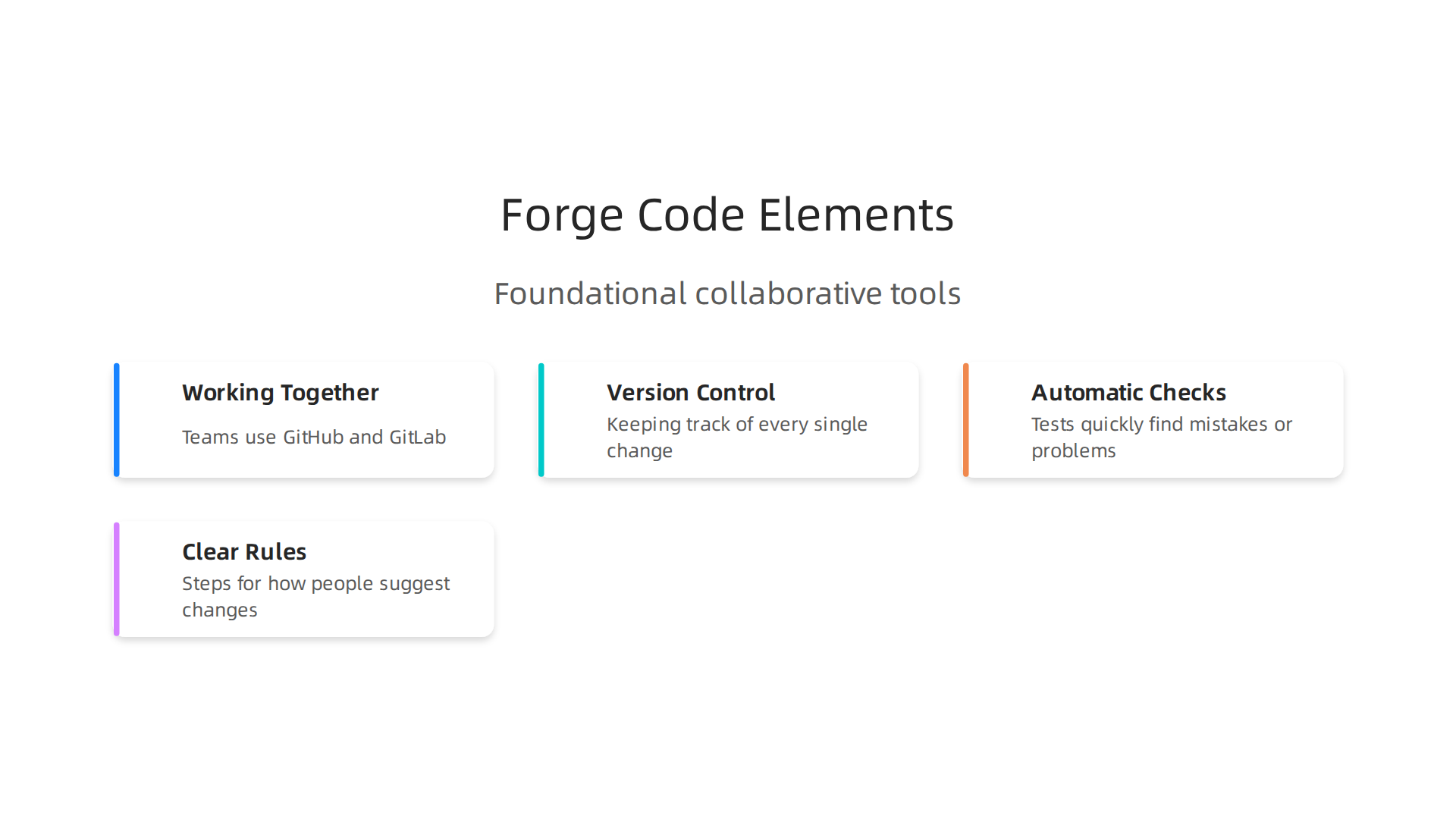
- Working Together: Forge code is all about teams. Developers use tools like GitHub and GitLab to put their code in one place.
This makes it easy for everyone to see changes, talk about them, and add their own parts. It’s like a shared whiteboard for code. Open collaboration in data engineering faces similar challenges and benefits, showing how important shared work is for complex projects Challenges to Open Collaborative Data Engineering.
- Version Control: This means keeping track of every single change made to the code. If something goes wrong, you can always go back to an earlier, working version. This helps keep the project safe and steady.
- Automatic Checks: When new code is added, forge code setups often run automatic tests. These tests quickly find mistakes or problems, making sure the new code doesn’t break anything.
- Clear Rules: There are clear steps for how people suggest changes, get them reviewed, and then add them to the main project. This keeps everything organized.
How Forge Code Is Like Other Smart Ways of Building Software
Forge code shares ideas with other useful methods in software development:
- Modular Design: This is like building with LEGO bricks. Instead of one big piece of code, you have many small, independent pieces or modules. Forge code often uses this because it makes it easier for different people to work on different parts without stepping on each other’s toes. Each module can have its own clear code meaning.
- Code Generation: Sometimes, computers can write parts of the code for us, especially with smart AI tools in 2026. This is one of the important applications of machine identification code. It saves time and helps keep things correct. If you’re looking into how AI helps here, you might want to learn about a Developer’s Guide to AI-Assisted Code Generation in 2026.
- Infrastructure-as-Code: Imagine describing your entire computer setup (servers, networks, etc.) using code. This code is then managed just like forge code, meaning it’s shared, version-controlled, and reviewed by the team. This ensures that everyone knows how the system is set up and can make changes in a controlled way.
How to Spot Forge Code in Action
You can often tell if a project or team uses forge code ideas by looking for these things:
- Shared Repositories: The project code lives in a place like GitHub, GitLab, or Bitbucket. Everyone on the team can access it.
- Pull Requests or Merge Requests: When someone wants to add new code, they don’t just put it in. They create a "pull request" that asks others to look at it and approve it first.
- Continuous Integration/Deployment (CI/CD): This means that as soon as new code is added, it’s automatically tested and then maybe even sent out to users. This makes things fast and reduces human error.
- Team Reviews: People regularly look at each other’s code. This helps catch mistakes early and makes sure the code is easy to understand for everyone.
- Clear Documentation: There are clear notes and explanations about how the code works, why certain choices were made, and how to contribute. This helps everyone understand the core "code meaning" and makes it easier for new team members to get started.
Understanding these points helps you see how forge code is more than just a tool. It’s a whole way of working that helps teams build software better and faster in 2026. If you want to dive deeper into making sense of complex software, you might find it helpful to Grok Code with a Science Backed Framework for Deep Comprehension.
Making forge code even better involves using smart methods, clear ways of building things, and helpful tools. These all work together to speed up how teams create software and make sure the code is strong and easy to understand.
Smart Ways to Build with Forge Code
Teams use special methods to make their work with forge code faster and more organized.
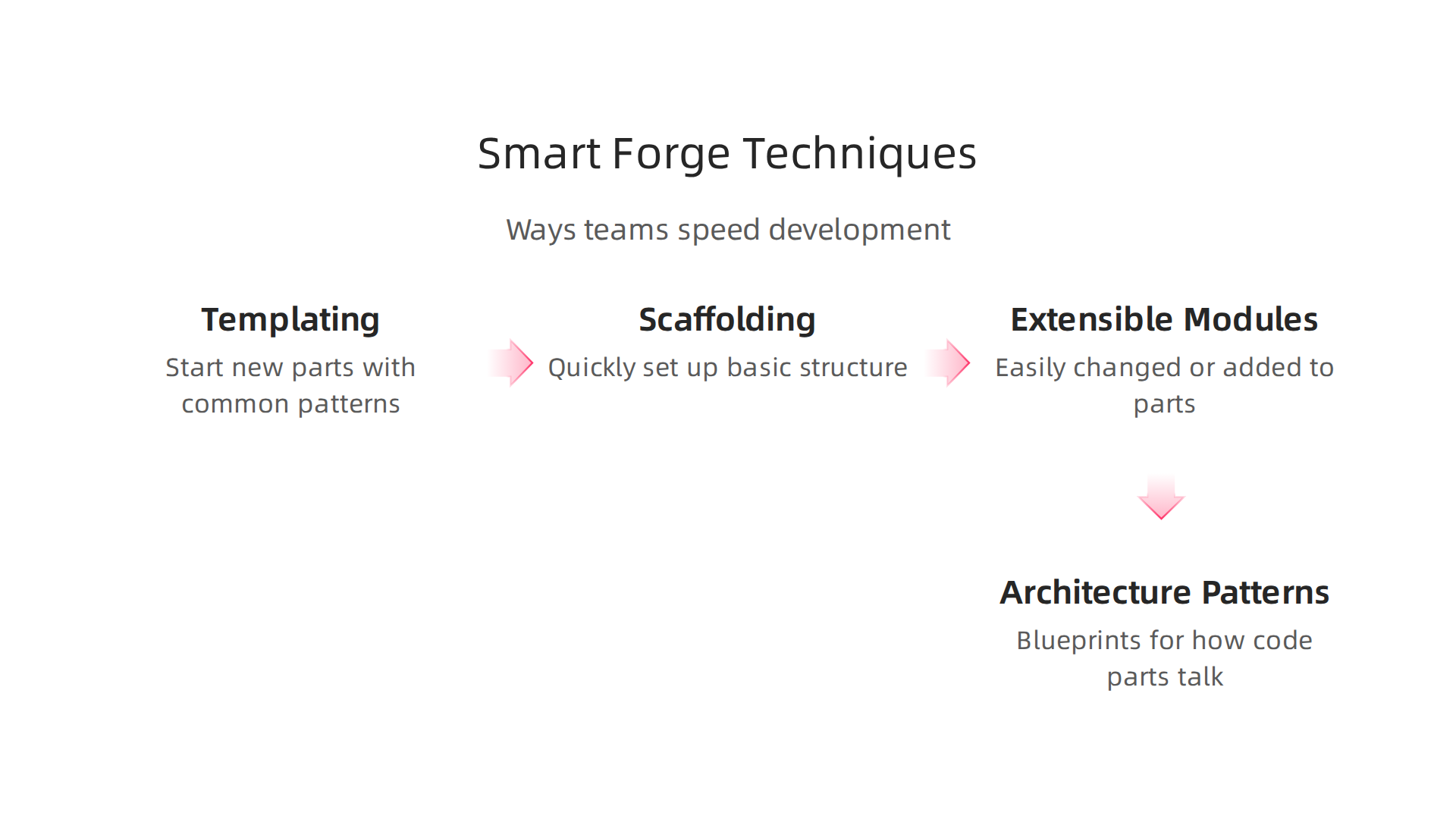
- Templating: Imagine you have to write many similar letters. Instead of starting from scratch each time, you use a template. It’s the same with code. Templates let developers start new parts of a project with common patterns already in place. This saves time and keeps the code looking the same across the whole team, which helps everyone understand its core code meaning.
- Scaffolding: This is like building a house frame before adding walls. Scaffolding tools can quickly set up the basic structure of a new project or a new part of an existing project. It means less time spent on setup and more time spent on writing the unique parts of the code.
- Extensible Modules: Good forge code is built with parts that can be easily changed or added to without messing up other parts. Think of it like adding a new room to your house without having to rebuild the entire house. This makes it easier to update and grow the software over time.
- Architecture Patterns: These are like blueprints for how a whole building is put together. For software, architecture patterns give clear rules for how different parts of the code talk to each other. This helps large teams work on complex projects without confusion.
Handy Tools for Forge Code Teams
Many tools help make forge code work well. They automate boring tasks and keep everything running smoothly.
- Linters: These are like grammar checkers for code. They look for mistakes, bad styles, or things that don’t follow the team’s rules. Linters help keep the code clean and easy for everyone to read, supporting a clear understanding of the code meaning.
- Scaffolding Command-Line Tools (CLIs): These are simple computer commands that let developers quickly create new project parts based on templates. They are a common tool that speeds up starting new tasks.
- Package Managers: When you build software, you often use code that other people have already written. Package managers help you easily get, update, and manage these outside pieces of code, making sure all your project’s parts fit together.
- Build-Time Code Generators: These tools can write some parts of the code for you before the software even starts running. This is one of the important applications of machine identification code and can save a lot of manual work. AI coding assistants in 2026 are making this even more powerful. You can learn more about how AI helps developers solve trust problems in code generation with AI coding assistants 2026.
The use of Git forges like GitHub, GitLab, and Bitbucket for adding functionality to the popular Git version control system further highlights this evolution in tooling and trust Rethinking Trust in Forge-Based Git Security.
Good Habits for Using Forge Code
Even with great tools and techniques, teams need good habits to make forge code truly shine.
- Keep it Readable: Code should be easy for any team member to read and understand. This means using clear names for things and simple steps. When code is easy to read, it’s easier to find and fix mistakes.
- Make it Testable: Good code is built so that it’s easy to check if it works correctly. Writing tests helps catch problems early, ensuring that new changes don’t break existing features. This is especially important for complex systems using applications of electronic code book methods.
- Use Modularity: Breaking code into small, independent parts makes it easier for different people to work on different things at the same time. It also means if one part has a problem, it’s less likely to affect the whole system. This makes each part’s code meaning clear and self-contained.
By using these smart techniques, helpful tools, and good habits, teams can make their forge code projects stronger, faster, and much more successful in 2026.
Using smart techniques, helpful tools, and good habits truly makes forge code projects stronger and faster. Now, in 2026, a new helper is making this work even more powerful: Artificial Intelligence (AI). AI-assisted coding is changing how we build software, helping models interact with how we make and manage forge code.
AI’s Role in Forge Code Workflows
AI models are becoming key partners for developers working with forge code. They can help with many parts of making software, making the whole process quicker and often better.
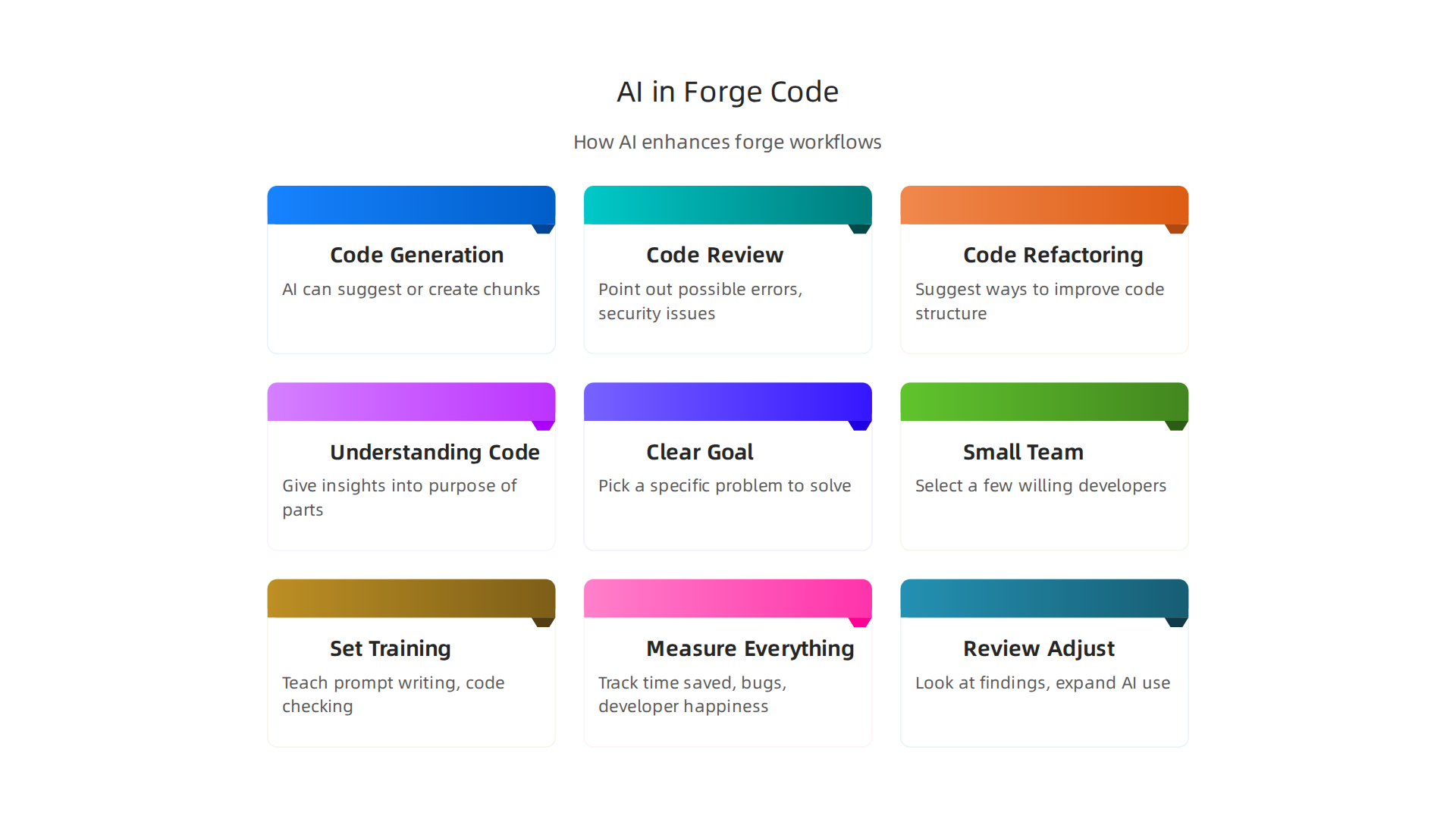
- Code Generation: Imagine AI as a smart assistant that can write code for you. When you tell it what you want the software to do, AI can suggest or even create chunks of forge code. This speeds up the start of projects and helps developers write common patterns without typing every single line themselves. It is a big step forward in AI-assisted software development.
- Code Review: Checking code for mistakes and making sure it follows rules used to be only a human job. Now, AI tools can look at forge code and point out possible errors, security issues, or places where the code could be clearer. This helps teams catch problems earlier and keeps code quality high. Learning How to Adopt AI-Assisted Code Review Workflows in 2026 can greatly boost team efficiency.

- Code Refactoring: Sometimes, existing forge code needs cleaning up to make it easier to read or update, even if it already works. This is called refactoring. AI can suggest ways to improve the code’s structure without changing what it actually does. This helps keep the code tidy and easier to maintain over time.
- Understanding Code Meaning: AI can also help developers better understand existing code. By analyzing patterns and structures, AI can give insights into the purpose of different parts of the forge code, which is especially useful when working on older or very complex projects. This touches on the broader idea of AI Development Patterns on GitHub.
How AI Tools Connect with Your Work
Integrating AI into your daily development process for forge code is becoming easier.
- Seamless Integration with IDEs: Many AI coding assistants in 2026 work right inside the tools developers already use, like VS Code or IntelliJ. They can suggest code as you type, explain pieces of code, or help fix bugs, all without leaving your main workspace. You can learn more about how to set up your workflow with AI in articles like My LLM coding workflow going into 2026.
- CI/CD Pipelines: AI tools are also being built into the automated steps that get forge code ready for release. For example, AI can automatically test code, check for security flaws, or even help deploy new updates. This makes the whole process faster and more reliable. Companies are using Top AI tools for CI/CD pipeline automation in 2026 to keep things running smoothly.
- Spec-Driven Development: AI can help even before coding starts, by assisting in writing clear project specifications. This makes sure everyone knows what needs to be built before the first line of forge code is written, which can be improved by knowing How AI Enhances Spec-Driven Development Workflows.
Weighing the Good and Bad of AI in Forge Code
While AI brings many benefits to forge code, it also has some things to watch out for.
- Pros: More Productivity and Better Code: The biggest plus is how much faster developers can work. AI can handle routine tasks, letting humans focus on harder problems. It can also help improve the quality of forge code by finding issues that might be missed by human eyes. This leads to higher-quality software and quicker launches. This is a clear application of machine identification code helping to speed things up.
- Cons: Hallucination, Drift, and Maintenance: AI isn’t perfect. Sometimes, it might create code that looks right but has subtle errors or doesn’t quite fit the specific needs of the project. This is called "hallucination." Also, AI models can "drift," meaning their suggestions might change over time in ways that aren’t always helpful. Fixing AI-generated errors or correcting misinterpretations of the code meaning can sometimes add a new kind of maintenance burden. Developers need to carefully review all AI-generated suggestions.

In 2026, finding the right balance between using AI and careful human oversight is key for making the most of forge code. It’s about using AI as a helper, not a replacement.
To stay on top of all the latest AI developments, including those impacting software and forge code, you need a reliable source. The AI Newsletter Worth Reading delivers clear daily AI updates from The Deep View Newsletter.
In 2026, as we use AI more for forge code, it’s super important to also think about safety, following rules, and making sure everything works right. While AI makes coding faster, it also brings new things we need to watch out for.
Security Risks in AI-Generated Forge Code
When AI helps write forge code, it can sometimes make mistakes that lead to security problems. These are like weak spots that bad actors might try to use. A recent study found that over 60% of code made by AI can have big flaws or known security issues, even when developers try to use it carefully Understanding Security Risks in AI-Generated Code.
Here are some common security worries with AI-generated forge code:
- Weak Code Patterns: AI might create code that has common weaknesses. Attackers know these weak spots and how to use them.
- Input Problems: Sometimes, AI-generated code doesn’t properly check what information users put into an application. This can leave doors open for things like SQL injection or cross-site scripting (XSS), which are ways attackers can trick the system or steal data. You can learn more about these kinds of issues when looking at What Is AI Coding Vulnerability? Risks & Types.
- Hidden Dependencies: AI might suggest using other pieces of code that have their own security holes. It’s like building with faulty parts without knowing it.
It’s vital to carefully check all forge code, even if AI helped make it. Human eyes are still the best way to spot these hidden dangers.
Compliance and Rules for AI-Assisted Forge Code
Another big part of using AI for forge code is making sure you follow all the rules and laws. This is called compliance.
- License Issues: AI models learn from huge amounts of existing code. This code might have different licenses that say how you can use it. If AI mixes and matches code from various sources, it can become hard to know if you’re allowed to use the final forge code without breaking any rules. Knowing the origin, or provenance, of every piece of code becomes very important. This is where applications of machine identification code could help trace where code comes from.
- Data Handling: What kind of data did the AI learn from? If the AI was trained on sensitive company information or private user data, using its output might have privacy concerns. You need to be sure that using the AI for your forge code doesn’t accidentally share private data or break any data protection laws. While less direct, some applications of electronic code book techniques might be considered for protecting data during AI training or in managing code secrets.
It’s important for companies to have clear rules about how AI tools are used and to check that the forge code created by AI follows all legal and company policies.
Making Forge Code Reliable and Stable
Beyond security and rules, you also need to make sure your AI-assisted forge code runs smoothly and is dependable. This is called operational reliability.
- Smart Testing: Even with AI’s help, you still need strong testing. This means running tests to make sure small parts of the code work (unit tests) and that all the parts work together (integration tests). You can learn about how to plan for AI-assisted code generation by checking out a Developers Guide to AI Assisted Code Generation In 2026.
- Watching Performance: Once your forge code is live, you need to watch how it’s doing. This is called observability. If something goes wrong, you want to know about it quickly so you can fix it. Tools for AWS status monitoring how to proactively avoid costly downtime can help you keep an eye on your systems.
- Backup Plans: What if a new piece of AI-generated forge code causes problems? You need a way to quickly go back to the old, working version. These are called rollback plans, and they are crucial for keeping your systems stable.
By thinking about these security, compliance, and reliability steps, you can use AI to build better forge code without taking unnecessary risks. It’s all about being smart and careful with these powerful new tools.
To really get the most out of AI for making forge code, you need to bring these new tools into your daily work in a smart way. It’s not just about using AI; it’s about making sure your whole team and all your other tools work well with it.

Bringing AI-Made Forge Code into Your Daily Work
Changing how your team creates code can be tricky. It’s like teaching an old dog new tricks, but with computers. Here’s how to do it smoothly:
- Start Small and Learn: Don’t try to change everything at once. Begin with small projects or a few team members using AI to make
forge code. These are called pilot strategies. You can learn what works and what doesn’t before rolling it out to everyone. There’s a good guide on how to pilot and scale AI projects successfully. - Help Your Team Learn: Many developers might be new to working with AI helpers. Provide training so they know how to best use these tools, how to check the
forge codeAI creates, and how to work with it safely. Getting used to a new way of coding, like a fresh LLM coding workflow going into 2026, is key. Teaching them aboutAI coding assistants 2026 how Cluely AI and prompt engineering solve the trust problemcan be very helpful for boosting confidence and skill. - Make Tools Work Together: Your current coding tools need to play nice with new AI helpers. This means making sure they can all share information and work in the same way. When tools are aligned, it makes everything easier. For instance, exploring how Anthropic AI for developers how Claude supercharges your coding workflow can integrate into existing systems shows how to align tooling with team processes.
Smart Ways to Check AI-Generated Code
After AI helps make forge code, it still needs to be checked carefully. This is part of what we call CI/CD (Continuous Integration and Continuous Delivery), which is all about getting code ready, testing it, and putting it out there quickly.
- New Checks and Balances: When AI helps create code, your usual checking steps might need to change. You’ll want special "testing gates" that look specifically for problems common in AI-generated
forge code. This means running extra tests to make sure the AI didn’t miss anything. - Clear Approval Steps: Even if AI makes the code, a human still needs to give the final "go ahead." Setting up clear approval steps ensures that important
forge codegets reviewed by a person before it’s used. This can help speed up tasks while still keeping things safe, as discussed in how to adopt AI-assisted code review workflows in 2026. Also, thinking aboutapplications of machine identification codecould help track which parts of the code came from AI and which from humans, making reviews more focused.
Knowing If AI is Helping Your Team
It’s super important to know if using AI for forge code is actually making things better. You need to measure its impact.
- Look at the Numbers: Track things like how much faster your team can make
forge code, or if there are fewer bugs. These are called Key Performance Indicators, or KPIs. They give you clear numbers to see if things are improving. - Listen to Your Team: Numbers don’t tell the whole story. Talk to your developers. Do they feel more productive? Are they happy using the AI tools? This "qualitative" feedback is also very important for understanding if the new way of working is a success. Learning how to measure and speed up AI adoption: The complete enterprise guide 2026 can help you decide if the changes are truly working. This also includes keeping an eye on "technical debt," which is like messy code that can slow you down later. If AI creates a lot of technical debt, it’s not helping.
It’s one thing to talk about using AI for forge code, and another to see it in action. Looking at real-world examples helps us understand what works and what doesn’t, especially when trying to avoid problems like technical debt that we talked about earlier.
Real-world Examples: Case Studies, Lessons Learned, and Measurable Outcomes
Many companies in 2026 are exploring how AI can help them create forge code. We’ve seen some amazing successes and some useful lessons from those who tried different ways.
Success Stories with AI-Generated Code
Take "InnovateTech," for example. They started small, using AI coding assistants for simple tasks, like creating basic website parts or small helper functions. They saw their developers finish these tasks about 30% faster. By tracking metrics like lines of forge code produced and time spent on bug fixes, they learned that AI could speed up development without adding many new errors. They also used strict review processes for the AI-generated code meaning to ensure it fit their quality standards. This helped their team become more efficient, letting them focus on bigger, more complex problems.
Another team, "DevGenius," used AI to help with translating older code into newer programming languages. This kind of work can be very slow and prone to human error. With AI, they were able to convert large parts of their system much quicker, freeing up their expert developers for more creative tasks. This kind of success shows the clear benefits when AI is used smartly and with a clear goal in mind. In fact, reports show that generative AI adoption has been very fast, with about 53% of the population using it within three years, according to the Artificial Intelligence Index Report for 2026.
Learning from Challenges and Setbacks
Not every step is easy. "QuickCode Inc." tried to use AI for almost all their forge code generation right away. They didn’t put enough checks in place. While the AI was fast, the quality of the forge code was sometimes poor, leading to more bugs and a lot of "technical debt." Their developers spent more time fixing AI mistakes than they saved in writing code. This taught them a big lesson: humans must still be in charge, especially when it comes to checking the code meaning and making sure it’s high-quality. A balanced approach with human review and clear guidelines is key, not just letting the AI run free.
Many organizations face similar hurdles, often missing a full plan for how to use AI effectively. There’s a useful video that talks about The AI Playbook Most Organizations Are Missing in 2026, which highlights common pitfalls. It reminds us that careful planning is just as important as the AI tools themselves.
Practical Steps for Your Own Pilots
To make sure your team succeeds with AI for forge code, here are some ideas for running your own tests:
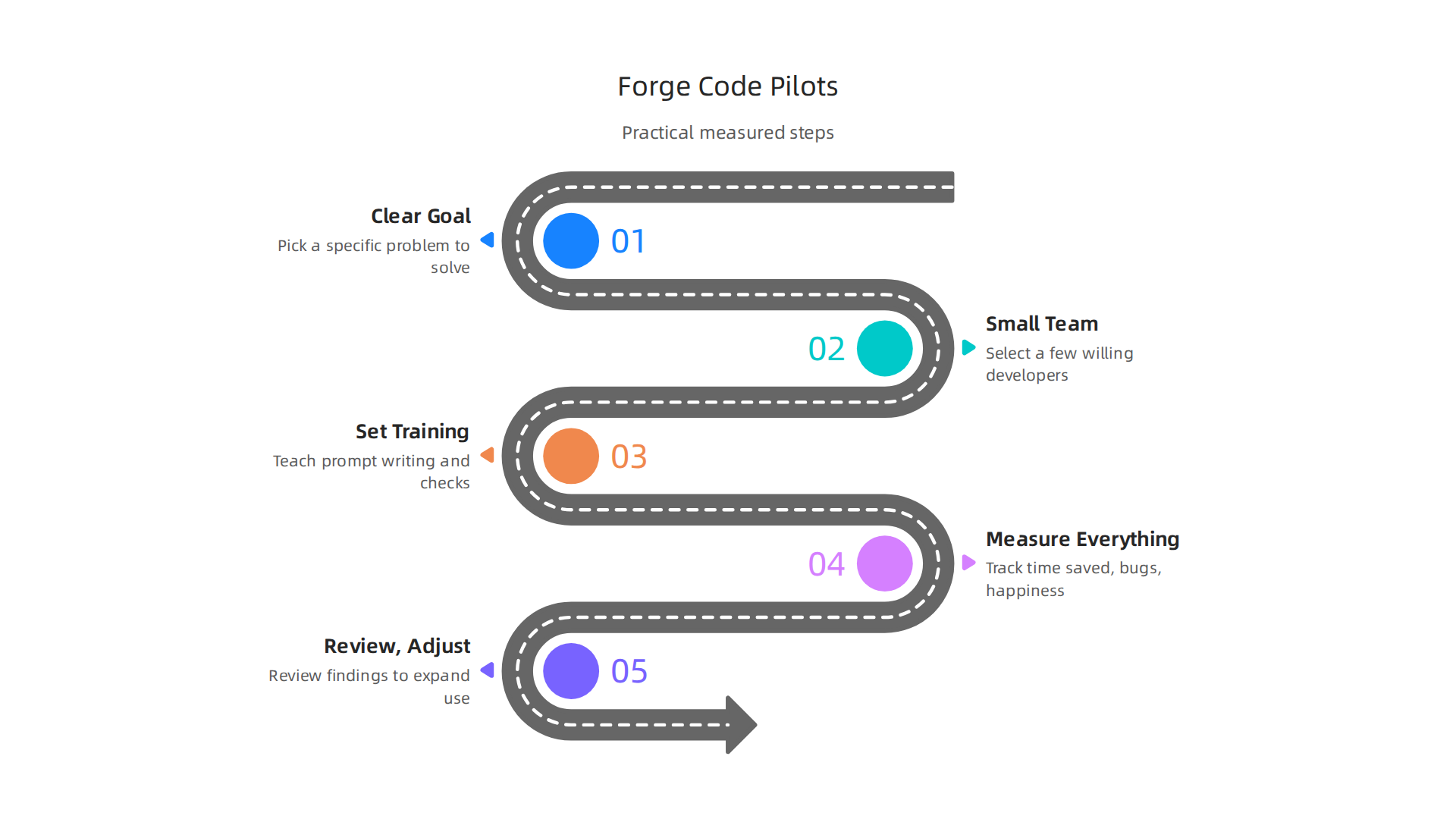
- Start with a Clear Goal: Don’t just "try AI." Pick a specific problem, like generating boilerplate code or automating simple tests. Define what success looks like beforehand (e.g., "reduce time on X task by 20%").
- Choose a Small Team: Select a few willing developers to be your "pioneers." They can learn the tools, provide feedback, and help shape best practices for the whole team. This method helps you successfully scale AI adoption beyond initial pilots.
- Set Up Training: Make sure your team knows how to use the AI tools well. Teach them how to write good "prompts" (instructions for the AI) and how to check the
forge codethat comes out. Understanding howAI coding assistants 2026 how Cluely AI and prompt engineering solve the trust problemcan be very helpful for boosting confidence. - Measure Everything: Keep track of things like how much time is saved, how many bugs are found in AI-generated code, and how happy your developers are. This helps you see if the AI is truly making things better.
- Review and Adjust: After your pilot, look at your findings. What went well? What didn’t? Use this information to make smart choices about how to expand AI use, or if you need to change your approach. A detailed Complete 2026 AI Business Transformation Playbook can provide further structure.
By taking these measured steps, you can learn from others’ experiences and smoothly bring AI into your coding work, improving how your team creates forge code without the headaches.
Want to keep up with the latest in AI and software development? The AI Newsletter Worth Reading delivers clear daily updates.
Summary
This article explains the concept of